11 Jul 2025 - {{hitsCtrl.values.hits}}
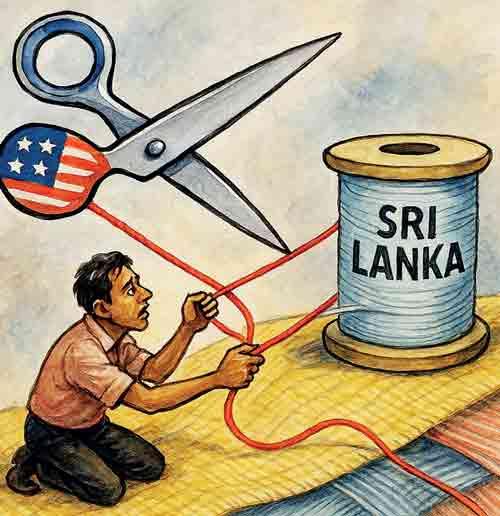
Sri Lanka’s apparel sector, a key pillar of the island’s export economy, yesterday raised red flags over the United States’ move to impose a 30 percent reciprocal tariff on all Sri Lankan products starting 1 August 2025. It warned that it could cost the country its competitiveness in a critical market.
The Joint Apparel Association Forum (JAAF), the apex body representing the industry, expressed deep concern, stating the tariff hike threatens to tip the playing field in favour of regional rivals and potentially redirect US sourcing away from Sri Lanka.
“If the 30 percent tariff stands, we risk seeing a migration of U.S. buyers to lower-tariff countries,” JAAF warned, while urging the Sri Lankan government to continue active engagement with the US Trade Representative (USTR) to secure a better deal for Sri Lanka.
JAAF pointed out that Sri Lanka is at a disadvantage compared to competing export economies in the region. Vietnam has concluded its negotiations with the US and will face a lower 20 percent tariff. Bangladesh, though currently subject to 35 percent, has already commenced talks to bring down its rate. India’s terms remain under discussion, but early signs point to a potentially more favourable outcome, while Cambodia is also expected to negotiate a lower rate.
The tariff move was formally communicated by the White House in a letter to President Anura Kumara Dissanayake on Wednesday, with Washington stating the decision demonstrates “the strength and commitment” of the trading relationship despite the significant trade deficit the US maintains with Sri Lanka.
Starting on 1 August 2025, the US will charge Sri Lanka a Tariff of 30 percent on any and all Sri Lankan products sent into the United States, separate from all sectoral tariffs. Goods transshipped to evade a higher tariff will be subject to that higher tariff, the letter, signed President Donald Trump, stated.
While acknowledging that the reduction from 44 percent to 30 percent was a result of Sri Lanka’s constructive dialogue with the USTR, JAAF maintained that it is not sufficient and urged for intensified diplomacy.
“JAAF is encouraged by the government’s comments (yesterday) indicating that negotiations with USTR will continue with a sense of urgency ahead of the 1st August deadline when the 30 percent will become effective,” the association said.
It added that securing a better outcome is essential not only to maintain Sri Lanka’s share in the US market, but also to preserve jobs and uphold the country’s credibility in global apparel supply chains.
“A diplomatic resolution is vital to safeguarding jobs, sustaining market share, and reinforcing Sri Lanka’s position as a trusted partner in global apparel supply chains,” JAAF stressed.
The Ceylon Chamber of Commerce (CCC) yesterday welcomed the United States’ decision to lower import tariffs on select Sri Lankan exports, calling it “a constructive and important first step” toward aligning the country’s trade terms with regional competitors.
The Ceylon Chamber of Commerce said it views the reduction in the tariff rate from 44 percent to 30 percent a constructive and important first step by the government toward bringing Sri Lanka’s tariff structure for exports to the US closer to that of regional competitors.
The US on Wednesday announced a tariff cut from 44 percent to 30 percent on a basket of Sri Lankan goods, a move expected to ease cost pressures for exporters targeting the key US market. The chamber encouraged the government to continue engaging with US authorities to secure further reductions by August 1, adding that regional peers are likely to benefit from even lower rates.
It noted that additional concessions would be vital to strengthening market access, maintaining buyer confidence, and supporting sustained trade growth.
21 Jul 2026 2 minute ago
21 Jul 2026 8 minute ago
21 Jul 2026 40 minute ago
21 Jul 2026 44 minute ago
21 Jul 2026 48 minute ago