19 Jan 2026 - {{hitsCtrl.values.hits}}
By Nishel Fernando
|
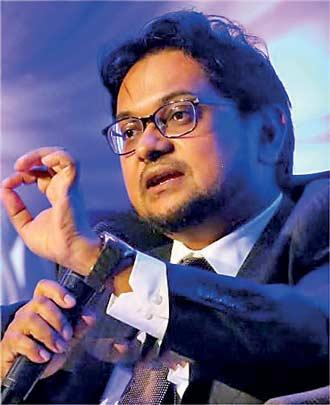
Dr. Nishan de Mel |
Sri Lanka must urgently pivot from a narrow focus on crisis management and International Monetary Fund (IMF) targets to a holistic developmental agenda that addresses the real economy as the country enters 2026.
Verité Research Executive Director Dr. Nishan de Mel emphasised that while the IMF programme has stabilised certain macroeconomic indicators, it has created a “tunnel vision” that obscures the deteriorating living standards of the general population.
Speaking on a televised programme recently, Dr. de Mel argued that the existing economic roadmap was designed as a limited solution to a crisis, not a comprehensive strategy for national development.
There is a growing disconnect between the narrative of macroeconomic stability and the ground reality faced by citizens. Dr. de Mel pointed out that while fiscal targets such as revenue and primary balances are being met, the indicators that matter for human well-being which includes poverty, jobs, and real wages are among the worst performing in the region.
He noted that Sri Lanka’s poverty rate surged by 13 percentage points during the crisis, the second-highest increase recorded in any country undergoing a debt crisis in the last decade, superseded only by Mozambique.
“If you have tunnel vision, we might think that everything is well because on certain indicators like increasing revenue or improving the primary balance, we have been successful,” Dr. de Mel observed. “But these are simply means to an end; they are not the goal itself. What you really want is a society in which people are better off. We are at risk of solving what seems like the crisis at the expense of solving the country, which means the means have swallowed up the ends.”
The economist highlighted that real wages remain 10 to 20 percent lower than past levels, while employment figures are at a 20-year historic low. He attributed part of this scarring to the “disastrous” decision to hike interest rates to 30 percent, which forced mass business closures and fundamentally damaged the real economy. He illustrated the unequal nature of the recovery by noting that while the bottom of the pyramid has been crushed, those with significant savings and assets effectively increased their wealth during the high-interest period, leading to a dual narrative where the rich recovered faster while the poor fell further behind.
Dr. de Mel also raised serious concerns regarding the Central Bank’s inflation targeting regime. Despite the enactment of the new Central Bank Act which mandates an inflation target of 5 percent, the regulator has missed this target for six to seven consecutive quarters.
He explained that the law builds in an “answerability trigger” requiring the Monetary Board to explain these failures to Parliament, yet the system currently lacks the maturity to demand meaningful corrective action. He drew parallels to the Supreme Court judgement against the former Monetary Board, noting that legal accountability was based on the lack of a reasoned basis for decisions rather than the economic theories themselves.
The discussion also introduced the concept of “prompetency”—a blend of professional competency—as the necessary successor to the government’s anti-corruption drive. Dr. de Mel argued that while punishing corruption is a necessary deterrent, it does not guarantee efficient governance. He stressed that the state bureaucracy needs to move towards professional risk management, similar to the private banking sector, to build “shock absorbers” for inevitable future external shocks like the recent Cyclone Ditwah. He criticized the lack of analytical rigor in recent debt management decisions, specifically referencing the RFI loan taken for the cyclone relief, arguing that there was no liquidity urgency to borrow funds at that specific juncture.
Touching on the digital economy, Dr. de Mel warned that Sri Lanka’s internet penetration of 51 percent is dangerously low compared to regional peers like India, which sits at 56 percent, and other competitors ranging between 70 and 90 percent. He cautioned that in the modern era, a lack of digital access is becoming a primary driver of poverty and inequality. He concluded by calling for a shift in 2026 towards a “Developmental Program” driven by local aspirations and the Sustainable Development Goals, rather than remaining passive recipients of external crisis-management solutions.
20 Jul 2026 5 minute ago
20 Jul 2026 19 minute ago
20 Jul 2026 1 hours ago
20 Jul 2026 2 hours ago
20 Jul 2026 3 hours ago