 Moiz Mustafa
 Reply To:
Name - Reply Comment
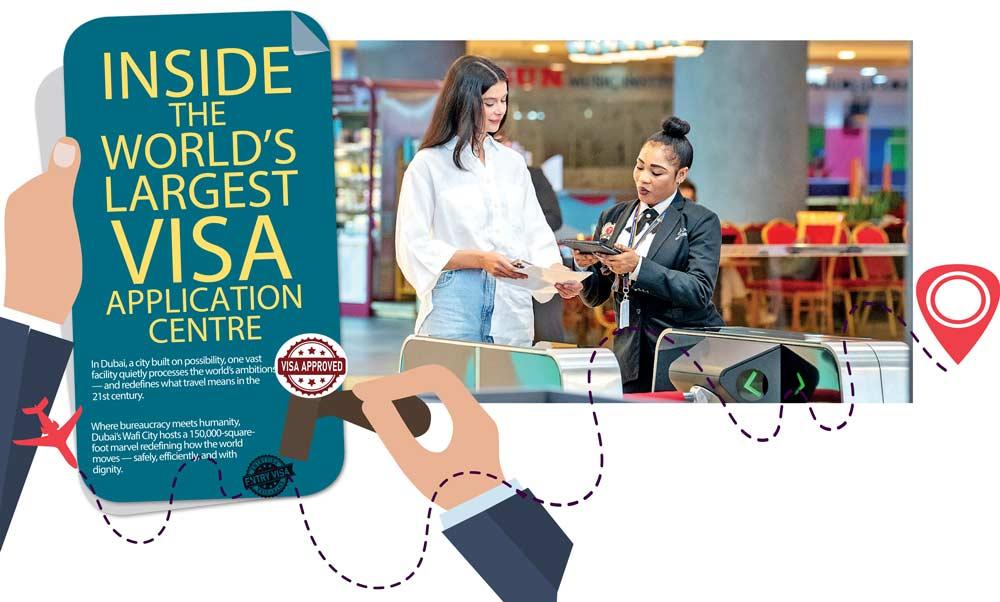
 It looks like bureaucracy, but it’s really choreography — a seamless movement of people, data, and trust, turning the once tedious act of applying for a visa into an experience shaped by precision and quiet empathy.”
Behind the glass, automation verifies, AI analyses, and biometric systems hum — not replacing humans, but reinforcing them, ensuring that every application moves with accuracy, accountability, and care across continents.”
Each counter here is a front line of diplomacy. Every staff member, every smile, every correction of a form is an act of trust that keeps the global system of movement intact.”
This isn’t a government office; it’s a city of visas — designed like a public service hub, yet run with the speed and spirit of a start-up redefining mobility in the modern age.”
At the heart of it all is trust — the invisible infrastructure binding governments, travellers, and technology into a single, secure rhythm that makes the world’s movement possible.”
By Moiz Mustafa
Inside Dubai’s Wafi City stands a place that quietly moves the world. The world’s largest visa application centre, operated by VFS Global, spans 150,000 square feet and processes up to 10,000 applications daily. Here, technology meets diplomacy, precision meets empathy, and every passport tells a story of ambition. Within its glass walls, global mobility unfolds not as chaos, but as choreography, a living system powered by trust, data, and a belief that travel should begin with dignity.
What does it take to move the world — safely, legally, and at scale?
Not a government. Not an airline.
But a company running a city-sized operation inside a Dubai mall.
This is the world’s largest visa application centre — 150,000 square feet of glass, data, and determination, where more than 400 people process up to 10,000 visa applications a day. It hums with the precision of a tech start-up and the diplomacy of a consulate.
Step inside, and you’re met with the quiet rhythm of global mobility: families clutching documents, students holding letters of acceptance, business travellers scanning phones for flight updates. It feels like an airport without planes — an intersection where nations meet through paperwork and promise.
What looks like bureaucracy is, in truth, choreography.
A City of Visas, Built for the World
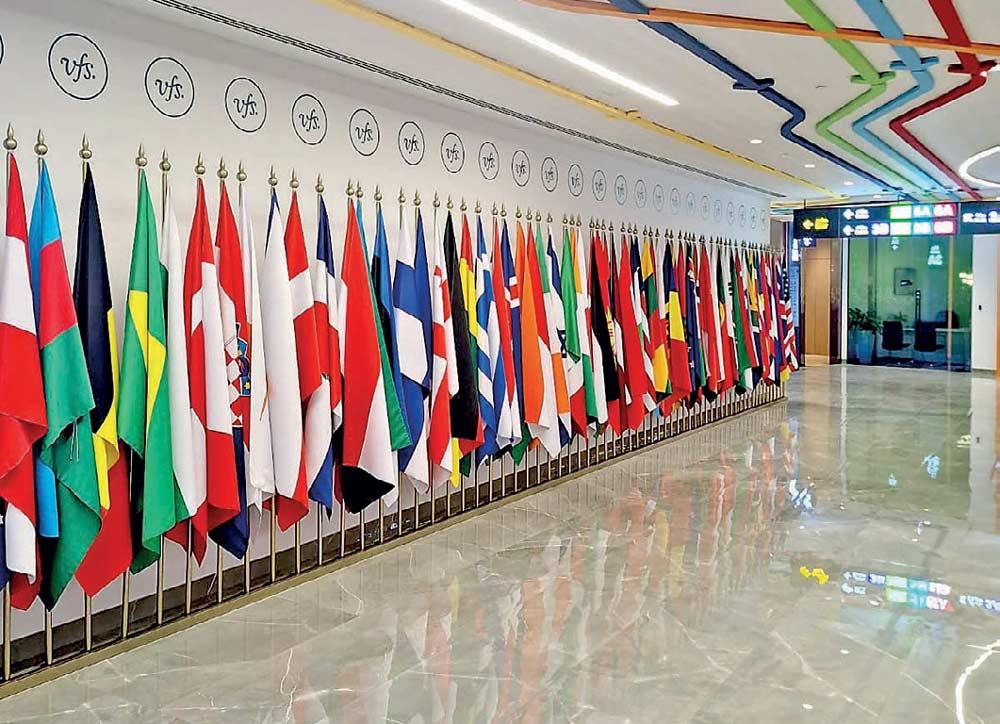
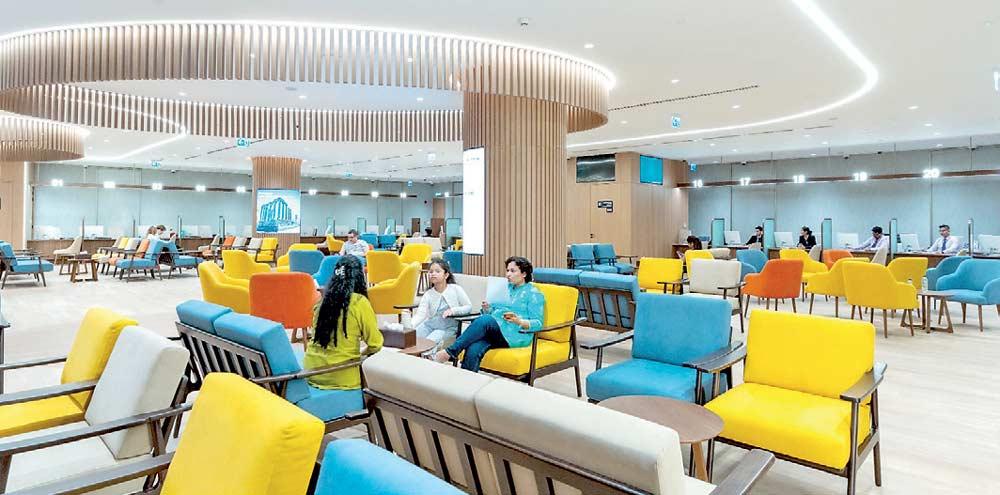
The centre, operated by VFS Global in Dubai’s Wafi City, is a model of modern service architecture. It handles visa applications for 37 governments under one roof — the physical manifestation of globalisation made tangible. Everything, from the lighting to the queue design, has been engineered for a seamless experience.
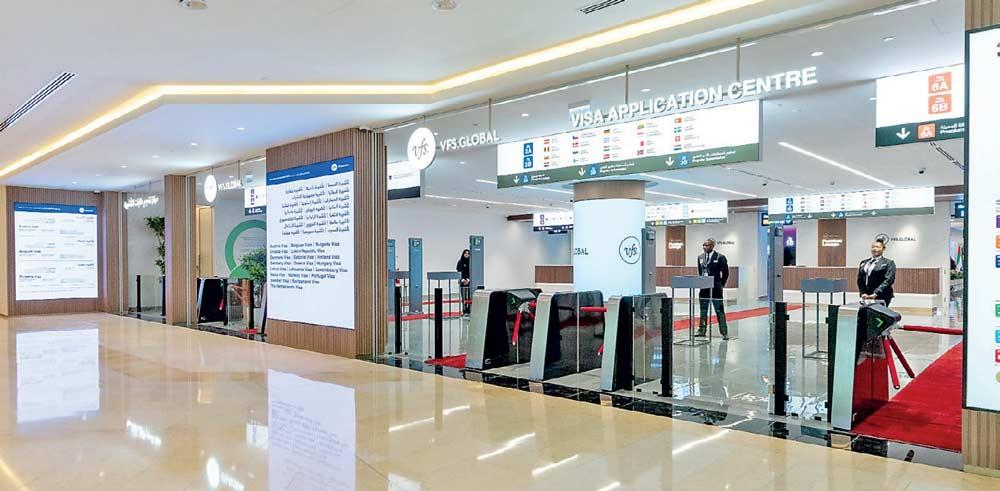
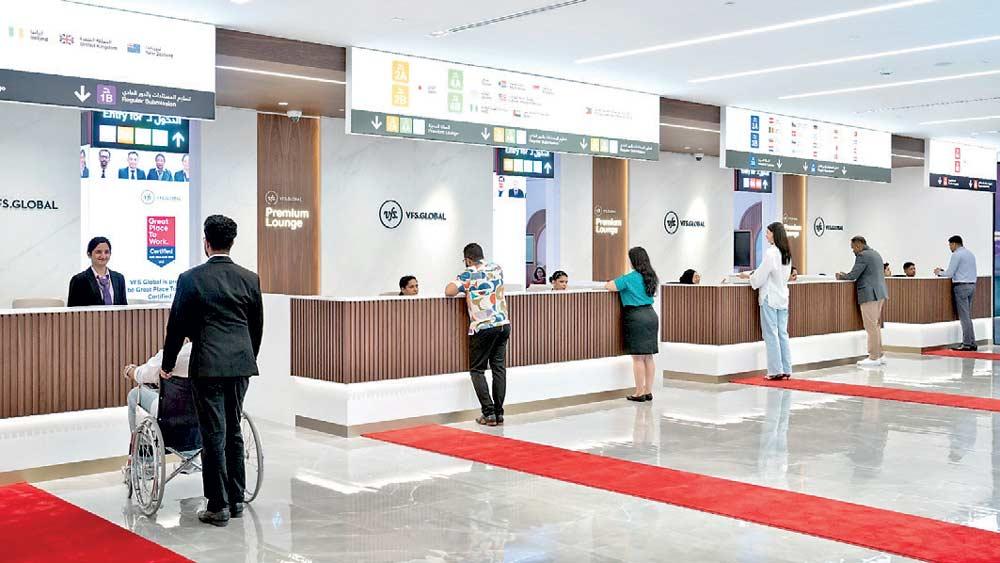
Applicants move through zones designed for comfort and clarity. QR-coded tokens replace the traditional paper number slips; touchscreen kiosks help verify documents before you even meet an agent. Over 200 submission counters line the space, including 79 Premium Lounges and a Platinum Lounge for those who want complete concierge support, right down to a chauffeur-driven arrival.
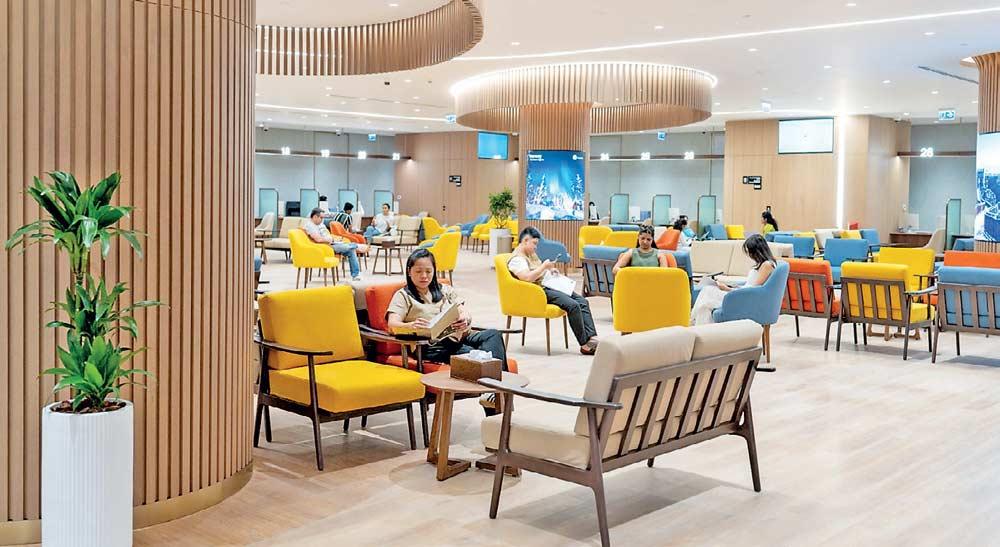
Prayer rooms, children’s play areas, and buggy services punctuate the sprawling layout. The logic is simple: people arrive anxious; the environment should calm them. What used to be a tedious administrative process has been transformed into a customer journey — one that mirrors Dubai’s obsession with efficiency and hospitality.
Technology at the Core
Behind the glass, an intricate machine hums 24/7.
The Wafi centre is powered by an AI-enabled Innovation Hub, where automation validates documents, flags inconsistencies, and supports governments’ biometric requirements in real time. The company now leads the industry in ethical AI adoption with a robust enterprise-wide AI strategy shaped in partnership with the Responsible AI Institute. With strong governance frameworks and built-in guardrails ensuring responsible deployment, VFS Global was this year recognised with the Dubai AI Seal — becoming the first in the sector to be certified as a trusted AI enterprise.
In parallel, it has expanded this capability into secure, government-led eVisa systems. With eVisa systems designed and implemented for 14 client governments and over 5.3 million applications processed, VFS Global currently operates nine active eVisa programmes, including for Azerbaijan, Brazil, Indonesia, Japan, South Africa, the Philippines, Suriname, Equatorial Guinea, and the UAE (DVPC).
Meanwhile, a Global Resilience Centre monitors system performance and data protection around the clock — ensuring that no matter how busy the day, operations don’t miss a beat.
VFS Global doesn’t decide who gets a visa. Instead, it handles every administrative and non-judgmental step — collection, verification, logistics — so that embassies and consulates can focus on decision-making. It’s a precise balance of service and consular discretion, refined over two decades and now replicated across nearly 4,000 centres in 160+ countries.
Where Safety Meets Service
The world’s largest visa centre isn’t just about speed. It’s about reliability and trust — the quiet kind that holds the system together. Every process here is built on layers of privacy, security, and compliance.
VFS Global’s data protection framework aligns with GDPR and international best practices, backed by certifications like ISO/IEC 27701 for privacy and ISO 27001 for information security. Staff undergo role-specific privacy training, and every system is designed with “privacy by design” embedded from the start.
Documents aren’t merely scanned and stored — they’re encrypted, access-controlled, and retained only for as long as client governments require.
There’s also a human safety dimension: the layout itself considers accessibility, with fast-track lanes for seniors, families, and people of determination. Security checks are discreet but constant, blending biometric authentication with physical vigilance.
In a time when personal data has become currency, VFS Global’s business depends on trust — and that’s a product it treats as sacred.
The Pulse of a Typical Day
By 9 a.m., the centre feels like a living organism.
Applicants filter through self-service kiosks, each guided by screens displaying token numbers. Trained multilingual staff — representing over 25 nationalities — move through the crowd with quiet efficiency, tablets in hand to assist wherever confusion flickers.
Some applicants head straight to the Premium Lounge for end-to-end assistance. Others wait in open seating zones, where real-time updates appear on digital boards. At any given moment, biometric booths record hundreds of fingerprints and facial scans that will soon traverse continents through encrypted channels.
The scene is diverse yet unified — parents helping children, consultants translating forms, agents explaining next steps with practiced calm. Every gesture, every movement, is part of a larger system that has turned global mobility into something almost seamless.
By late afternoon, the centre breathes easier. Digitized files are uploaded to government portals, and the rhythm shifts from public-facing service to backend processing. When the counters finally close, the data systems don’t sleep — they’re monitored continuously for uptime and security, watched over by engineers who keep the network’s pulse steady.
More Than a Visa Centre
For Dubai, this centre is more than just infrastructure; it’s a statement of intent.
It embodies the emirate’s long-standing belief that efficiency is diplomacy. It aligns with the Dubai D33 agenda and the UAE Vision 2031, which imagine the country as a nexus for global talent and innovation.
By situating such a colossal operation in Wafi City, Dubai places the act of travel at the heart of its identity — not just as a destination, but as a connector.
The design even reflects that ethos. Subtle Emirati motifs and art by young Emirati artists, paired with hospitality by Emirati women entrepreneurs, sit alongside modern digital signage, merging cultural heritage with cutting-edge systems. It’s Dubai’s way of saying: we can make the complex simple — and do it beautifully.
Sustainability in Motion
The Wafi centre’s efficiency isn’t purely technical — it’s environmental too.
VFS Global’s sustainability strategy, aligned with the UN Global Compact and Women’s Empowerment Principles, drives its operations across energy use, waste reduction, and community engagement.
Paperless processing reduces resource consumption; energy-efficient lighting and HVAC systems lower emissions. Globally, the company has reported significant reductions in Scope 1 and 2 emissions and logged thousands of volunteer hours through staff-led community initiatives. VFS Global maintains a gender balance that leans in favour of women, with approximately 55% women and 45% men across its workforce.
Sustainability also extends to people. The VFS Global Academy trains thousands annually in customer service and management — many from underrepresented communities — ensuring that professional growth remains as central to the business as operational excellence.
In short, the centre’s scale doesn’t come at the planet’s expense. It’s designed to grow responsibly.
A Human Touch in a High-Tech World
For all its automation, the Wafi centre is powered by empathy and dignity.
Each counter is a front line of human interaction, where patience and precision matter equally. Mistyped details can mean delays, so staff are trained to catch small errors with big consequences. The centre even employs “floor walkers” — staff dedicated solely to helping applicants navigate forms and kiosks before submission.
The technology may be cutting-edge, but the experience remains deeply human.
Visitors are greeted, guided, and reassured by people who understand that a visa isn’t just a document — it’s a bridge.
That’s perhaps what differentiates this place from the stereotype of government offices. It’s not a hall of bureaucracy; it’s a theatre of mobility. Everyone in the room — from an engineer in the control centre to a receptionist — plays a part in keeping the global movement of people safe, legal, and human.
Trust: The Invisible Infrastructure
Security and privacy might be the hard architecture of this centre, but trust is the emotional one.
Without it, none of this works. Governments entrust sensitive data; applicants trust their personal details; employees trust that the systems will hold firm under pressure.
This invisible web of trust is reinforced through transparent policies, routine audits, and relentless testing. The Global Security Operation Centre in Dubai is connected by over 10,000 cameras monitoring visa centres world wide and vans carrying passports in real time, ensuring a constant layer of operational vigilance. The result: a process that feels stable in a world that often feels uncertain.
It’s also what keeps VFS Global relevant in an age of digital borders.
As immigration systems become more data-driven and risk-sensitive, the ability to guarantee secure, neutral processing is the new diplomacy. This centre isn’t just a logistics hub — it’s a trust engine for global mobility.
The Ecosystem Beyond Visas
VFS Global’s ecosystem extends far beyond visa counters.
Its education services help students navigate admissions, documentation, and verification, while its tourism services partner with national tourism boards to promote destinations — running roadshows, training trade partners, and producing digital campaigns that boost inbound travel.
The logic is consistent: when people move, economies breathe.
By connecting education, tourism, and mobility under one umbrella, the company quietly supports global exchange — the lifeblood of modern cities like Dubai.
Scale, with a Soul
At full capacity, the Wafi centre can process 10,000 applications a day — yet each one is treated as personal.
Scale matters because it buys consistency: the ability to handle seasonal surges, prevent bottlenecks, and ensure every applicant, regardless of background, gets the same standard of care. But it’s the smaller touches that define success.
A volunteer helping a child with a tablet
A multilingual agent guiding a nervous traveller through the fingerprint scan.
A quiet prayer space tucked away beside the counters.
Those details turn efficiency into experience — the difference between service and hospitality.
Where the Day Ends — and Begins Again
By evening, the last applicants drift out into the marble corridors of Wafi City. The hum quiets.
Behind the scenes, encrypted data flows into government systems; digital archives are updated; engineers at the Global Resilience Centre monitor the night’s network activity.
Tomorrow, it begins again.
Another 10,000 stories. Another symphony of data, patience, and precision.
And through it all, one constant remains — the quiet idea that the world can move safely, efficiently, and with dignity, if only someone builds the systems to make it possible.
Because here, in the world’s largest visa application centre, travel begins long before the journey.