Reply To:
Name - Reply Comment
In Sri Lanka, tariffs have become a fiscal instrument to arrest the decline in government revenue
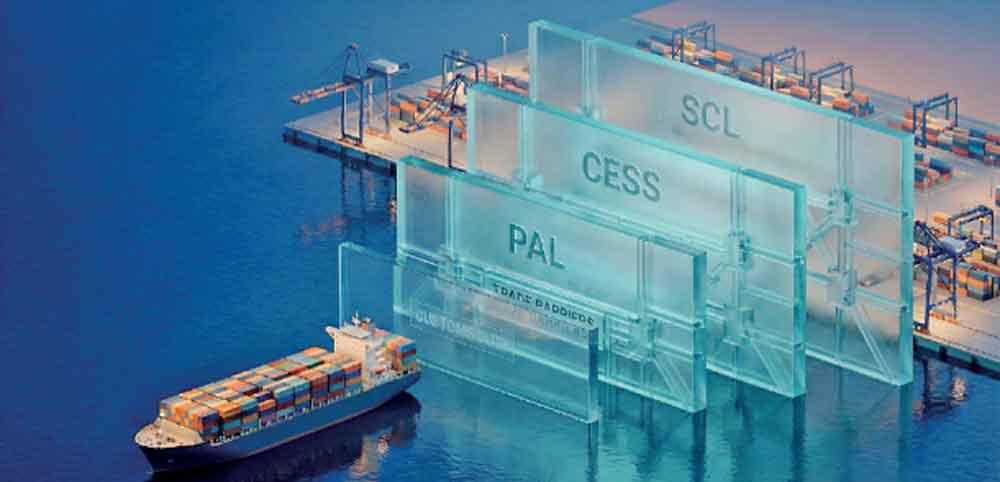
 Sri Lanka’s import tariff regime is dysfunctional by design. Tariffs are among the highest in the region and highly complex, with importers required to pay multiple para-tariffs in addition to Customs Duty, such as CESS and the Ports and Airports Levy (PAL). The result is higher prices and reduced consumer choice, inflated and unpredictable input costs for domestic firms, and investment diverted into inefficient, protected sectors, entrenching an anti-export bias.
Higher import tariffs are typically seen as instruments of industrial policy, providing protection for nascent industries. In Sri Lanka, however, their role has shifted sharply over the past two decades. Tariffs have become a fiscal instrument to arrest the decline in government revenue. Because they are hard to evade, collected upfront, and easily adjusted through gazettes, they have served as a convenient tool to plug short-term fiscal gaps. Border taxes gained prominence amid rising debt burdens, repeated failures of tax reforms under IMF programmes to expand domestic tax collection, and a sharp fall in the overall tax-to-GDP ratio from 15% in 2000 to 8% in 2020.
With this shift, the share of taxes on international trade in total tax revenue increased from about 13% in 2000 to a peak of 30% by 2020. A system once centred on Customs Duty expanded to include para-tariffs such as CESS and PAL, which were then steadily increased. This expansion also created an internal contradiction.
Under the Export Development Board Act No. 40 of 1979, CESS, for instance, was intended to be channelled into an Export Development Fund, yet revenues collected from CESS have continued to be transferred to the Treasury’s Consolidated Fund as general revenue. PAL alone increased from 1% in 2002 to 7.5% by 2015 and now stands at 10%, applying to more than 60% of imports. Taken together, PAL and CESS account for half of the taxes on international trade.
Although successive governments attempted to reduce and simplify import tariffs, these efforts were not reinforced by stronger reforms to domestic taxes. Reforms focused mainly on cutting Customs Duty, while para-tariffs were subsequently raised to claw back lost revenue, leaving overall import tariff levels largely unchanged. In some cases, para-tariffs have been imposed on products where Customs Duty was eliminated under Free Trade Agreements, hollowing out the spirit of those agreements and eroding business confidence in the concessions secured through them.
The 2026 Budget and the Illusion of Liberalisation
The 2026 Budget is the latest attempt to “liberalise” the tariff regime. This time, the government has at least publicly acknowledged the importance of para-tariffs as a revenue source. The proposal is therefore not to cut overall tariffs, but to phase out PAL and CESS while keeping the reform revenue neutral. This exposes the core contradiction: para-tariffs account for most import tax revenue, so removing them without incurring fiscal loss is inherently difficult.
In theory, there are several ways to reduce para-tariffs without creating a fiscal hole. The first approach is the one proposed in the 2026 Budget itself: absorb para-tariffs into the headline Customs Duty by replacing the 0-15-20% tariff bands with 0-10-20-30%, essentially increasing the middle band from 15% to 20% and the top band from 20% to 30% from April 2026. While this simplifies the tariff structure and improves administration, it does not amount to genuine liberalisation. The overall tax burden on imports is reshuffled rather than reduced, and it remains unclear whether a 30% top band can replace current revenue from PAL and CESS. More tellingly, Budget Estimates released alongside the 2026 speech still project that 41% to 44% of import tax revenue between 2026 and 2028 will come from PAL and CESS, raising doubts about the seriousness of the proposed phase-out.
Other theoretical routes offer little relief. A second option is to rely on a revenue boost from higher imports after tariff cuts. In principle, reducing very high tariffs on price-sensitive goods can raise revenue if import volumes rise sharply. Sri Lanka tried this in 2015 by cutting vehicle taxes on smaller cars.
The demand response was strong: vehicle imports rose from LKR 195 billion in 2014 to LKR 311 billion in 2015, and revenue from customs and excise duties on imported vehicles increased by over 170% between 2014 and 2015. The result, however, was a wider trade deficit due to the import surge, pressure on the rupee, and a policy reversal in 2016. Without strong export growth to finance higher imports, this approach is not sustainable.
A third option is to offset lower trade tax revenues by increasing domestic taxes, including excise duties, VAT, and income and corporate taxes. However, Sri Lanka’s narrow tax base, extensive exemptions, weak compliance, and administrative shortcomings have long been identified by subject-matter experts and the IMF as binding constraints that must be addressed before domestic taxation can generate reliable fiscal space.
No Fiscal Space, No Real Liberalisation
Identifying and being honest about these constraints is essential if Sri Lanka is to chart a credible path to meaningful tariff liberalisation. Without fiscal space created through stronger domestic tax mobilisation, tariff reform will remain largely cosmetic. Folding para-tariffs into the headline Customs Duty may simplify the tariff structure and make it easier for businesses to comply.
But unless the overall tax burden on imports actually falls, this will do little to reduce trading costs, lower input prices for firms, or deliver cheaper goods and greater choice for consumers. Worse still, reforms undertaken without a durable domestic tax anchor are prone to rapid reversal. The policy uncertainty created by frequent tweaks to border taxes can be more damaging, particularly for investment and planning, than living with a high, yet simple and predictable, tariff regime.
Mathisha Arangala is a Lead Economist at Verité Research’s International Economics Research Programme.