Reply To:
Name - Reply Comment
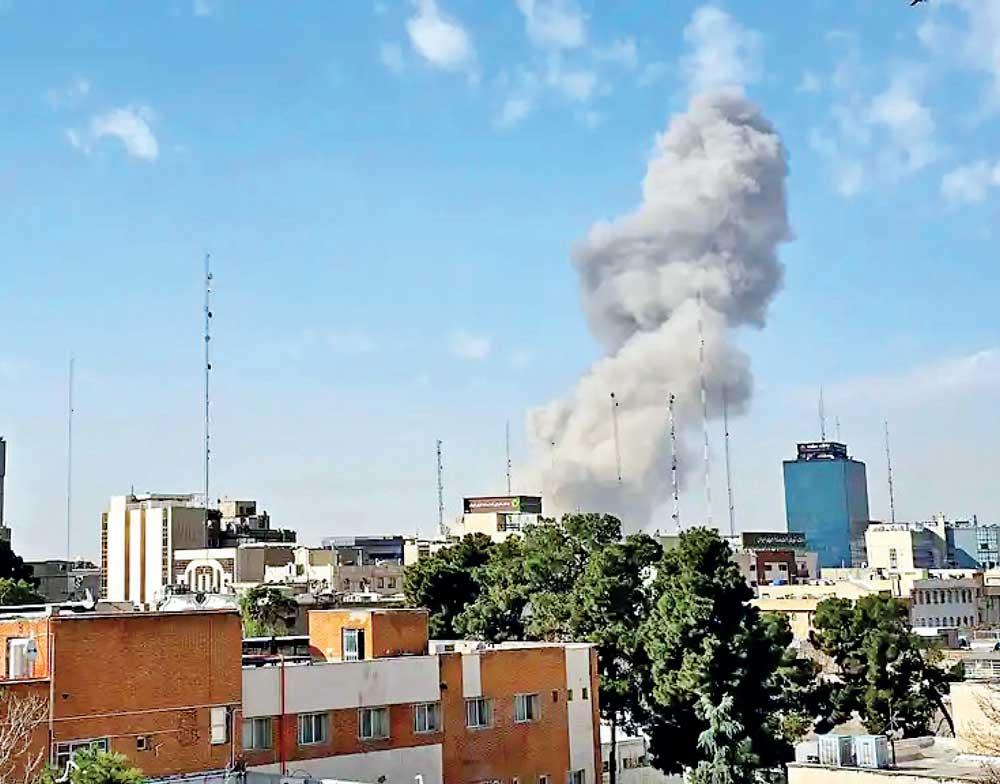
Smoke rises after a drone attack in Iran
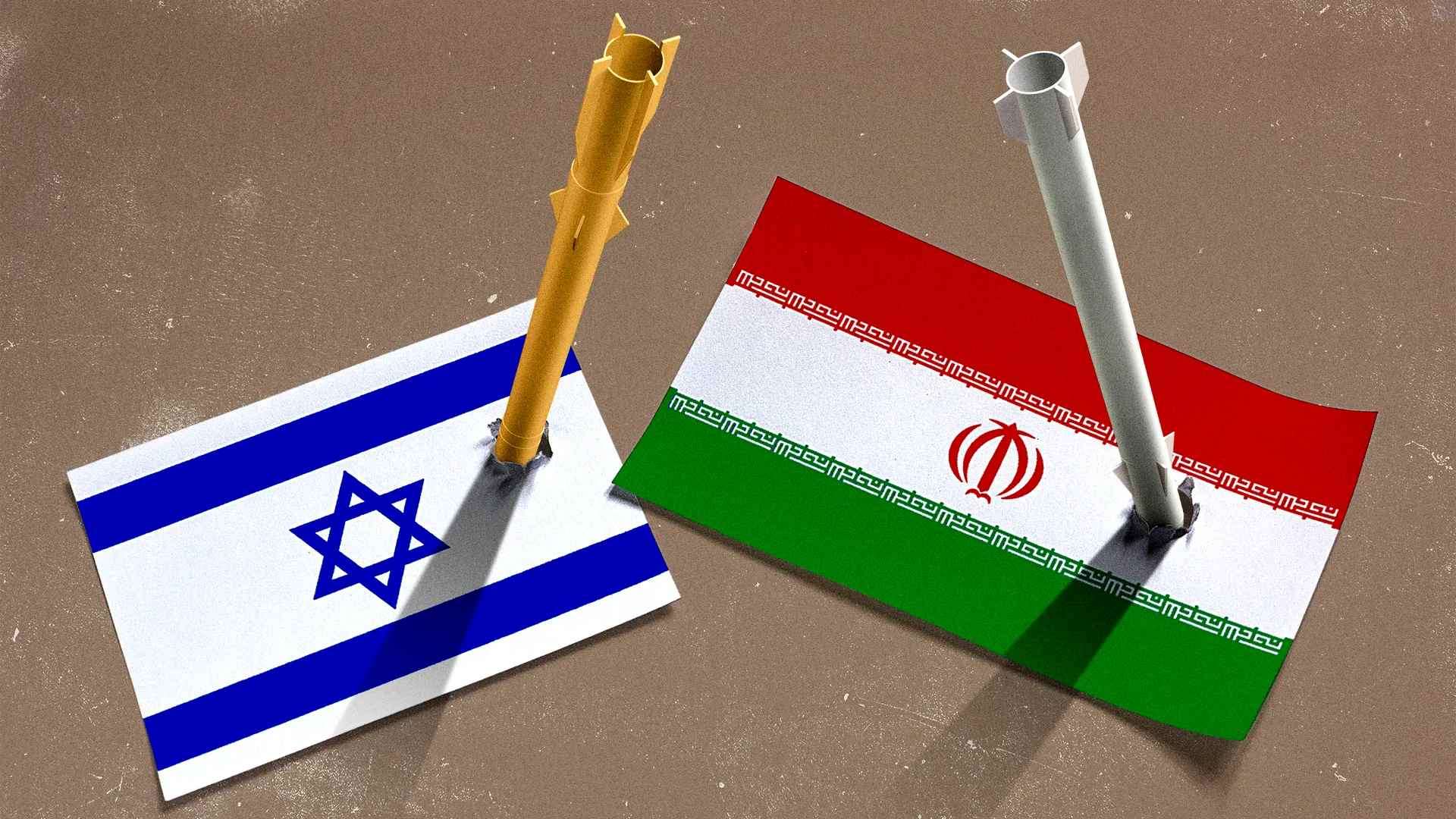
 The American-Israeli onslaught against Iran is now more than two weeks old. US President Donald Trump and Israeli Prime Minister Benjamin Netanyahu expected Iran to give in quickly under the sheer weight of bombs.
Instead, Iran has counter-attacked effectively, and has re-written the rules of modern warfare within the past fortnight. With no effective air force or navy, it has been able to damage 27 American bases in the Gulf, and attack Israel’s capital Tel Aviv and the port of Haifa effectively purely with their locally-made missiles and drones, and to put any plans for a ground invasion of Iran on hold. It’s unprecedented in the history of modern warfare.
The economic fallout on the Gulf region is devastating. The Gulf Cooperation Council (GCC) consists of six countries – Bahrain, Kuwait, Oman, Qatar, Saudi Arabia and the United Arab Emirates – and at least three (Qatar, Kuwait and Bahrain) have declared Force Majeure after the Iranian attacks (Force Majeure, from the French meaning ‘superior force’, is a clause in contracts that allows a party to be excused from its obligations when an event beyond its control prevents performance).
These countries have a combined GDP of US Dollar (US$) 2.37 trillion, ranking them 10th globally, and hold one third of the world’s oil reserves and about 20% of its natural gas reserves. The total population of the six GCC states is only 61.5 million; but they hold nearly US$5 trillion in sovereign wealth funds, making them major global investors.
It isn’t just the oil and gas. Dubai became a haven for tourists and rich expatriates over the past two decades. Since the first Iranian missile struck the tiny state (4,114 sq km), many have left, leaving behind empty multi-million dollar apartments. Dubai was the model for the other GCC countries to follow once their oil revenues diminish. Dubai’s critical banking sector too, has been crippled, with international banks closing offices and asking staff to work from home.
Oil rich Abu Dhabi was on track to rival Dubai’s busy banking sector while positioning itself as a safe, low-tax haven for the ultra wealthy. Now, all this in jeopardy. GCC countries allowed American bases as a guarantee of safety against external aggression. But all these bases have been proven to be highly vulnerable to attacks by a country 1,400 km away lacking a capable, modern air force.
Missile and drone warfare
What Iran does have is a potent and very large arsenal of short to medium-range missiles (said to number 250,000) and tens of thousands of drones. Iran can make hundreds of drones per day. The accuracy of Iranian missiles and drones came as a shock to both the US and Israel. The Americans underestimated Japanese air and naval power before WWII. The same fatal mistake vis-à-vis Iran’s offensive capability has been done in this case, too. Israel, which suffered Iranian missile attacks earlier, failed to anticipate the clout Iran’s missile-drone forces packed.
It isn’t just the numbers, it’s their accuracy that is astonishing. That a country with relatively less resources (compared to the US) is able to gain the upper hand and sustain a possible long drawn out war is a sobering lesson to the West that is smug about the superiority of their military forces and high-tech weaponry.
But how can the Iranians pull this off? Iran’s GDP is US$385 billion, just over a third of the US defence budget. Iran’s defence budget is only US$23 billion while the US spends a trillion dollars annually on defence. Israel’s defence budget is US$46.5 billion. It’s a David against Goliath war, Iran being David in this case. Iran has adapted a low cost approach. Its missiles and drones are cheaper to make than American ones. Despite this, Iran’s hypersonic missiles can now reach between Mach 3 and 5. Neither the US nor Israel has the technology to counter these. Iran’s principal one-way attack drone, the Shahed-136, costs between US$20,000-50,000. A cheap Iranian drone flew 1,100 miles to Cyprus and damaged a British air base.
By comparison, American military drones cost much more – from US$70,000 for small ‘loitering munitions’ to over $30 million for advanced drones such as the MQ-9 Reaper.
Why are Iranian drones so accurate?
Despite massive air attacks, neither the Americans nor the Israelis have been able to destroy the Iranian launching sites. There are 31 identified command control nodes spread out in Iran’s extensive deserts. Iranian drones have attacked targets in Israel and the Gulf region with a precision of ten metres. They have destroyed key radar bases. How do they manage that?
Iridium bubble system
China and Russia are giving real time satellite data of the Persian Gulf to Iran. But the Iranians have their own information system.
Iridium is a communications network system similar to Starlink, but placed higher up. Starlink satellites operate at altitudes between 480km and 550km, while Iridium operates from 780km above. These satellites function as phone modems. The Iridium bubble system communications device is lightweight and can be fixed on drones. They transmit data at 350kb per second (ps).
Three hundred kb/ps is capable of providing up to 20 to 30 frames per second video at a resolution of 240p. This is more than enough to tell drone operators in Iran all they need to learn about their targets. Iran uses Iridium communications devices carrying infra-red cameras. High end mobile phones come equipped with these. Anyone can buy a high end smart phone with a built-in infrared (IR) thermal imaging camera. The Russians used drones equipped with such smart phones to destroy Ukraine’s air defences.
This is precisely the low-budget technology the Iranians are using. Iridium is designed to serve aircraft. The phones are attached to drones which can be updated ten minutes from their targets, such as Bahrain’s radar sites.
Neither the Americans nor the Israelis have yet found a way to stop them. It’s hard to see how they can do that, either.