 MOHAMED AYUB
 Reply To:
Name - Reply Comment
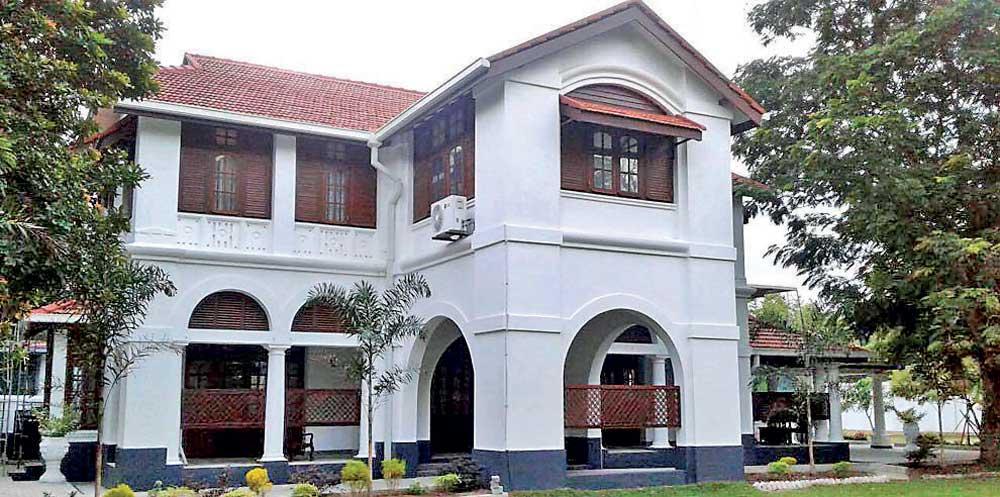
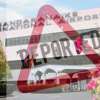
Pictured here is former President Mahinda Rajapaksa's official residence in Wijerama Mawatha.
According to the Presidents Entitlements Act, every former president or president’s spouse should be provided with an “appropriate” house, free of rent or a rent allowance equal to one-third of the pension of the relevant president
President Anura Kumara Dissanayake’s warning last Sunday that the security provided for former President Mahinda Rajapaksa would be removed if the latter grumbled further about his security was unbecoming to his stature and his professed promise to bring in a new political culture.
The President while addressing a public meeting in Kalutara stated that sufficient security has been provided for former Presidents and their widows, according to the threat assessments, but if former President Mahinda Rajapaksa grumbles further over his security, the sixty security personnel assigned to him would be removed.
Also, he said that he had obtained valuation reports from the Government Valuation Department on the value of the official residences provided to former Presidents and if they are willing to remain in those residences, they would have to pay the rent calculated by the Valuation Department. Accordingly, Mahinda Rajapaksa has to pay a monthly rent of Rs. 4.6 million for his official residence which has an area of 30,000 square feet, he said.
According to the Presidents Entitlements Act, every former president or president’s spouse should be provided with an “appropriate” house, free of rent or a rent allowance equal to one-third of the pension of the relevant president. One third of former President Rajapaksa’s pension is about 30,000 since he draws a pension of Rs. 97,500, according to President Dissanayake.
President Dissanayake’s argument is that since Rajapaksa is entitled to a monthly rent of about Rs. 30,000, a government bungalow which can earn a monthly rent of Rs. 4.6 million cannot be an “appropriate” official residence for him. During an interview with a private television channel President thanked former President Ranil Wickremesinghe for not taking any government residence after he was defeated at the recent Presidential election. Also, he stated that former President Gotabaya Rajapaksa and Hema Premadasa, the widow of former President Ranasinghe Premadasa have vacated their official residences after they learnt about the government’s new decision on the matter.
Currently only three former Presidents, Chandrika Kumaratunga, Mahinda Rajapaksa and Maithripala Sirisena are staying in their official residences. However, only Mahinda Rajapaksa’s residence has become a bone of contention. Other two have neither hinted about their possible vacation of the official residences nor have they protested against the decision.
The decision is valid only to the retired politicians and not to the serving politicians or judges or officials. It stems from an argument put forward by the National People’s Power (NPP) some years ago that a political culture should be created where politics should be an honourary service where undue privileges should not be attached to. And the NPP promised during the recent Presidential and Parliamentary elections to abolish provision of pension and state-owned residences to the politicians after they leave the relevant office. Interestingly, not a single political party opposed it then, although they did not subscribe to the idea. Hence this cannot be described as a political vengeance.
Parliamentarian Namal Rajapaksa, the son of Mahinda Rajapaksa told media that his father would vacate the official residence, if the government notifies it in writing, whereas Health and Media Minister Dr. Nalinda Jayatissa stated that there is nothing to notify and the former President has to take a decision as per the law. Jayatissa seems to expect the former President to act based on media reports. However, the question remains on what grounds the Opposition political parties, especially the Sri Lanka Podujana Peramuna (SLPP) led by Mahinda Rajapaksa for that matter opposes the political culture that the NPP has promoted, if they do so.
Responding to President Disanayake’s statement made on Sunday on Rajapaksa’s residence and security detail, the latter had told the Daily Mirror that “Anura has forgotten that I am Mahinda Rajapaksa.” This is an undue threat or a warning directed at Dissanayake which is not a far cry from Dissanayake’s threat to remove Rajapaksa’s security detail.
Dissanayake’s threat is inappropriate not only because it might prolong the debate, but also it runs counter to the political culture that the NPP promotes. Technically, on what grounds is the President going to remove Rajapaksa’s security detail, if the strength of it is decided based on a scientific threat assessment?
In spite of Dissanayake seeming to have not really meant it, his threat was a blow on his own image which he has painstakingly built locally and internationally for years, in a manner that no one can equal him, after decisively breaking from the past and creatively as well as logically being flexible.
The fact that Mahinda Rajapaksa’s security should not be compromised is irrefutable. Despite the role he played in winning the war has several times been challenged by the war winning Army Commander Sarath Fonseka, the general perception is that he won the war. Hence, one should not deny that his life is threatened, despite LTTE is no longer a force to be reckoned with.
A few weeks after the Easter Sunday attacks, the then Army Commander Lieutenant General Mahesh Senanayake was asked if he can give an assurance on the security situation. He told something that suggested “not hundred percent, ‘lone wolf attacks’ might happen any time in anywhere in the world.”
Sergeant Amaradasa Ratnayake, one of the two army officers jailed for 16 years for the brutal murder of Premawathie Manamperi during the JVP’s first insurrection in 1971 was stabbed to death by a suspected JVP supporter at Devinuwara, following his release after serving a jail term.
Similarly, retired Major Generals Lucky Algama and Janaka Perera, two war veterans bitterly hated both by the Southern and Northern rebels were killed in bomb attacks after their security was removed when they joined the UNP by the then governments; in one Mahinda Rajapaksa was a powerful minister and in the other he was the President.
In an interview with the state-run ITN, soon after the end of the war Gotabhaya Rajapaksa, stated “these achievements would never have been won without the experience, knowledge, bravery and heroism of Lieutenant General Sarath Fonseka.” The life threats the then Army Commander Fonseka had faced then has to be inferred accordingly. However, Fonseka’s security was drastically reduced subsequent to him challenging Mahinda Rajapaksa at the 2010 Presidential election and he was imprisoned after depriving him of his pension and medals he earned. These incidents point to the possible repercussions of viewing security matter through political prism.