Reply To:
Name - Reply Comment
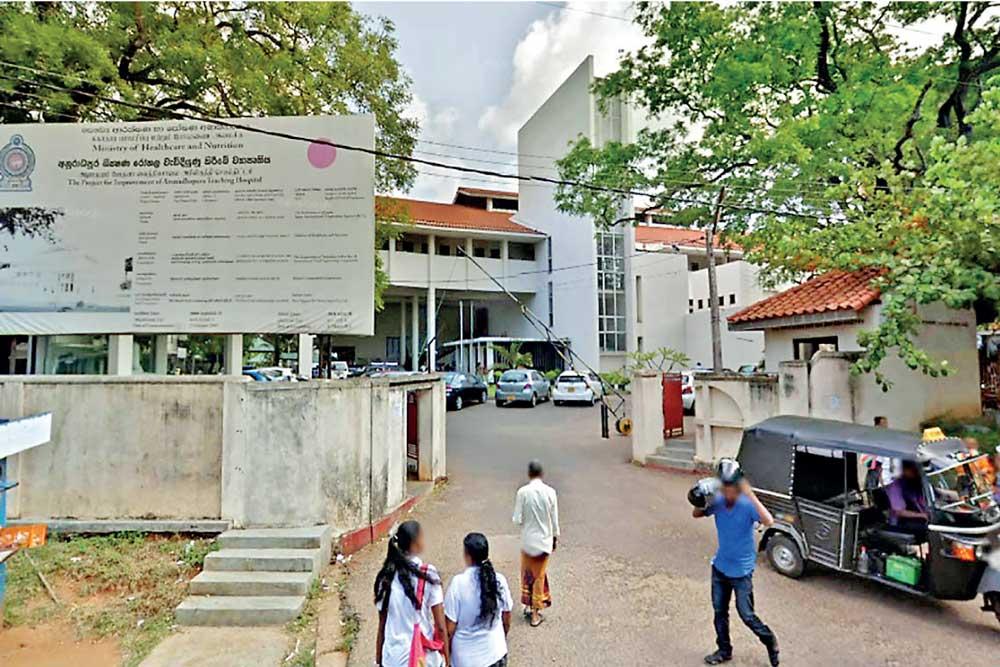
There are 555 Government hospitals in Sri Lanka, categorized as teaching hospitals, provincial general hospitals, district general hospitals, base hospitals A & B, divisional hospitals, and primary medical care Units. Dangers can lurk even in the smaller institutions
 As news of the shocking rape of a young doctor at the Anuradhapura hospital broke out, the General Medical Officers’ Union (GMOA) threatened a strike action if those responsible weren’t arrested immediately.
Strike action is the GMOA’s answer to every problem affecting the medical sector. Its massive power means that such actions generally produce positive results. But the GMOA has never worried about the terrible plight of patients when such strike actions occur.
Luckily, the alleged rapist was arrested quickly, and the GMOA didn’t have to go on strike. But I’m shocked that it hasn’t voiced any concern about lax security at this hospital which made it incredibly easy for the accused to assault the doctor. It should give priority to this security issue in its agenda to make sure a repeat of this tragedy won’t happen in those hospitals where security measures are clearly inadequate.
Colombo hospitals seem to be more secure, though I have seen only those within the central areas of Colombo 7 and 8. But, before we go into that, let’s try and form a clear picture of what happened on the tenth of this month.
There are two versions. According to one, the doctor went to her hostel which is across the road after finishing her duties. The other says she was within the hospital. The time is given as between 6.30 to 7.00 p.m.
If that was the case, the implications are even more serious – how did an intruder get into the hospital at this time? But most news report support the first version, that she was sexually assaulted in her own room within the hostel.
This is the shocking part -- the assailant was lurking outside the entrance, threatened her with a knife, forced her into her room and gagged and bound her before allegedly raping her.
One can conclude only one thing from this fact – if there was a security guard at the hostel entrance, he or she must have been deaf and blind.
There was no surveillance camera evidence, either. The police got lucky only because the assailant stole the victim’s mobile phone. They were able to trace it up to the Aukana railway station, and track him down from there.
If there had been a security guard and/or a surveillance camera with constant monitoring of all hospital entrances and risky interior spaces, this doctor would have been spared the trauma. Now, she will carry the emotional scars for the rest of her life.
I said Colombo hospitals seem to be more secure (talking of the National Hospital, Eye Hospital, Dental Institute, Lady Ridgeway and Castle) but we are talking about entrances. As crowded as these hospitals are, interiors can be gloomy and risky even during the day.
During a visit to the new Out Patients’ Department (OPD) of the Colombo National Hospital, one can see visitors looking for the staircase because the lifts take so long to arrive. But it is located far from the crowded areas. One must pass empty corridors to access it. After looking at the gloomy staircase, I saw one woman turning back in fear.
The new medical students’ hostel and the Lady Ridgeway nurses’ quarters have guarded entrances. Outsiders may not be able to get inside at odd hours, but security inside is another question.
The assailant could be a hospital employee, or someone with easy access to the hospital, as it was the case in Kolkata, where a doctor was brutally assaulted, raped and murdered in August 2024.
Opposition leader Sajith Premadasa, expressing his outrage in parliament about the Anuradhapura case, said such a shocking event has not happened in living memory. This shows what short memories politicians have. In 2007, a young garment factory worker was raped and thrown out of an upper floor window (to make it look like a suicide). The assailant turned out to be an in-house surgeon.
It was evidence given by a female attendant who saw the doctor dragging the body along a corridor which brought him to justice. There were no surveillance cameras. The female attendant who courageously gave evidence was reportedly harassed by other staff and superiors as the trial progressed.
Both these cases show the magnitude of the danger. In Negombo, the accused was able to render his victim unconscious, rape her and then drag her body along a corridor and throw it out of a window without anyone except this attendant seeing him (if anyone else saw him, they preferred to remain silent).
In the Anuradhapura case, a stranger lurking outside the building was able to terrorise and force his victim inside. The implications in both cases are frightening. While it’s not practical to post guards along empty corridors and inner recesses of all hospitals, surveillance cameras are an absolute necessity.
They can be monitored from a security room, just like in the supermarket chains, which spend a lot of money to check if someone is stealing a chocolate or a packet of biscuits. But nothing of the sort is being done to prevent murder, assault and rape that is happening in our hospitals, and to provide valuable evidence of crimes. The breakthrough in the Kolkata case was provided by surveillance cameras.
Why didn’t hospital directors, the GMOA and ministers of health see this security void and attend to it at least since 2007? The war ended in 2009, checking the need for a very large military budget at the expense of health, education, and other key areas.
But succeeding governments maintained bloated military/security budgets for two decades after the war ended. This is criminal and unpardonable. The GMOA, which supported the war effort wholeheartedly, changed its tune after the 2023 economic crash and turned apologist to Gotabhaya Rajapakse with the slogan ‘crash due to 75 years of mismanagement.’
There are 555 Government hospitals in Sri Lanka, categorized as teaching hospitals, provincial general hospitals, district general hospitals, base hospitals A & B, divisional hospitals, and primary medical care Units. Dangers can lurk even in the smaller institutions. The assailant may be in house. Big or small, they should be provided with security, both human and technological, after identifying weak and vulnerable areas.
Or it’s a matter of time before another outage happens in a hospital premise.