Reply To:
Name - Reply Comment
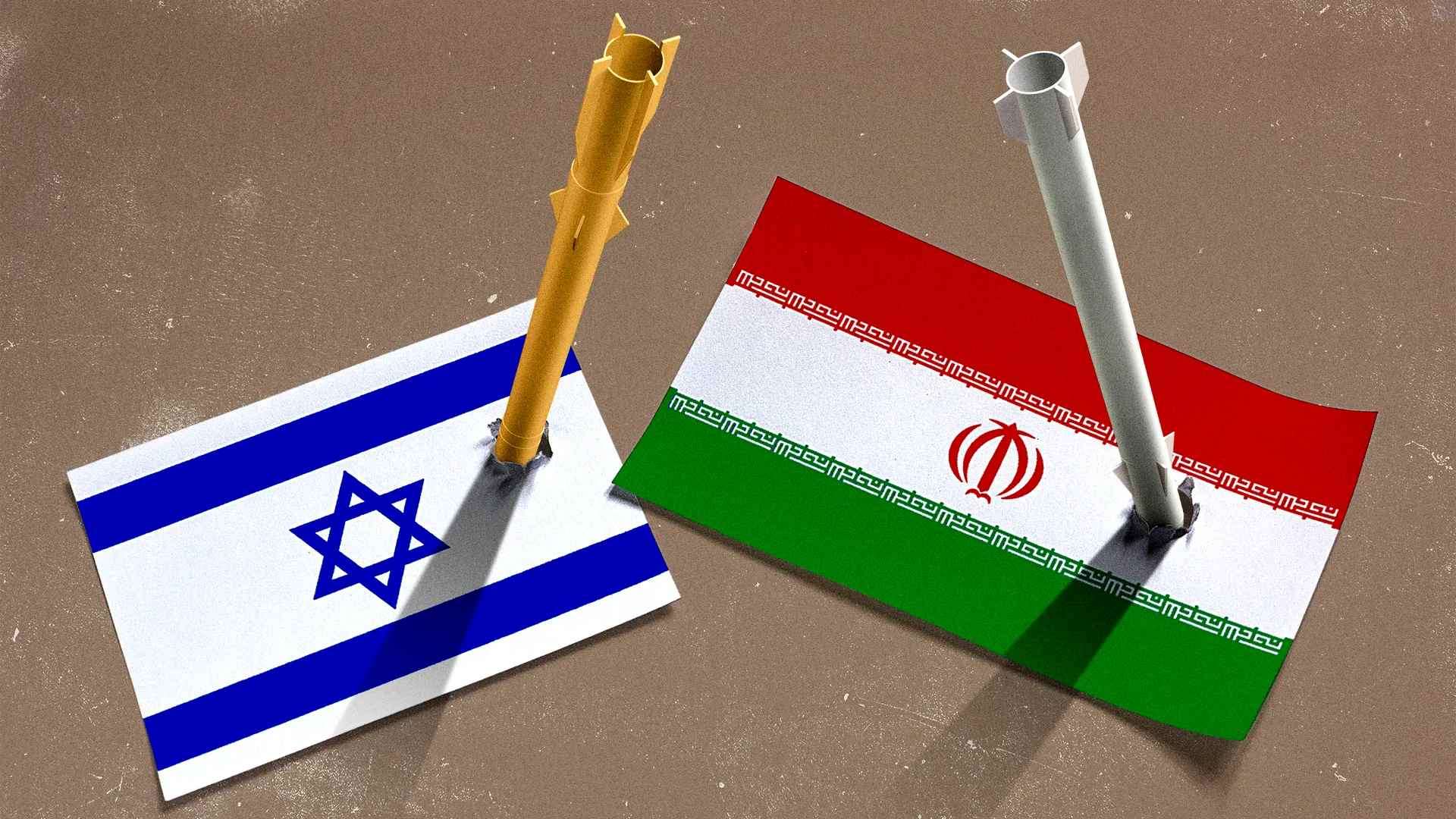
 In international geopolitical discourse, the ongoing war in West Asia is often framed as a direct confrontation between Iran and the US-Israel alliance. Yet two key Iranian allies - the Houthis in Yemen and Hezbollah in Lebanon - play significant supporting roles, functioning as partners or proxies in the broader conflict.
Like their Iranian backers, both groups are Shia Muslim and share a vehement anti-Israel and anti-US stance.
Although they receive armaments from Iran and participate in the current war, they operate in distinct theatres, and often respond independently to local dynamics and needs.
The Houthis
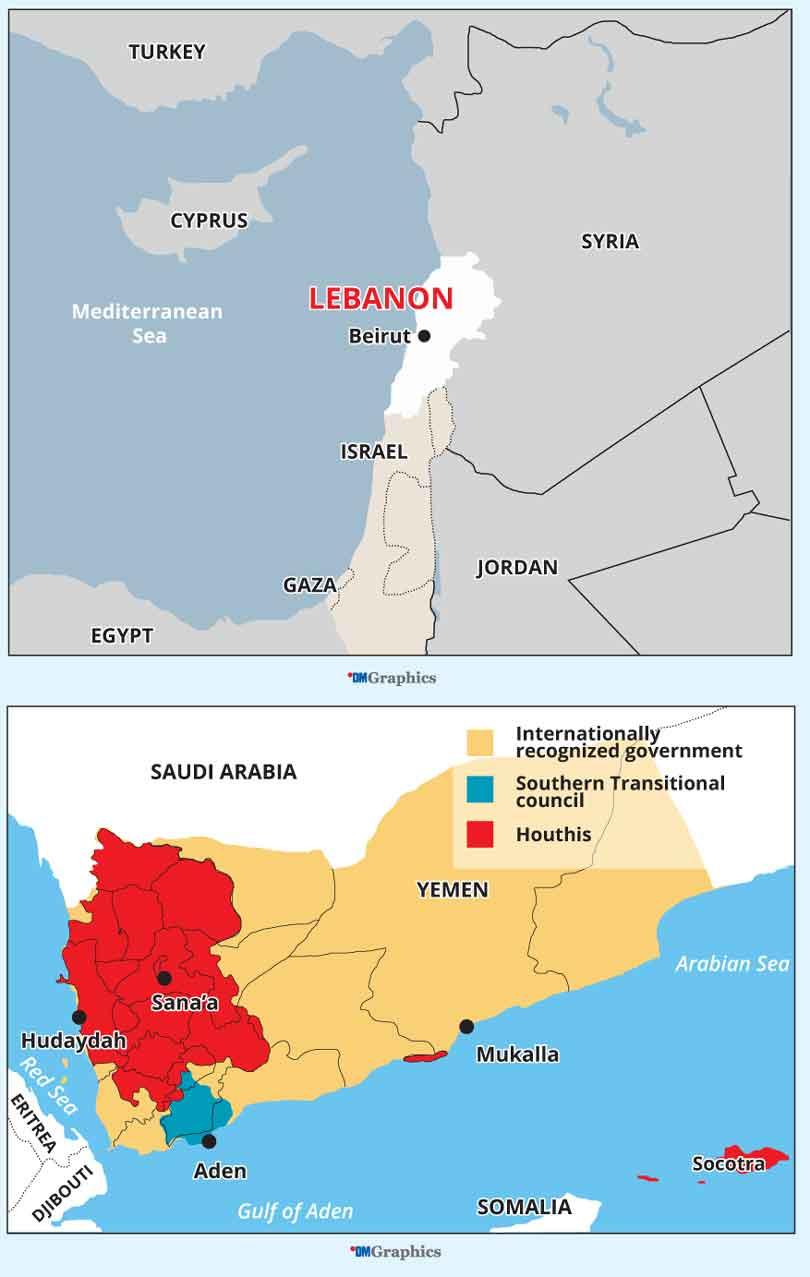
Officially known as Ansar Allah (Helpers of God), the Houthis originated from a Zaydi Shia Islamic revivalist movement in Northern Yemen in the mid-1990s. The movement arose midst longstanding tensions between the Zaydi-dominated north and the Sunni-dominated south.
It received support from Shia Iran and was founded by Yemeni politician and Zaydi Shia religious leader Hussein al-Houthi. The group has long echoed Iranian rhetoric, adopting the slogan: “God is great, Death to America, Death to Israel, Curse on the Jews, Victory to Islam.”
The Houthis soon clashed with Yemen’s longtime President, Ali Abdullah Saleh - a fellow Zaydi Shia - who had reunified north and south Yemen in the early 1990s. Suspicions grew over Saleh’s ties to Saudi-backed Sunni Islamists, whom the Houthis viewed as a threat.
Open conflict erupted in 2004, escalating into a full-blown civil war that has plagued Yemen ever since. Despite Saleh’s numerical and technological advantages, the Houthis proved more effective fighters. However, Hussein al-Houthi was killed early in the fighting and was succeeded by his brother, Abdul-Malik al-Houthi. However, successive Yemeni governments failed to crush the Houthis.
Ali Abdullah Saleh was ousted in 2012 and was replaced by Abdrabbuh Mansour Hadi. Under Mansour Hadi, the Houthis captured the capital Sanaa in 2014. But victory brought no peace. The Houthis faced a Saudi-led coalition aiming to restore Hadi’s internationally-recognised government. The UAE was backing the southern Sunni secessionists and Sunni Jihadist groups linked to Al-Qaeda and Islamic State.
The US and allied airstrikes, justified as counter-jihadist operations or responses to Houthi attacks on Israel during the Gaza war, compounded the chaos in the country.
To add to the Houthis’ woes and the woes of the North Yemenis, the American naval blockade triggered a famine in Houthi-controlled northern regions.
A tactical alliance with former rival Ali Abdullah Saleh was briefly formed by the Houthis, but it collapsed in late 2017 when Saleh signalled willingness to cooperate with Saudi Arabia and the UAE. Saleh was subsequently killed.
In September 2019, the Houthis demonstrated their reach by striking Saudi oil facilities, heavily damaging the Aramco processing plant at Abqaiq. This prompted an UN-brokered truce with Saudi Arabia in early 2022.
Houthi military hardware
The Houthis possess a formidable arsenal of long-range ballistic and cruise missiles, along with diverse kamikaze drones. They have employed anti-ship missiles, aerial and naval drones, and even close-range speedboat assaults. Their naval interdiction capabilities are particularly potent.
Since November 2023, amid the Gaza war, the Houthis had targeted over a hundred cargo ships linked to Israel and its allies in the Red Sea, especially around the Bab el-Mandeb Strait and Gulf of Aden - the southern gateway to the Suez Canal. At least 40 vessels were damaged and four sunk, forcing many ships to reroute around Africa and disrupting global trade.
Missile strength
The Houthis have the ‘Toufan’ long-range surface-to-surface ballistic missile (range 2,000 km); the ‘Tankeel’ medium-range ballistic missile (available in surface-to-surface and anti-ship variants); The ‘Aqeel’ long-range surface-to-surface missile (up to 800 km, with precision upgrades); The ‘Quds-4’, a precision-guided surface-to-surface missile with a reported range of up to 2,000 km and stealth features.
While most munitions are believed to originate from Iran, the Houthis claim that many are domestically designed and produced. They sustain covert procurement networks funded largely through extortion.
A 2021 US Treasury announcement estimated that Houthi asset seizures exceeded US$ 100 million, targeting political opponents, banks, corporations, and even hospitals.
As long as Iran withstands US-Israeli pressure, the Houthis are likely to continue receiving weapons and sustaining their campaign. Control over Red Sea routes would enable lucrative extortion and maritime leverage.
The Hezbollah
The Hezbollah are engaged in its own intense conflict with Israel in Lebanon. Deeply rooted among Lebanon’s Shia population through shared sectarian identity and widespread anti-Israel and anti-US sentiment, the group maintains significant influence despite opposition from the Lebanese Government. Through sustained missile and drone attacks, Hezbollah keeps Israel’s northern front under pressure, straining air defences and, in coordination with Iran, inflicting damage on Israeli infrastructure.
Its involvement forms part of a wider regional ‘Axis of Resistance’ strategy. The resistance is against Israel and the US.
Hezbollah’s renewed operations followed the killing of Iran’s late Supreme Leader Ayatollah Ali Khamenei. Israeli sources alleged that close operational ties existed between Iran’s Islamic Revolutionary Guard Corps and Hezbollah in Lebanon.
The coordinated attacks aim to exhaust and disperse Israeli air defences, creating openings for Iranian ballistic missiles to penetrate deeper.
Ground offensive in Lebanon
Israel has launched a ground offensive in southern Lebanon, though its precise objectives remain ambiguous - whether to seize territory, degrade leadership, or destroy military capabilities.
The Israelis carried out a wave of air attacks on Lebanon, killing more than 250 people, on Wednesday, the bloodiest day since the US-Israel war on Iran began nearly six weeks ago. On Thursday, Israel said it had also killed an aide to Hezbollah’s chief, Naim Qassem, in the attacks.
The attacks came just hours after the announcement of a two-week United States-Iran ceasefire raised hopes of a de-escalation on all fronts in the war on Iran, which has spread across the region.
On March 31, Israeli Defence Minister Israel Katz stated that Israeli forces would maintain a ‘security zone’ south of the Litani River. The military later clarified the mission focused on eliminating Hezbollah’s ‘terror infrastructure.’
Hezbollah acknowledges it cannot halt Israeli advances outright. Instead, it relies on small, mobile units equipped with anti-tank guided missiles and drones to raise the human and material cost of any incursion, slowing progress and inflicting casualties.
Political challenge in Lebanon
Beyond the battlefield, Hezbollah is fighting for its political survival in Lebanon. On March 2, the Lebanese Government banned Hezbollah’s military activities, asserting that decisions on war and peace belong solely to the State - a notable shift.
Beirut has also explored direct talks with Israel and ordered the expulsion of Iran’s ambassador
(who refused to leave).
Over decades, Hezbollah has embedded itself deeply into Lebanese society. Leveraging military strength, political power, and grassroots support, it has built parallel educational, social, and welfare institutions. This has granted it enduring influence across multiple sectors, even as the State seeks greater sovereignty.
Shared dependence and uncertain futures
Like the Houthis, Hezbollah relies heavily on Iran for advanced armaments and strategic guidance. Should Iran collapse under US-Israeli pressure, both groups would face severe setbacks - potentially existential ones.
Conversely, if Iran endures, the Houthis and Hezbollah will survive. They will also frame it as their strategic victory. They could then convert that staying power into greater political leverage within their respective countries and across West Asia.
However, the incontrovertible truth is that in this interconnected conflict, the prospects of Iran’s two most active allies remain inextricably linked to Tehran’s ability to weather the storm.