Reply To:
Name - Reply Comment
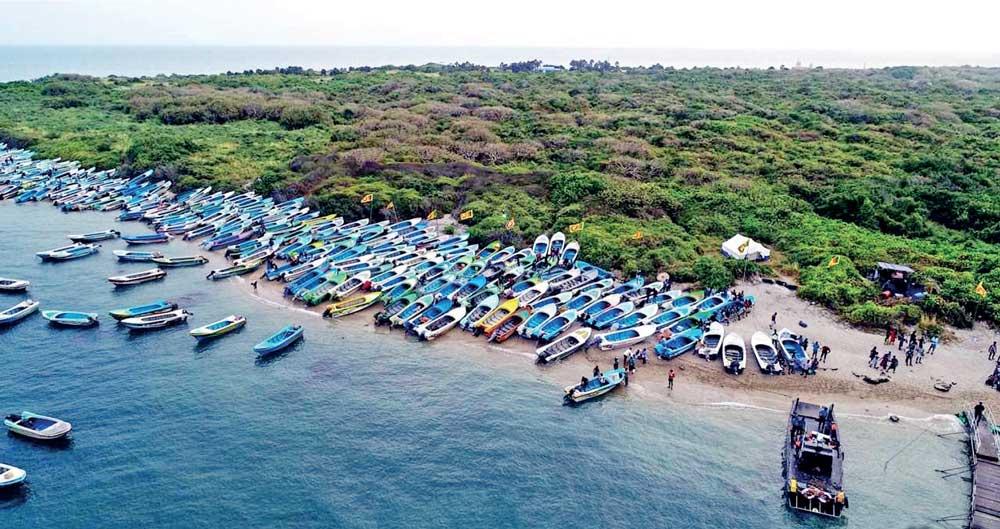
Katchatheevu Island in the Palk Strait: Under the 1974 agreement, Indian fishermen can only dry nets here and attend St. Anthony’s Temple festival. FILE PHOTO
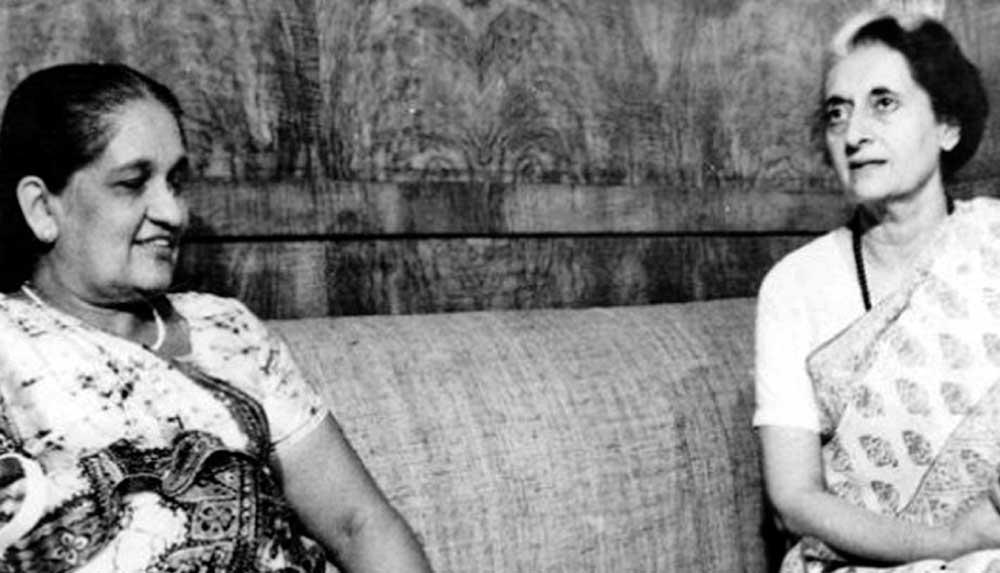
Sirimavo Bandaranaike and Indira Gandhi
 Unwanted strife over Katchatheevu has come back to the forefront after many years. I will begin my brief outline of the history of Katchatheevu in the Palk Strait and the present-day situation.
The Palk Strait
This strait connects the Bay of Bengal between the northern coast of Sri Lanka and the southeastern coast of India. The Palk Strait was referred to by the Tamils as the “Pakku Neeranai”.
The Palk Strait is named after Robert Palk, the Governor of the Madras Presidency (1755–1763) during the British colonial period. It is located between the Indian state of Tamil Nadu and the neighbouring island of Sri Lanka, according to European cartographers.
Adam’s Bridge is a chain of islands and rocks. This strait is a major route for small ships and fishing boats, and serves as a significant border and connection point between the two countries.
Katchatheevu
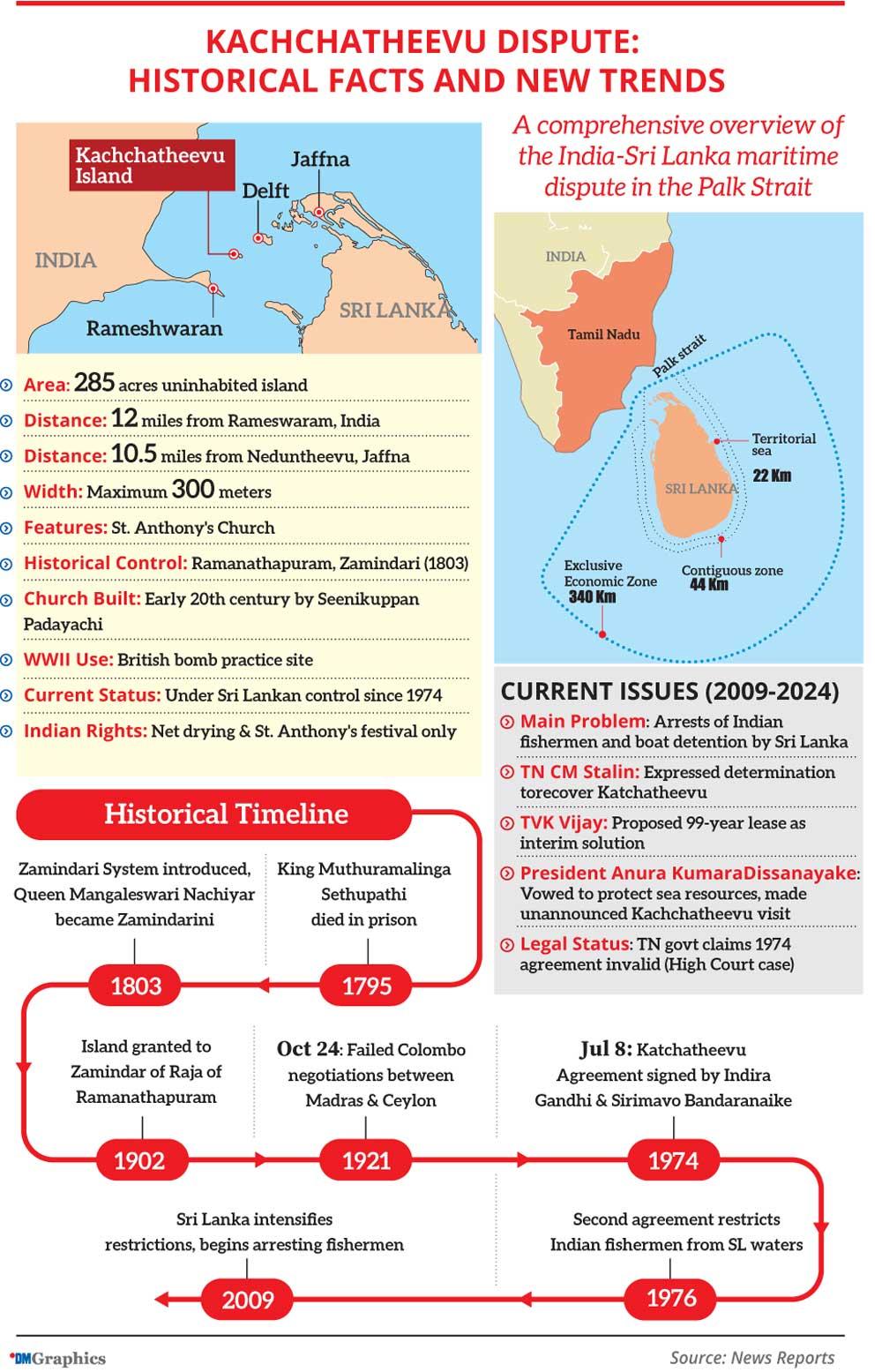
Katchatheevu is a tiny island located in the Palk Strait, 12 miles from Rameswaram, India, and 10.5 miles from Neduntheevu, Jaffna. Its area is about 285 acres. Its maximum width is only 300 meters. This uninhabited island also has a St. Anthony’s Church. This is the importance of this island.
The Madras Presidency Gazetteer categorically states that this temple was built in the early 20th century by Seenikuppan Padayachi from Ramanathapuram, and that a priest from the Thangachi Mat (Thangachi Madam) used to offer prayers in this temple. During World War II, the British used this island for bomb-exploding practice. The issue is complex, which continues to challenge the geopolitical relations between India and Sri Lanka, particularly the livelihoods and political positions of the coastal communities of Tamil Nadu and northern Sri Lankans.
The Katchatheevu Agreement
The Katchatheevu Agreement is an agreement that ceded to Sri Lanka the island of Katchatheevu, located in the Palk Strait, which was owned by India. The Katchatheevu Agreement was signed by Indian Prime Minister Indira Gandhi and Sri Lankan Prime Minister Sirimavo Bandaranaike and came into effect on July 8, 1974. The Katchatheevu Agreement is an agreement that delimits the maritime rights and maritime boundaries between India and Sri Lanka in the Gulf of Mannar and the Bay of Bengal south of Adam’s Bridge. According to the 1976 Katchatheevu Agreement, Indian fishermen are not allowed to fish in the Gulf of Mannar.
Indian rights in Katchatheevu
According to the agreement, Indian fishermen are given only two rights, namely to dry their fishing nets in Katchatheevu and to participate in the festival of St. Anthony’s Temple there. According to the 1976 Katchatheevu Agreement, Indian fishermen were deprived of the right to fish in the Gulf of Mannar area.
Court case
The Tamil Nadu government filed a case in the Madras High Court claiming that the Katchatheevu Agreement is invalid. In 2013, the Indian central government gave an affidavit in the Supreme Court that it did not cede Katchatheevu to Sri Lanka.
The Indian government filed an affidavit in the court stating that Indian fishermen do not have the right to fish in the Katchatheevu area as per the Katchatheevu Agreement. Regarding the actions of the central government that are detrimental to the welfare of Tamil Nadu, the Chief Minister of Tamil Nadu also sent a letter to Indian Prime Minister Narendra Modi and the people of Tamil Nadu, seeking justice.
History of Katchatheevu’s Rights
Tamil Nadu was under the colonial rule of the British. After the annexation, the Zamindari System was introduced in the Madras Presidency in 1803. At that time, in the absence of the Sethupathi royal heir, King Muthuramalinga Sethupathi, who died in prison in 1795, the East India Company made his sister-in-law, Queen (Rani) Mangaleswari Nachiyar, the Zamindarini. She administered it from 1803 to 1812. The fact that Queen Victoria had stated in her proclamation that Katchatheevu belonged to the Rule of Ramanathapuram Jamin was recorded by B.P. Pieris, the then Cabinet Secretary of Sri Lanka (who was in the Survey Department during 1936-40), who claimed that Katchatheevu was part of India until 1974, is being argued based on the Zamindar rights of the King Raja of Ramanathapuram.
However, all the documents related to this have been taken to New Delhi. They are now classified as secret documents. The island was granted to the Zamindar of the Raja of Ramanathapuram by the Government of India in 1902. The lease amount he had to pay for his land was calculated, including the Katchatheevu island. The Raja of Ramanathapuram had leased out the right to fish around this island, the right to pasture on the island, and the right to use it for other purposes.
The issue of who owned Katchatheevu had begun in the 1920s. On October 24, 1921, negotiations were held in Colombo between the Madras Provincial authorities and the Ceylon authorities to delimit the border in the Palk Strait-Gulf of Mannar area. The Principal Collector of Customs and Excise, Harsburg, who attended the meeting on behalf of Sri Lanka, said that the border should be drawn so that Katchatheevu came to Sri Lanka. Otherwise, the conference could be adjourned. He pointed to a correspondence with the Indian government as evidence that Katchatheevu belonged to Sri Lanka.
The Indian delegation, which did not accept this, said that it would only give the fishing rights of that area. Accordingly, an agreement was signed that Sri Lanka had the right to fish up to three miles west of Katchatheevu. The negotiating officials thought that since the area with the most conch shells fell under the Madras Province, they could give up the fishing rights and did so. However, the Colonial Office did not accept this agreement. Therefore, legally, this agreement did not come into effect.
Tamil Nadu Fishermen felt Katchatheevu is located in a very small area. Sri Lanka’s economic zone begins where the Indian maritime economic zone ends. As a result, Tamil Nadu fishermen often enter Sri Lanka’s economic zone. Since 2009, the Sri Lankan government has intensified its restrictions and begun to seize boats and arrest Tamil Nadu fishermen.
Katchatheevu under Sri Lankan control
In 1974, based on an agreement signed by the then Prime Minister of India, Indira Gandhi and Sri Lankan Prime Minister Sirimavo Bandaranaike, the border between the two countries was demarcated, and it was decided that Katchatheevu belonged to Sri Lanka. However, Tamil Nadu fishermen have the right to go fishing, and the right to travel to and from Katchatheevu without a tourist visa, and there was permission to set fishing nets to dry. But according to another agreement signed in 1976, Indian Fishermen and boats were not allowed to enter the Sri Lankan maritime territory.
The 1976 Katchatheevu Agreement is an agreement that delimits the maritime rights and maritime boundaries between India and Sri Lanka in the Gulf of Mannar and Bay of Bengal areas south of Adam’s Bridge.
New trend of the Katchatheevu issue
New trend of the Katchatheevu issue, as I see it, is that currently, not only the political parties in Tamil Nadu, but also the national parties are talking about the recovery of Katchatheevu. But the most patriotically powerful Indian Prime Minister, Indira Gandhi, gave serious analysis and consideration, and handed over the Kachchatheevu to Sri Lanka through an agreement signed by both Prime Ministers Indira Gandhi and Sri Lankan Prime Minister Sirimavo Bandaranaike.
Now, Arrests of Indian fishermen and detention of boats have become a serious prickly issue that both country heads must take into consideration.
Madurai Atheenam, a Southern Highest Hindu chapter, has appealed to Prime Minister Modi, who visited the inauguration of the new Pamban Bridge, through a video message to recover Katchatheevu as soon as possible.
Tamil Nadu Chief Minister, M.K. Stalin, has also expressed his determination to recover Katchatheevu. Prime Minister Modi should urge the Sri Lankan government to reclaim Katchatheevu. Tamilaga Vettri Kazhagam (TVK) leader, Actor “Vijay” (a.k.a Vijay Chandrasekhar) has said that Katchatheevu should be acquired on a 99-year lease as an interim solution until a permanent solution is reached for the free fishing of Tamil Nadu fishermen without harassment of arrests and boats being held in Sri Lankan court custody.
The Sri Lankan President
Sri Lankan President Anura Kumara Dissanayake has vowed to protect the “sea resources and islands” across the country and resist any “external pressure”. He later made a quick, unannounced visit to Katchatheevu. He was in Jaffna to launch development projects, including the expansion of the Myliddy Fisheries Port, when he reaffirmed that Sri Lanka will protect its sea territory and islands and that “his government will not allow any external force to influence this matter”.
Sri Lankan President Anura Kumara Dissanayake’s comments came days after Vijay, who said at a Madurai rally that India should reclaim Katchatheevu to resolve the ongoing arrests of Tamil Nadu fishermen and detention of boats by Sri Lanka.
Finally, I must say that this issue can be handled diplomatically by instructions to the Navy by both the Government without all these controversial conflicts, if India and Srilanka can maintain mutual goodwill by sending back the fishermen from the maritime border to India in a humane manner, avoiding the arrest of the fishermen and capturing the boats. Perhaps Indian fishermen might fail to know the maritime border. The Indian Navy should monitor the maritime border and guide its fishermen and boats for safe fishing. Which can bring a full stop to all controversies and undesirable bilateral unpleasant disputes.