Reply To:
Name - Reply Comment
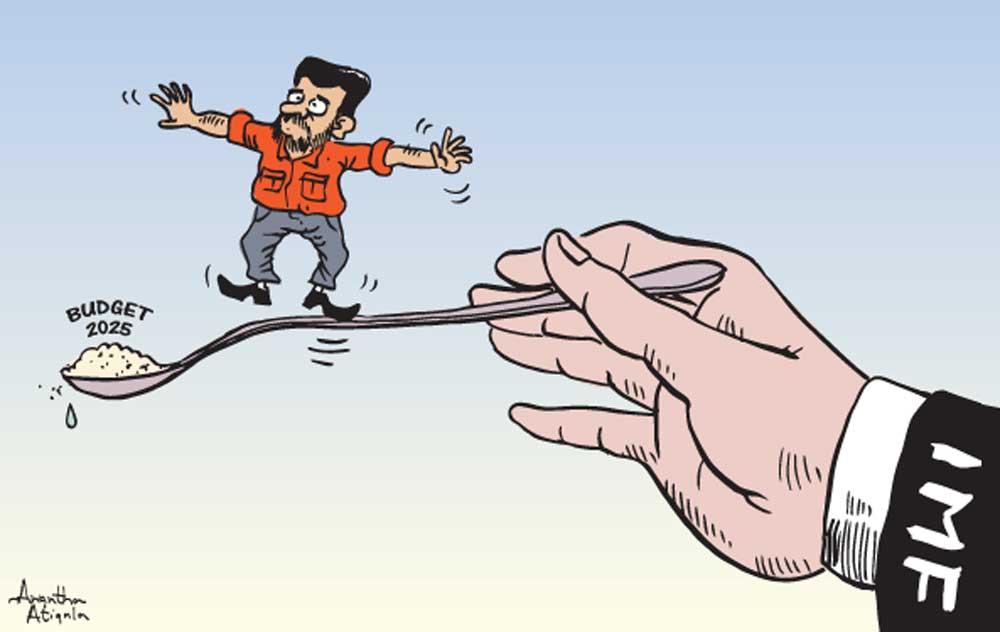
Two days ago President Anura Kumara Dissanayake had the somewhat daunting task of presenting his government’s first budget. AKD as the incumbent president, was voted into power by a population sick and tired of the corrupt rulers who promised much, but delivered only excuses for broken promises.
Sadly, up to this moment of time Dissanayake and his Cabinet of Ministers, Deputy Ministers et al have not been able to live up to the expectations of the masses. They gave him a two-thirds majority in Parliament, to help fulfil the NPP/JVP election promises.
During the run-up to the election the President and his NPP/JVP partners played to the gallery and promised to renegotiate the IMF agreement to relieve the poorer sections of the community from the burdens the agreement had placed on their shoulders.
Unfortunately the IMF was not agreeable to make changes. The poor continue to grit their teeth and bear the burdens. Days after the president was elected to office, it was discovered that stocks of rice in the country were insufficient to meet basic requirements. The price of rice sky-rocketed. Again it was the poor who were worst hit.
Believing that big-time rice millers had created an artificial shortage of rice the president threatened to bring rice mills under the army’s control if they failed to comply with government diktat. Matters took a comical turn when the president suggested rice fed to household pets could have played a role in the rice shortage as this had not been taken into account.
Sadly even today the rice crisis continues despite a threat to import rice from India.
Then we had a shortage of coconuts -an important ingredient in Lankan culinary. The nuts were scarce and those to be found were way beyond the means of the common man and woman in the country. A minister informed us that monkeys were partly responsible for the shortage. A particular senior minister even suggested shooting the monkeys.
However, thanks to JVP activities of the past, guns belonging to farmers were confiscated. Today unlike criminal gangs, who reign the roost, farmers do not have guns to shoot monkeys. As this was not bad enough of an ill-thought out explanation to a serious problem facing the country, a week ago the country suffered a total blackout.
A not-so-clever subject minister put the blame once again on a monkey. Government became an international laughing stock. It was in this background President Dissanayake presented his first budget. To its credit the government has been able to keep the deficit down to 6.7%. The problem is how we bridge this gap. The president expects growth to be facilitated by a strong export sector.
The US has been our major export market. Exports to the US amount to nearly a quarter of our total exports. Today, the US market has become extremely volatile with the US involved in numerous trade wars and imposing sanctions on even its closest allies.
We need to diversify our export strategy away from dependency on Western markets. India and China, with the world’s largest populations present the best opportunities for government to tap into. The growing economies of Malaysia, Indonesia, Vietnam and Thailand are part of the global supply chain for Asia’s manufacturing sector.
It offers us an excellent opportunity to not only become part of a global supply chain (even if it is manufacturing a single item), but presents us a path to diversify from traditional exports and become part of a global supply chain. The economic growth in Vietnam, Thailand and Malaysia are best examples of this diversification. Diversifying our export base becomes even more necessary in light of our president’s expectation that the relaxation of restrictions on vehicle imports will bring in a large section of the country’s revenue.
While we hope this will be so, on the other hand the extremely high taxes placed on importation of the same, may drive vehicle prices beyond people’s purchasing power. The result -God forbid- will be government not being able to achieve its revenue targets and inability to keep within parameters set by the International Monetary Fund.
Rather than depending on speculation the government would do better to concentrate on practical measures which could definitely bring in revenue to meet its targets.