Reply To:
Name - Reply Comment
 In the Trumpian world order -– similar to the Thucydidean world – the international law, the UN, or assorted international organisations no longer set normative parameters for state behaviour
 In 416 BC, Athenian historian Thucydides enacted a dramatic negotiation between Athenian invaders and the leaders of the neutral small state of Melos. The interaction, dramatised as the Melian dialogue in his treatise, The History of the Peloponnesian War, is one of the best-remembered anecdotes of the brutal reality of the international system, and a starting point for any student of international politics.
During the siege of Melos, when the Athenians demanded unconditional submission, the Melian leaders invoked morality and fairness. To which Athenians responded that morality, justice, and fairness are concepts only applicable between parties of equal power. “The strong do what they can, and the weak suffer what they must.”
The Melians still refused to surrender, and were invaded by the Athenians; their men were killed, and women and children were sold into slavery.
The international system has evolved since then, and especially after World War II, anarchy in the system has considerably lessened, courtesy of the rule-based international order that America itself championed. The UN Charter laid the foundation for international peace and security, and prohibited the use of force, except when authorised by the UN Security Council, or in self-defence against an armed attack.
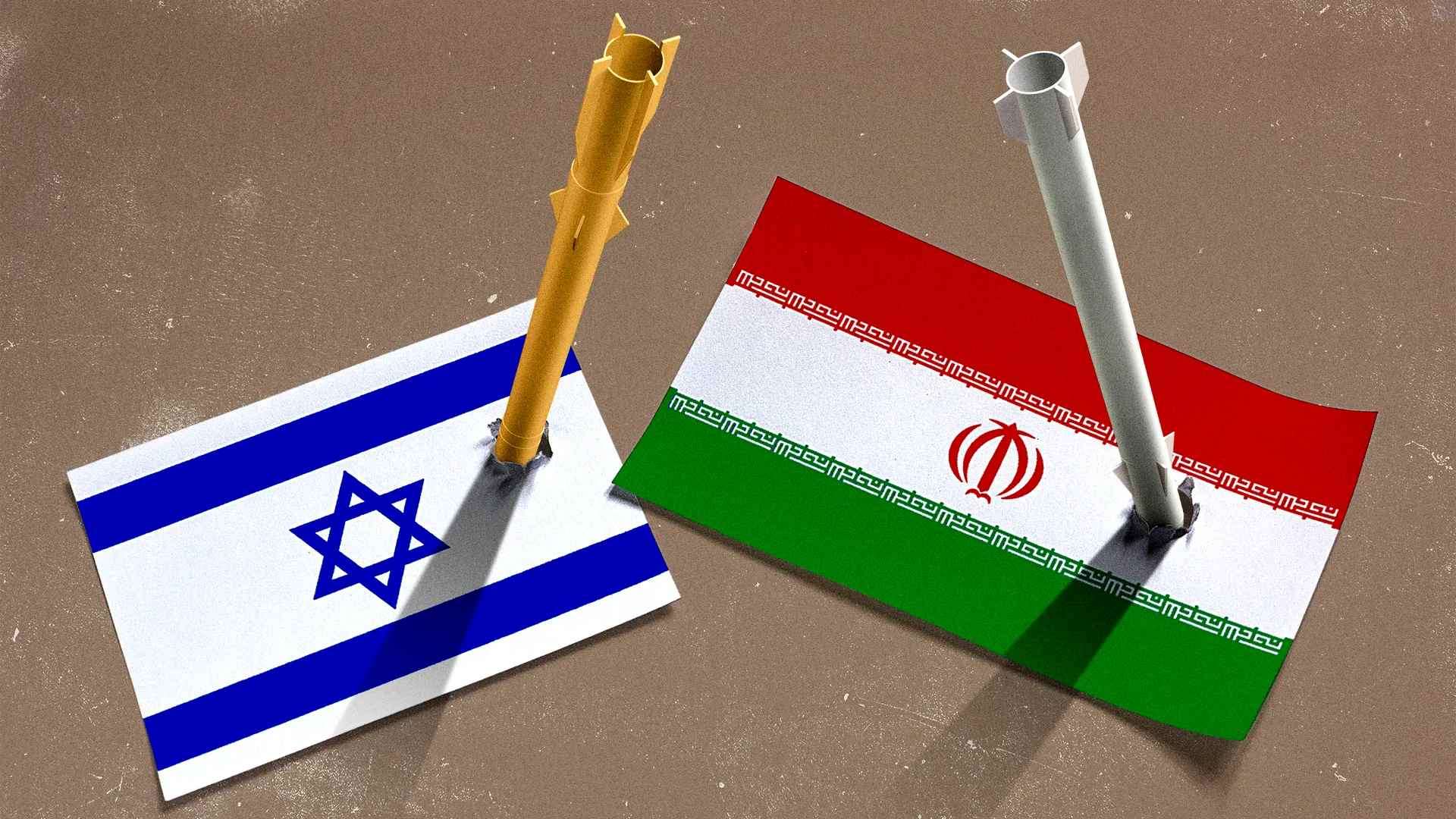
However, Donald Trump, America’s president, has thrown the international system back to the Thucydidean world. There is little argument that the American and Israeli war on Iran does not satisfy the requirements of international law for the use of force; and therefore, is an unlawful act of armed aggression.
In the Trumpian world order -– similar to the Thucydidean world – the international law, the UN, or assorted international organisations no longer set normative parameters for state behaviour.
Instead, Trump believes only his ‘own morality’ sets limits on his actions, stating, “I don’t need international law.” And he has threatened to obliterate ”Iran’s power stations and fresh water plants if Tehran does not agree to peace terms shortly”. At another time, he had been pondering over taking “Iran’s oil” except for the fact that ‘some stupid people’ in Washington were asking why he was doing that.
Attacks on civilian infrastructure such as electricity and desalination plants are prohibited under the Rome Statute and would amount to a war crime. Yet Donald Trump’s own morality does not seem to preclude them. These statements themselves set a dangerous precedent, regardless of whether such threats are carried out.
echoing Thucydides
Donald Trump’s worldview operates on two premises, which broadly echo Thucydidean words.
The first, as many have observed, is his belief that might is right, and that “the strong do what they can and the weak suffer what they must.”
The second, though less discussed, but plentifully in display through his behaviour, is that as Thucydides observed, ‘right, as the world goes, is only in question between equals in power.’
Trump has a preference for competent autocrats. That, rather than a foreign policy choice, might be a personal trait developed in a career as a real estate developer. The list may have a handful of names with a varying level of preference or deference, from Syria’s born- against former Jihadist, Al- Sharaa, Saudi Arabia’s Mohammad bin Salman (MBS), Turkey’s Erdogan, and Pakistan’s army chief of staff Asim Munir,etc. This is in contrast to his snickering of America’s Western allies, and even the relative disdain he had for Narendra Modi’s India.
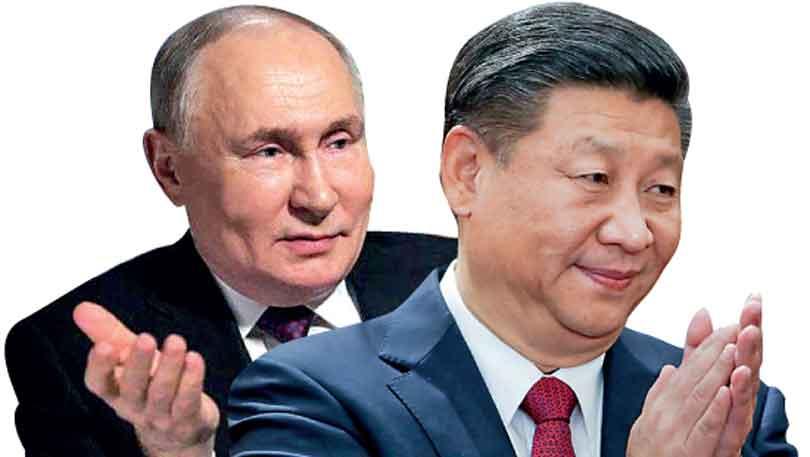
However, only two leaders command the unflinching deference of Donald Trump. They are Vladimir Putin of Russia and, more importantly, Xi Jinping of China who, unlike Putin, has maintained a hands-off relationship with Trump and does not seem to relish the special relationship Trump claims to have with him. And they are what Trump might term as ‘equals’. That is more than a personal preference; it is a realist foreign policy choice.
In a world where might is right, economic power takes a back seat, and military strength takes the lead. Putin reigns over a military superpower and Xi, a comprehensive superpower.
The question that would linger even after the end of the American and Israeli war with Iran would be how America would respond if China or Russia decided to follow the American precedent.
Economic sanctions can only go so far, as the Russian example explains. It would be even less if sanctions were ever imposed on China. By destroying the architecture of international peace and security, Trump has not only risked the survival of small nations, but also the security of America’s key allies in the Asia Pacific and Eurasia. The world that would emerge from the smouldering of the Iran war would rush towards rearmament, and China towards a speedy path to acquire nuclear parity with the United States.
This would set off a security dilemma for regional states, and compel countries like India, Japan, South Korea, and Vietnam to an arms race. Also in an international system, where nuclear weapons have proved to be the ultimate guarantor of sovereignty – as the North Koreans watching the unfolding Middle-East crisis would attest – more countries would try to go nuclear and existing ones, such as Pakistan, would improvise into low-yield battlefieldnukes.
Their security dependence on the US can best explain the European indifference to Trumpian abuse of international law. German Chancellor Friedrich Merz had refused to “lecture our partners and allies,” also questioning what the countries would do when international law was stretched to its limits. He had suggested Iran’snon-adherence to international law had prompted the US response. However, while the clerical regime in Tehran is neither loved at home – it massacred 25,000 of its own people in January, cracking down on anti-regime protests – nor a responsible actor of international politics, that does not provide legitimacy for the US action against Iran. Yet, it has now set a precedent that other major powers are likely to follow. In such an eventuality, neither America nor its allies would have sufficient recourse, nor moral right to stop such behaviour.
Post-WWII consensus
The American war on Iran has eroded the post-World War II international consensus that the sovereignty and survival of nation-states are granted. The smaller states in the region, including Sri Lanka, should ponder the shifting norms in the international system. The obvious and conservative means of providing security for oneself is to acquire a minimum credible deterrence. Acquiring such only through military means is a tall order for a small state. A more commonsense approach would be to embed itself in the international system as an indispensable partner in international peace and security, a provider of global public goods, and an integrated participant in global supply chains. That would make a country less susceptible to predation by a great power.
As the rules of international conduct are being rewritten at this very moment, the government in Colombo should give serious thought.
Follow @Ranga Jayasuriya on X