Reply To:
Name - Reply Comment

 Sri Lanka’s agricultural sector faces a convergence of unprecedented, interconnected crises—from climate-induced water scarcity and land fragmentation to labor deficits and collapsing farm profitability. While local universities traditionally produce highly competent disciplinary specialists, the reductionist educational models of past decades are increasingly inadequate for modern socio-ecological challenges. To bridge the gap between technological innovation and field-level implementation, local Faculties of Agriculture must strategically transition toward Agricultural Systems Management. Cultivating holistic “systems thinkers” who can integrate multi-dimensional scientific knowledge is no longer a progressive option; it is a critical necessity to secure national food climate resilience.
 Sri Lanka’s agriculture is passing through a period where it faces unprecedented challenges, such as water scarcity, climate change, land fragmentation, labour shortages, declining profitability of farming, food insecurity-related issues, land and environmental degradation, and rapidly changing market demands, where these challenges are complex, interconnected, and evolving. Yet, many of our agricultural education systems continue to prepare graduates largely through disciplinary silos established decades ago.
The simple question is, do Sri Lankan universities produce graduates equipped to solve the agricultural problems of the twenty-first century? Unfortunately, the answer is not always encouraging. While our Faculties of Agriculture have produced highly competent specialists in crop science, animal science, soil science, agricultural engineering, food science, agricultural economics, and related fields, the future of agriculture increasingly demands professionals who can understand how all these components interact within a larger agricultural system, or called ‘systems thinkers’. Agricultural systems management becomes critically important in that context.
The Nature of Agricultural Problems Has Changed
For thousands of years, our ancestors managed agriculture as an integrated system. They did not manage crops, livestock, soil, water, forests, and people as isolated components. Instead, they recognized their interconnectedness. The Scientific Revolution and later the Industrial Revolution encouraged scientists to study complex phenomena by breaking them into smaller components. Hence, agricultural education also evolved around specializations. This approach was highly successful during an era when increasing production was the primary objective. Scientists worked in specific disciplines and produced useful knowledge that contributed to increased yields, pest and disease control, the development of better varieties, and the enhancement of farm productivity. However, today’s agricultural challenges are fundamentally different.
When the issue of climate change is considered, a prolonged drought affects not only crops but also livestock, water resources, household income, labour allocation, food prices, farmer decision-making, biodiversity, and national food security. Equally, declining profitability in farming cannot be explained solely by agronomic factors. Market dynamics, input costs, technology adoption, policy interventions, and social factors are significant. At the same time, such challenges cannot be effectively addressed by examining individual components in isolation. Modern agriculture is increasingly recognized as a complex socio-ecological system in which biological, environmental, economic, technological, and social dimensions interact continuously. Understanding these interactions requires a systems perspective.
Beyond the Reductionist Mindset
Agricultural science has largely been influenced by a reductionist approach for a decades ago. Reductionism attempts to understand complex problems by breaking them into smaller components and studying each separately. While this approach has generated significant scientific knowledge, it often struggles to address real-world complexity.
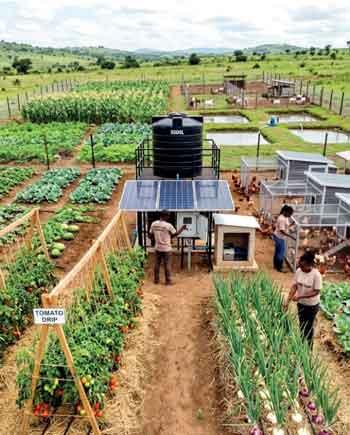
While a soil scientist identifies soil degradation, a crop scientist may recommend improved varieties. While an agricultural engineer proposes irrigation solutions, an economist may suggest policy incentives. Nevertheless, farmers do not experience these issues separately. Their decisions involve balancing crops, livestock, labour, water, markets, risks, family needs, environmental conditions, and financial constraints simultaneously while they manage the entire system.
Agricultural systems management recognizes this reality. It studies agriculture as an integrated whole, rather than a collection of disconnected parts. This discipline seeks to understand interactions, feedback mechanisms, trade-offs, and long-term consequences across entire agricultural systems. This perspective is becoming increasingly important in modern agricultural development.
Why Agricultural Systems Management Matters
Agriculture is entering an era characterized by artificial intelligence, remote sensing, drones, automation, precision agriculture, digital advisory services, and big data analytics. These technologies generate enormous opportunities. However, their effectiveness depends on how well they are integrated into existing agricultural systems. Technology adoption is not just a technical issue. It involves economic feasibility, environmental implications, farmer behaviour, institutional support, and management capacity. Professionals trained in Agricultural systems management are uniquely positioned to bridge technological innovation and practical implementation. Their ability to understand interactions across multiple dimensions makes them particularly valuable in an increasingly digital agricultural landscape.
Global Shift Towards Systems Thinking
Agricultural research and education are undergoing a major transformation across the globe. Food Systems, agroecology, climate-smart agriculture, sustainable Intensification, circular bioeconomy, regenerative agriculture, and resilient food systems are the dominant themes in international agricultural debate. Systems thinking is the unifying element that connects all these ideas. Major international organizations now advocate for multi-dimensional approaches that simultaneously address productivity, sustainability, environmental protection, social justice and economic viability. The agricultural sector is moving beyond narrow disciplinary perspectives toward holistic frameworks capable of managing complexity. Sri Lanka cannot afford to remain outside this global transformation.
A Critical Reflection on Agricultural Education in Sri Lanka
In South Asia, it is not arguable that Sri Lanka possesses one of the most respected agricultural higher education systems. Faculties of Agriculture has contributed immensely to national development by producing scientists, researchers, extension professionals, administrators, and policymakers. However, the structure of agricultural education in many universities still reflects priorities established several decades ago. Departments are often organized around a discipline, and curricula tend to emphasize specialized knowledge at the expense of integration. Students receive limited exposure to systems thinking, interdisciplinary problem solving, and holistic farm management, instead of becoming experts in particular subjects. This educational model may have been appropriate for the challenges of the past. It is increasingly inadequate for the challenges of the future. The next generation of agricultural professionals must be capable of understanding not only crops, animals, soils, machinery, and economics, but also the interactions among them. They must be trained to manage complexity rather than merely analyze components.
Producing Systems Thinkers for Sri Lanka
The future success of Sri Lankan agriculture will depend heavily on the ability of universities to produce graduates capable of addressing complex and interconnected challenges. Our Faculties of Agriculture should therefore move deliberately towards producing agricultural systems thinkers rather than simply producing narrower specialists. This does not mean abandoning disciplinary expertise. Sri Lanka will always need excellent crop scientists, soil scientists, agricultural engineers, food scientists, and animal scientists. Specialists remain essential. However, universities also have to produce graduates who can synthesize knowledge from across disciplines and apply it to real-world agricultural systems, and agricultural systems management provides an ideal vehicle for producing such graduates. Students trained in agricultural systems management learn to see farms as systems, communities as systems, value chains as systems, and food production as part of larger socio-economic and environmental systems. These graduates are often better able to work across sectors, coordinate multidisciplinary teams, develop innovative solutions, and contribute to policy formulation.
Climate Change Makes Systems Thinking Essential
Sri Lanka stands among the countries most familiar with the realities of agricultural vulnerability. Extreme rainfall events, prolonged droughts, changing monsoon patterns, emerging pests and diseases, and increasing climate uncertainty are already affecting farming communities across the country. Climate adaptation demands more than technical recommendations. It demands integrated strategies that combine agricultural production, natural resource management, economic planning, risk management, technological innovations, and community resilience. Agricultural systems management provides exactly this integrated framework. As climate risks intensify, systems thinking will become not merely desirable but essential.
Preparing Agriculture for the Fourth Industrial Revolution
Agriculture is entering an era characterized by artificial intelligence, remote sensing, drones, automation, precision agriculture, digital advisory services, and big data analytics. These technologies generate enormous opportunities. However, their effectiveness depends on how well they are integrated into existing agricultural systems. Technology adoption is not simply a technical issue. It involves economic feasibility, environmental implications, farmer behaviour, institutional support, and management capacity. Professionals trained in Agricultural systems management are uniquely positioned to bridge technological innovation and practical implementation. Their ability to understand interactions across multiple dimensions makes them particularly valuable in an increasingly digital agricultural landscape.
The Way Forward
The way forward for Sri Lankan universities should not degrade systems-oriented education but improve it. Agricultural systems management should be embraced as a strategic discipline that can equip graduates with the skills to tackle the complexities of modern agriculture. Curricula should be expanded to incorporate systems thinking, climate-smart agriculture, sustainable food systems, agricultural innovation systems, digital agriculture, circular bioeconomy, sustainability assessment, resilience planning, and data-driven agricultural decision-making.
These are the future of global agriculture. By adopting Agricultural systems management, Sri Lankan universities can establish themselves as leaders in agricultural education, generating graduates who are more equipped to address national and global challenges.
The Future Belongs to Integrators
The agricultural challenges facing Sri Lanka today are not isolated technical problems. They are complex systems problems. The future will still require specialists. But increasingly, it will require professionals capable of connecting specialist knowledge into coherent and sustainable solutions. The agricultural sector needs individuals who can see the whole picture rather than only individual pieces of the puzzle. Agricultural systems management is the discipline that develops this capability. If Sri Lanka is serious about building a resilient, sustainable, climate-smart, and globally competitive agricultural sector, its universities must invest not only in producing specialists but also in cultivating systems thinkers. The future of Sri Lankan agriculture may well depend on it.
The writer is the Professor in Agricultural Systems and former, Vice Chancellor Faculty of Agriculture, Rajarata University of Sri Lanka, Anuradhapura.