Reply To:
Name - Reply Comment
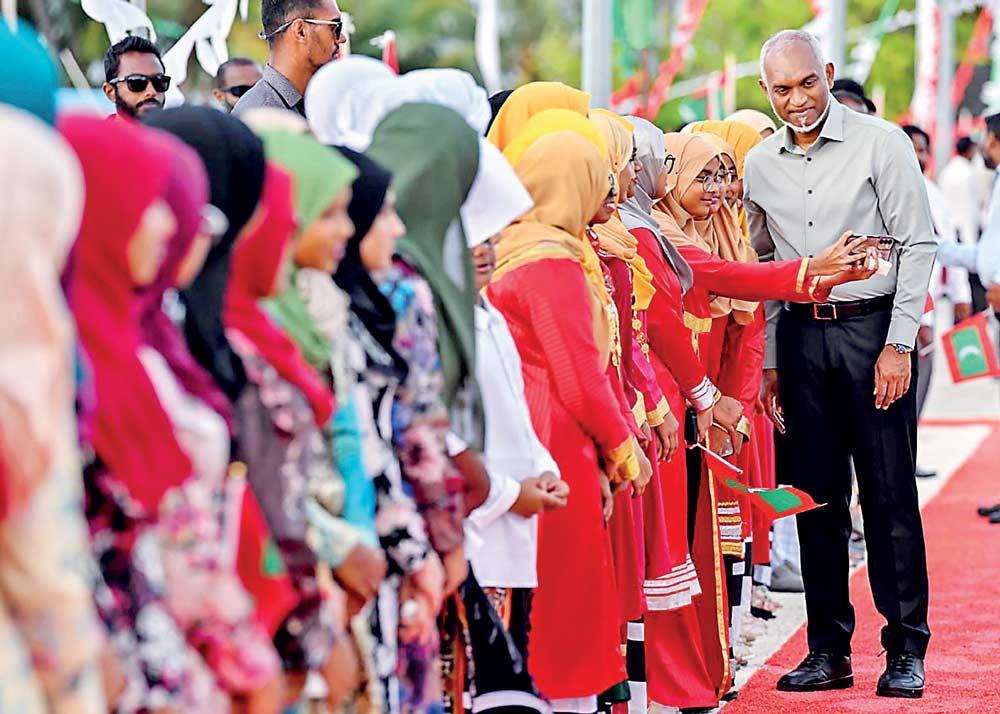
President Dr. Mohamed Muizzu greeting citizens
The Maldivian government has expressed a firm commitment to maintaining a free, independent and responsible media. Despite concerns regarding regulating social media through the recently passed Maldives Media Bill, government officials affirm that the Bill would only regulate registered media outlets and not social media activities of citizens or content creators.
The Maldives Media and Broadcasting Regulation Bill, ratified by President Dr. Mohamed Muizzu, is framed as a critical piece of legislation designed to foster and uphold press freedom, prevent the dissemination of false news, and ensure the responsible exercise of constitutional rights within the nation’s media landscape. Its proponents maintain that it is a crucial step towards a more accountable yet thriving journalistic environment for the Maldives.
While explaining the scope of the Bill, Minister of Youth Empowerment, Information and Arts, Ibrahim Waheed refuted ‘untrue claims’ from the Opposition to the effect that the Bil aims to control people’s social media use and content creation.
He also highlighted the extensive consultation process, noting that he had listened to and addressed journalists’ concerns by amending the bill in collaboration with the Attorney General. Endorsing the bill, several journalists affirmed that the current landscape offers more opportunities for independent journalism than ever before. One editor with over three decades of media experience stressed the importance of journalistic responsibility and respecting human dignity, arguing that monitoring media for this purpose does not equate to a deprivation of press freedom.
The Bill proposes the Establishment of the Maldives Media and Broadcasting Commission and states that this Commission shall formulate a code of conduct for broadcasters, media workers, and journalists in consultation with them and in accordance with the principles stated in Section 39 of this Act.
Broadcasters, media workers, and journalists shall work in accordance with and uphold the following principles:
(a)Respect for Islam, the Constitution, and laws;
(b)Maintaining national security and safety;
(c)Maintaining social ethics and public order;
(d)Protecting people’s dignity and privacy;
(e)Respect for human rights;
(f)Disclosing truthful information and delivering news and information fairly and transparently;
(g)Allowing space for diverse thoughts and opinions in matters of public interest, in accordance with the provisions of the law;
(h)Giving special protection and attention to the rights of vulnerable groups when spreading news and information about them;
(i)Not spreading news and information that directly or indirectly harms children’s rights.
In terms of upholding rights of media consumers, Section 43 states that media consumers have the right to expect that information broadcast or published in media is provided fairly and truthfully, and that such information is delivered with due respect and dignity, respecting the personal freedom of individuals.
As such, some of the responsibilities imposed on broadcasters, media workers, and journalists under this Act are as follows;
(a)Not disclosing information through any media outlet that is known to be false or has a high likelihood of being false;
(b)Not disclosing information received by media without making reasonable efforts to verify its truthfulness when the opportunity exists to do so;
(c) When disclosing information whose truthfulness cannot be verified, stating that it is such information in the disclosure
To ensure a democratic process, the Elections Commission of Maldives (ECM) has opened a Media Commission Election with an eligible voter list and the opportunity to submit complaints to this voters list. According to ECM, a total of 353 media outlets are eligible to cast their votes, comprising 18 broadcasters and 335 other registered media entities, each nominating one representative to participate in separate voting processes for broadcasters and other media categories. Voters have been given a tight deadline and according to ECM officials the expedited timeline is a direct consequence of legal stipulations requiring the elections to be held within 30 days of the law’s ratification on 18 September.
President Dr Mohamed Muizzu has reaffirmed the Maldives’ commitment to press freedom, highlighting the evolving role of artificial intelligence (AI) in journalism and the ongoing importance of media independence in democratic societies. In his address in view of World Press Freedom Day held earlier this year, President Dr. Mohamed Muizzu said that the responsible use of AI holds great potential to serve the public interest, particularly in countering disinformation and restoring trust in media. He stated that AI, when used responsibly, can be a powerful tool for public good, particularly in addressing the spread of disinformation and misinformation, which are often sources of mistrust and social division.
He also said that that the Maldives is actively working with national and international partners, including the Media Freedom Coalition and several non-governmental organisations (NGOs), to improve media literacy, raise awareness about AI-generated content, and support the ethical use of AI in journalism.
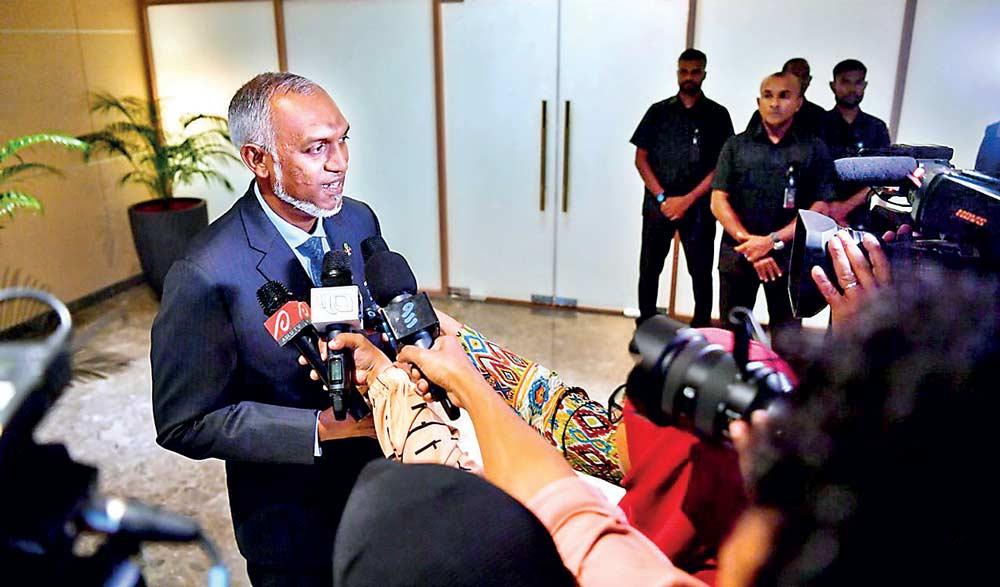
President Dr. Muizzu briefing the press
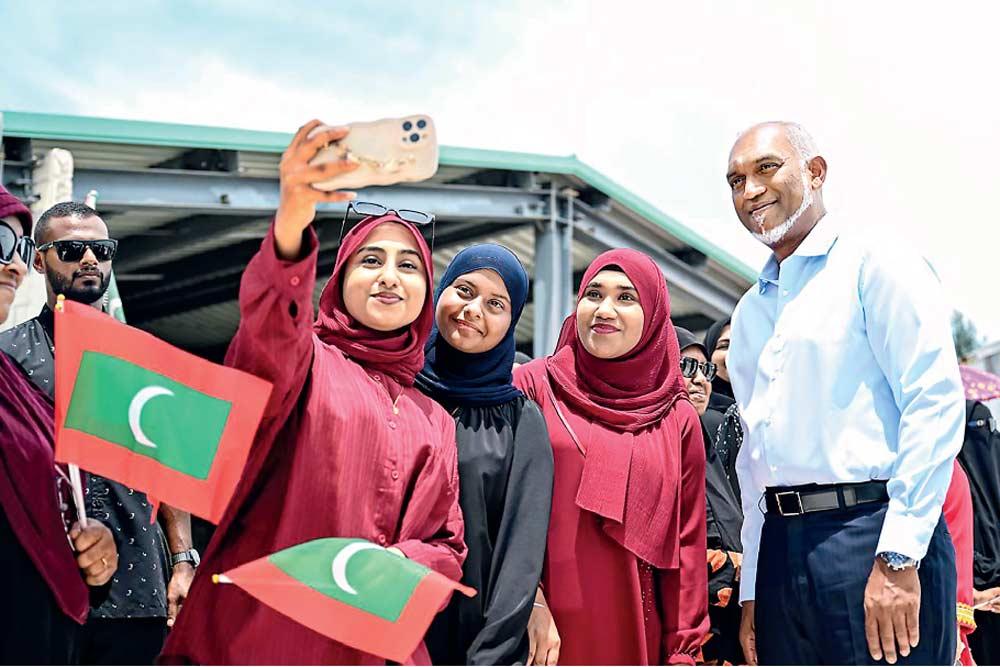
Citizens clicking a selfie with President Dr. Muizzu