Reply To:
Name - Reply Comment
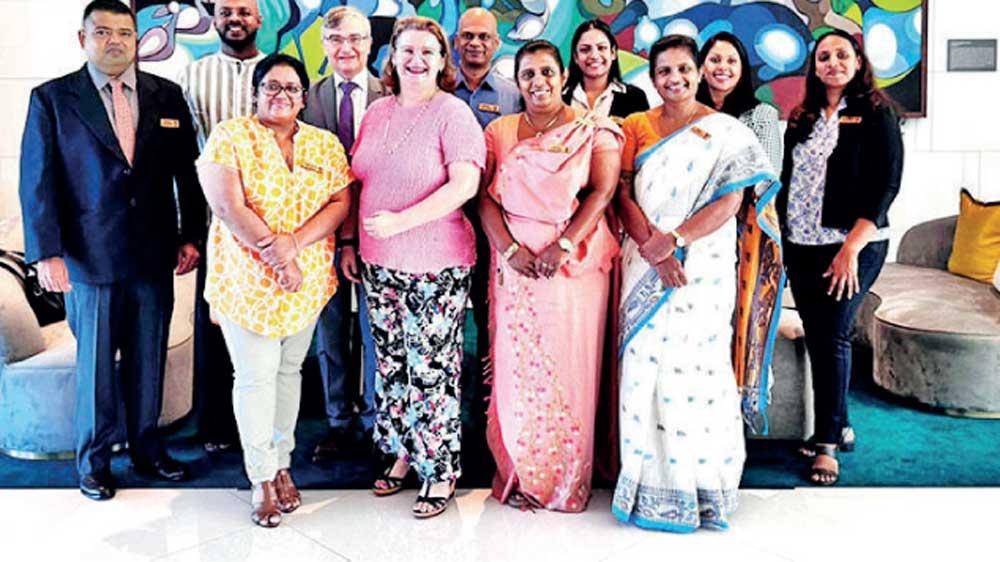
Incorporating the theme, ‘From classroom to career: German for a Competitive Edge’, the conference focused on inculcating and developing the linguistic capabilities of South Asians in the German language. Moreover, the conference also highlighted the importance of fostering regional cooperation in education and making students of the language global citizens
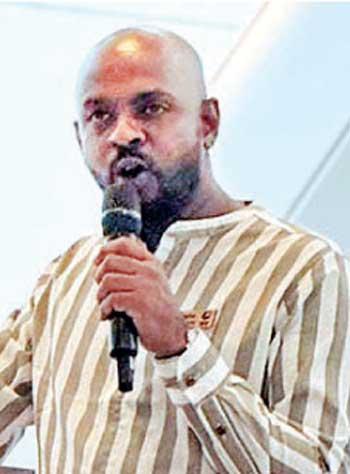 By Aakil Riyaz
The School Leaders’ Conference South Asia 2025, organised by the Goethe-Institut, was held from the 19th to 22nd September at Cinnamon Life, City of Dreams, Colombo. This forum consisted of 101 school principals and educators from Sri Lanka, Bangladesh, India, Nepal & Pakistan.
Incorporating the theme, ‘From classroom to career: German for a Competitive Edge’, the conference focused on inculcating and developing the linguistic capabilities of South Asians in the German language. Moreover, the conference also highlighted the importance of fostering regional cooperation in education and making students of the language global citizens.
The inauguration ceremony commenced at 9:00 am (IST) on September 20, with the lighting of the traditional oil lamp along with a Kandyan dance performance (Udarata natum).
The Keynote addresses were individually delivered by 4 dignitaries;
Dr Marla Stukenberg, Director & Regional Director South Asia (India, Pakistan, Bangladesh, Sri Lanka, Afghanistan) Goethe-Institut / Max Mueller Bhavan New Delhi, in her welcome address, asserted the importance of learning German & the prospects it offered on the global stage. She mentioned that, “German is not just a language. It is a gateway to Europe’s largest economy, a key to world-class education and a bridge to international careers. For students in South Asia, learning German offers a real competitive action”.
Dr Alexandra Mittler, Director of Language Programmes South Asia, Deputy Executive Director, Goethe-Institut / Max Mueller Bhavan, New Delhi, touched on the challenges between language learning and the rise of AI. “Artificial intelligence is artificially intelligent, but creativity, ingenuity, is something that’s very much human. I hope that artificial intelligence doesn’t take that away from us”, she stated.
Stefan Winkler, Director, Goethe-Institut Sri Lanka, in his welcome address, sought to mention the importance of plurilingualism in an increasingly multi-polar world. “Actually, we are advocating a policy of plurilingualism, the ability of a person who has competence in more than one language. Because, as the scholar Wilhelm von Humboldt (the founder of comparative linguistics) said, language is the key to the world”, Winkler stated.
Marisa Kollenberg, Head of Cultural Affairs, German Embassy, Sri Lanka, touched on the value addition the German language brings to the youth of today. She also expressed her remarks on the expansion of German firms and the importance of having a profound understanding of the language: “From the automotive industry to IT, German firms are expanding their operations, bringing them more jobs, internships and training opportunities. For young people, knowing German opens up the possibility of working not just locally but in one of the world’s most economically advanced nations. But the opportunities are not confined to Germany alone”.
Following the welcome addresses by the 4 dignitaries, the keynote speech for the conference was delivered by Prof. Dr Georg Gombos, General Educational Science and Diversity-Aware Education, Klagenfurt University. He emphasised the importance of promoting German in the context of multilingualism, along with touching on the various opportunities presented to speakers of the language. With the conclusion of the inauguration session and keynote speech, the conference proceeded with its power-packed and dynamic agenda for the subsequent days.
It is worth noting that with more than 155 million people speaking German worldwide, it also holds the highest number of native speakers within the European Union.
Speaking a language simply isn’t enough. Endowing students with the pedagogic ability to unconsciously utilise the language is what defines true linguistic mastery, and this is what the School Leaders’ Conference South Asia 2025 endeavoured to accomplish in their capacity as educators of the German language.