Reply To:
Name - Reply Comment
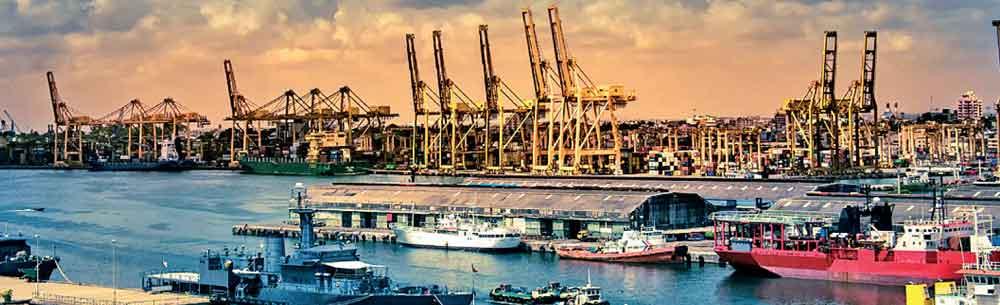
 Sri Lanka’s engagement with intellectual property (IP) dates back to the British colonial era, beginning with the British Inventor’s Ordinance of 1859, under which the first patent was issued in 1860. Over the years, various laws, such as the Trademarks Ordinance (1888, later revised in 1925), the Patents Ordinance (1906), and the Copyright Ordinance (1908), were enacted and remained in use even after Independence in 1948. The modern era of IP legislation began with the Code of Intellectual Property Act, No. 52 of 1979, introduced in response to economic liberalisation.
This was followed by several amendments before being replaced by the Intellectual Property Act, No. 36 of 2003, which aligns with international standards, particularly the Agreement on Trade-Related Aspects of Intellectual Property Rights. The act covers a wide range of IP rights, including copyrights, patents, trademarks, and geographical indications. The most recent development is the 2022 amendment, which introduced a national registration system for Geographical Indications to enhance both domestic and international protection.
Despite the amendment introduced in 2022, there remains a significant deficiency in Sri Lanka’s Intellectual Property Law, specifically in relation to the lack of a proper mechanism for registering marks internationally.
The National Intellectual Property Office, which is commonly known as ‘NIPO’, was established under the Intellectual Property Act No.36 of 2003.
The legal framework at present does not provide for protection in another country for locally registered trademarks through NIPO. In the case where the applicant is engaged in business in a foreign country, it is advisable to apply for the registration of the trademark under the law in that country. This means that the locals have to reach out to IP Agents in the countries where their businesses are expanded to seek protection of their marks in those countries.
According to World Intellectual Property Organisation (WIPO) statistics 2016, there had been over 400 such applications to register trademarks overseas by the Sri Lankan exporter community.
The best remedy for the resolution of this issue is for Sri Lanka to become a member of the Madrid Protocol, administered and controlled by the WIPO. The international registration of trademarks under the Madrid System is primarily governed by two treaties: the Madrid Agreement Concerning the International Registration of Marks and the Protocol Relating to the Madrid Agreement, which was adopted in 1989.
In the event, a country accedes to the Madrid Protocol, an applicant in a member country can file a single application, having paid a prescribed fee for the registration of a trademark to be applicable and enforceable in 134 countries where the Madrid Protocol is in force. Following accession, Sri Lankan exporters will benefit from significantly lower trademark registration costs and a faster registration process through the Madrid Protocol.
The latest member is Qatar, which acceded to the Madrid Protocol on 3rd August 2024. The 115 members cover 134 countries, including the European Union, countries of the African Intellectual Property Organisation, developed countries and a significant number of developing countries. When Asia is considered, major economies like India, Indonesia, Thailand, China, Pakistan, Japan, Vietnam and Korea have acceded to the Madrid Protocol. Furthermore, all membership covers more than 80% of the world trade. This will no doubt benefit the exporter community because filling out specific applications for the purpose of registration in each foreign country can be avoided accordingly. Besides, this arrangement is less costly and efficient.
The National Intellectual Property Office has been carrying out preliminary works towards accession to the Madrid Protocol since the year 2016, for which the government has allocated a substantial amount of money in the Annual Budget as well. Although Sri Lanka initially agreed to accede to the Madrid Protocol in 2017, the process has faced repeated delays continuously. On the 12th of February 2020, the government granted formal approval to join the international treaty, which streamlines global trademark registration.
A draft Bill incorporating the required legal changes has reportedly been prepared on earlier occasions as well. The delay continues to hinder exporters who face significant time and cost barriers in securing trademark protection abroad. In his Annual Budget speech 2024, President Ranil Wickremesinghe, as the Minister of Finance, acknowledged these challenges and pledged to expedite the accession process.
In addition, in a meeting held in November 2023, then the Secretary to the Ministry of Trade, Commerce, and Food Security reaffirmed the government’s commitment to fast-tracking the process. Despite these assurances, progress continues to remain slow.
A proposal to this effect was also made by President Anura Kumar Dissanayake, as the Minister of Finance, in his Annual Budget speech 2025. Further, it was reported that in February 2025, Trade, Commerce, Food Security and Cooperative Development Minister Wasantha Samarasinghe had sought Cabinet approval to direct the Legal Draftsman to complete the drafting of the Bill to amend the current Act, enabling accession to the Madrid Protocol without any further delay.
Given Sri Lanka’s strategic pivot towards an export-oriented economy, the need for facilitative measures such as accession to the Madrid Protocol has never been more urgent.
Joining the protocol would significantly reduce the administrative and financial burdens faced by local businesses when registering trademarks in multiple countries, thereby enhancing their competitiveness in global markets.
It would also signal to international investors and trading partners that Sri Lanka is committed to aligning with global intellectual property standards. In a landscape where brand identity and intellectual property protection are critical to business success, timely accession to the Madrid Protocol could serve as a vital step toward boosting international trade, attracting foreign investment, and strengthening the country’s position in the global economy.
The author can be reached at [email protected]