Reply To:
Name - Reply Comment
MTL Ebell’s latest publication, The Atrophied Wife, should be on the list of ‘must-read’ books of every discerning reader. This is a piece of writing that takes the reader on an emotional roller coaster.
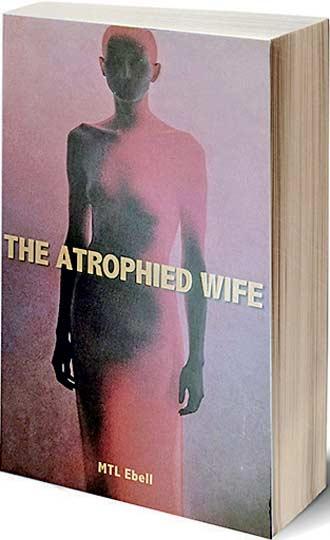 MTL Ebell is a well-known, established Sri Lankan writer who has authored many publications. She won the State Literary Award in 2008 for best short stories in English for Short and Verse and in 2014 for the best novel in English, Thus She Grew.
MTL Ebell’s latest publication, The Atrophied Wife, should be on the list of ‘must-read’ books of every discerning reader. This is a piece of writing that takes the reader on an emotional roller coaster. The story does not just begin but erupts from the very first word, and grabs your attention with a vice-like grip.
The book is set within the framework of a traditional novel, a family saga spanning generations. Yet, it explodes with modernity in the sense that it explores subjects that the good old-fashioned novelist did not dare to touch upon.
Ebell delves into relationships with sensitivity and a deep understanding of the human condition. She lays bare a perspective of humanity which falls outside accepted societal norms; aspects that society would rather ‘sweep under the carpet’ and some would even look upon as sinful. However, reality must be accepted and truth be told, and Ebell tells it.
She explores abusive and loving relationships, issues of child development, moral dilemmas, internal conflicts, sexuality, and sexual deviance. She does it with calm acceptance of reality. Yes, shocking maybe, but never crude. Sometimes deep, dark subterranean feelings are also alluded to but not fully exposed; the author half opens up the ‘can of worms’, allowing the reader to peer in.
Ebell presents life as it is, and in doing so, she is not judgmental. She neither approves nor disapproves. She merely presents facts via the actions and reactions of her wellrounded characters and leaves the readers to make up their own minds. What really struck me was the author’s underlying compassion and empathy for the so-called ‘sinners’ and ‘The sinned against’, which are in equal measure. Underlying the psychological and emotional core of the story is the theme of cause and effect. This is handled with nuance. The theme emerges from the lived consequence of the narrative, rather than from speeches and the narrator’s comments. It is implicit rather than explicit, and very subtly woven into the narrative. This adds depth to the story.
The story is centred around Danny and Moira Balathamby, their two daughters Suni and Minuri, and their extended family. It is a narration of a series of events which transform into a reflection of life. The story is related from multiple viewpoints, which I found very interesting. The author gives her characters equal chances to tell their stories/ show their reactions, so that the readers are given space to make their own character assessments.
The characters are wellrounded and life-like. No character is perfect, and even the dynamic characters have their negative aspects.
Moira’s attitude and treatment of her younger daughter, Minuri, is extremely insensitive and deplorable, yet she did love her and was very protective of her. Danny, irresponsible, selfseeking and obsessed with his own importance, was the only one in the nuclear family who really loved and understood Minuri and knew that she was a ‘special child’. He was alsocapable of self-reflection – “I am a sick bastard. I am never there”, he snarled to himself. In all circumstances, Danny puts his daughter’s interest first.
Suni, the older, smarter sister, looked upon her sibling with contempt, calling her “stick insect”, and was always putting her down. When she finds that Minuri is talented in dramatics, her reaction is – “At least you have found something I can not be ashamed of you …”
And yet, the sisterly bond was strong enough for her to want to help her with learning to read, and to wash and change her when she had ‘accidents’ in her panties. The story is about daily events that happen in ordinary living and the family’s response. Their actions lead to reactions, which in turn lead to further repercussions, and so, the story goes on.
What I liked most was the fact that the characters undergo development as the novel progresses, and consequently, relationships change too. These changes are convincing because they are organic and emerge naturally, and not contrived.
Ebell’s use of language is vivid and evocative. Minuri loved the smell of new books. “I think heaven will smell a little like this.” Minuri inhaled so strongly, some pages moved up and stuck to her nose.
I found this very evocative of my own childhood memories!
The author vividly creates Minuri’s sense of foreboding of impending disaster while travelling in the car to her sister’s home. “Off Armour Street, crowded and busy in the daytime, now, a ghost town. Everything looked grey/ green and slightly menacing in the orange glow of street lights. Here and there the lights weren’t on, leaving long patches of darkness…”. And she gets out of the car, “ fighting a growing sense of dread”.
The Atrophied Wife is a multi-levelled novel. While it is basically exploring relationships and psychological complexes, at a deeper level, the author lays bare some universal truths that govern and dominate Life. She is never preachy but subtly shows us
 That every action causes a reaction. (In Buddhist terms, karma and karma vipaka)
Impermanence. That life is an ongoing process, and everything is subject to change. People change, feelings change, and behaviour patterns change. Nothing is static.
With all the turbulence, emotional upheaval, unhappy and unexpected happenings, the narrative could have descended into a depressing story. But it doesn’t. Ebell is successful in showing the reader that negative aspects of life can be overcome by coming to terms with reality, with understanding, forgiveness and love.
Some critics, while acknowledging the positives in this novel, have opined that the story is not credible because it is very unlikely that all these shocking, even outrageous situations could take place within one family circle. That may be so, but they seem to have overlooked the fact that Ebell has written a fictional story using fictional characters and circumstances, in order to explore basic human emotions and psychological needs, which are generally kept under wraps. It is not the framework she uses that really matters, but the exploration and the exposition.
Readers of fiction generally abide by the axiom of “willing suspense of disbelief” coined by - poet and philosopher - Samuel Taylor Coleridge. He suggested that if an author could infuse “human interest and a semblance of truth” into a story, the reader would suspend their disbelief for the moment, in order to fully enjoy the narration and the poetic experience.
I found The Atrophied Wife a page-turner. So much so, I feared that I may have turned the pages too fast, in my curiosity to find out what happens next, and missed out on some subtleties. So, I read it a second time. And guess what? I enjoyed it more on the second read!
The Atrophied Wife is available for purchase at:
Barefoot Bookshop, Kalaya, Jamfruit Tree Publications, Vijitha Yapa bookshops, and Sarasavi bookshops, priced at Rs 2500/.
Reviewed by Rukmini Attygalle