Reply To:
Name - Reply Comment
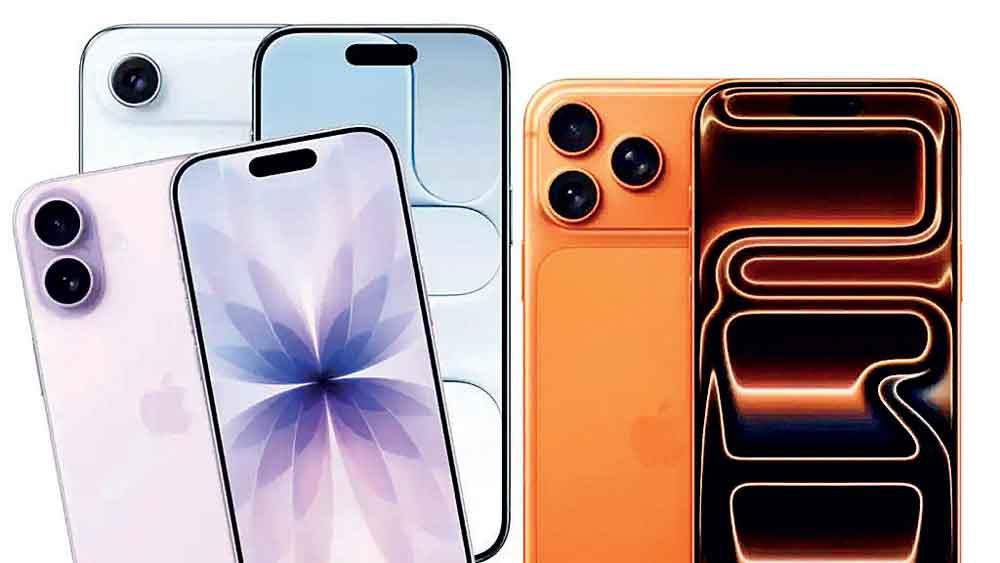
 A month after the iPhone 17 launched in Sri Lanka, the initial hype has settled, and early adopters have moved past the excitement of unboxing. What remains is the reality of daily use, which promised features actually deliver, which fall flat, and whether Apple's latest flagship justifies its Rs 365,000 price tag in real-world Sri Lankan conditions.
What Actually Changed Daily Use
The ProMotion Effect: More Than Marketing Hype
After four weeks, the 120Hz ProMotion display on the base iPhone 17 proves to be more than a spec sheet bragging point. The difference becomes particularly noticeable when switching back to older devices; scrolling feels sluggish by comparison, and app interactions lack the same responsiveness. For users who spend hours daily on social media, news apps, or productivity tools, this smoothness reduces eye strain and makes the phone feel genuinely faster, even when it isn't.
The Always-On display, now available across all models, has divided users. Some find it convenient to check notifications without touching the phone, while others report it becoming a distraction during meetings or contributing to battery anxiety.
Camera Upgrades: Revolutionary or Evolutionary?
The dual 48-megapixel system (Wide and Ultra Wide) delivers noticeable improvements in specific scenarios. Low-light photography at restaurants, night markets, or evening gatherings produces cleaner images with less noise. The ultrawide lens captures landscapes from Galle Fort to Horton Plains with significantly more detail than the previous 12-megapixel sensor.
However, for casual photography in good lighting conditions, the difference between the iPhone 15 and 16 remains subtle. Users who primarily photograph food, selfies, or documents won't see transformational improvements. The computational photography enhancements work quietly in the background, but they're refinements rather than revelations.
After four weeks, the 120Hz ProMotion display on the base iPhone 17 proves to be more than a spec sheet bragging point. The difference becomes particularly noticeable when switching back to older devices; scrolling feels sluggish by comparison, and app interactions lack the same responsiveness.
The Center Stage front camera proves more useful than expected for remote workers conducting video calls, though it requires adequate lighting and space behind you to function optimally in smaller Colombo apartments.
Performance: Overkill for Most, Essential for Some
The A19 chip with 8GB RAM handles everything thrown at it without hesitation, but for typical usage, WhatsApp, Instagram, Chrome, and streaming, the difference from last year's models is imperceptible. Apps launch marginally faster, but not enough to notice without a side-by-side comparison.
Where the extra power matters: video editing, gaming with high graphics settings, and heavy multitasking with 10+ apps open simultaneously. Content creators editing 4K footage report smoother timelines and faster exports. Casual users checking email and browsing social media are paying for performance they'll never fully utilise.
Features That Proved Their Worth
The Disappointments After Daily Use
What Early Adopters Are Saying
Local tech communities and authorised retailer feedback reveal common themes:
The Sri Lankan Reality
Who Should Buy Now vs. Wait
Buy Now If
Wait 3-6 Months If
Consider Alternatives If
You want specific features - If you're primarily interested in camera quality, the Samsung Galaxy S25 offers comparable photography. For value, iPhone 15 provides 85% of the experience at significantly less cost.
You're platform-flexible - Android flagships often include features like higher zoom capabilities, faster charging, or expandable storage that iPhone lacks.
The real question isn't whether the iPhone 17 is good (it is), but whether it's worth the price. A month of real-world use suggests that for most people, the answer depends more on their current device's condition and their personal financial situation than on the iPhone 17's actual capabilities.
The One-Month Verdict
The iPhone 17 is exactly what Apple promised: a refined, incremental upgrade that makes everything slightly better without revolutionising anything. After the excitement fades, it settles into being an excellent phone rather than a transformative one.
The features are genuinely useful—smoother display, better cameras, improved durability—but they're evolutionary improvements that enhance rather than transform the smartphone experience. For users with recent iPhones, the upgrade is a luxury. For those with older devices, it's a meaningful step forward.
The real question isn't whether the iPhone 17 is good (it is), but whether it's Rs 365,000 worth of good for your specific situation. A month of real-world use suggests that for most people, the answer depends more on their current device's condition and their personal financial situation than on the iPhone 17's actual capabilities.
If you can comfortably afford it, want the latest technology, and will use it for 3-4 years, it's a solid investment. If the price represents a financial stretch or you own a recent iPhone, your money likely delivers more value elsewhere, whether that's investing, saving, or upgrading other aspects of your life that need attention more than your perfectly functional smartphone.
The iPhone 17 isn't trying to convince you to upgrade; it's simply there for those who've already decided they need to. A month later, that positioning feels more honest than any launch event could convey.