Reply To:
Name - Reply Comment
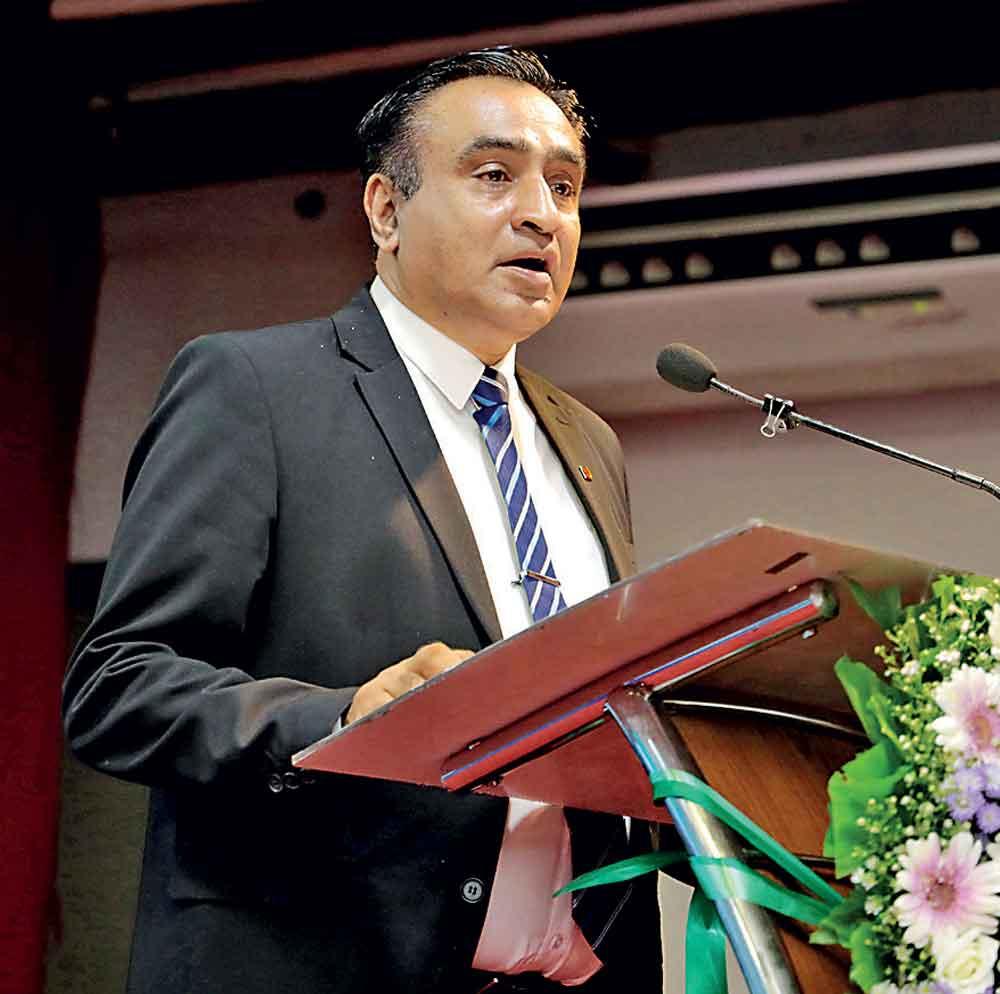
 A one-day national symposium held on 21 November 2025 marked one of the country’s most significant cross-sector efforts to advance disability-inclusive employment and promote diversity in skills and work. The event, held at the Sri Lanka Foundation Institute in Colombo 07, brought together government agencies, development partners, and private-sector stakeholders in a unified call to strengthen opportunities for persons with disabilities. Organized by the Ministry of Education, the Ministry of Higher Education, and the Ministry of Vocational Education in collaboration with the Deutsche Gesellschaft für Internationale Zusammenarbeit (GIZ) GmbH on behalf of the German Federal Ministry for Economic Cooperation and Development and supported by the Swiss Agency for Development and Cooperation (SDC), the symposium highlighted a growing national commitment to building an inclusive workforce.
Delivering the opening remarks, the Heads of GIZ Sri Lanka emphasised that meaningful and dignified employment is central to improving the livelihoods of persons with disabilities. She highlighted that the country cannot achieve sustainable growth if a significant portion of its population continues to be excluded from skills training, job placements, and decision-making processes. “Persons with disabilities bring new perspectives, ideas, and strengths,” she noted, adding that closing the opportunity gap requires targeted training, improved access to qualifications, and systemic reforms across institutions. Inclusion, she stressed, is not merely a social obligation but a driver of innovation, economic resilience, and societal transformation.
Education Ministry Calls for Reforms and Recognition of Potential
In a special felicitation address, Secretary to the Ministry of Higher Education and Education, Mr. Nalaka Kaluwewe reflected on the misconceptions and structural barriers that continue to hinder inclusivity. He stated that Sri Lanka must move beyond outdated assumptions and embrace a more nuanced understanding of individuals’ abilities and potential. “We must identify the diverse levels of talent within every citizen,” he said, calling for modernization within the education sector to support innovation and future-ready skills.
He noted that the national education system needs reforms that integrate inclusivity as a core principle rather than an optional add-on. The Secretary highlighted the importance of building survival skills, expanding facilities, and increasing collaboration with training institutes such as the Vocational Training Authority (VTA). Commending the initiative, he observed that inclusion is not a peripheral requirement but a growing national priority. He also acknowledged the efforts of trainers and staff working on the ground to ensure that learners with disabilities receive equal opportunities.
International Partners Stress the Need for Early and Integrated Inclusion
Representing the Deputy Head of Mission at the German Embassy in Colombo, serving as the Deputy Ambassador to both Sri Lanka and the Maldives Sarah Hasselbarth underscored that inclusion must be embedded at the planning stage not as an afterthought. “It must be an integral part of our thinking from the beginning,” she remarked, pointing to the need for stronger partnerships and coordinated efforts to address systemic gaps and institutional loopholes. She noted that inclusive development requires long-term cooperation across sectors and a commitment to sustainable implementation.
Deputy Head of Mission, Embassy of Switzerland to Sri Lanka and the Maldives Oliver Praz, echoed similar sentiments, referencing the successful German-Swiss vocational training frameworks that prioritize inclusion as a national policy. He highlighted how private companies in these countries play a central role in offering training opportunities designed to enhance skills, productivity, and long-term employability for individuals of all backgrounds. Investing in skills development, he said, is simultaneously an investment in dignity, growth, and social stability. Projects such as these, he added, help translate policy intentions into reality by creating practical pathways toward employment.
“Nothing About Us Without Us”: Advocates Demand Voice and Representation
A powerful address was delivered by Manique Gunaratne, Manager of the Specialised Training and Disability Resource Centre, a prominent trainer and advocate for persons with disabilities. She emphasized that inclusion must go beyond symbolic gestures. “The right to be heard and seen is fundamental,” she said, invoking the global disability-rights principle: “Nothing about us without us.”
She stressed that inclusion must represent voice, participation, respect, and the autonomy to make decisions. She urged policymakers, employers, and organizations to ensure that persons with disabilities are actively consulted in all discussions that concern them, and that their lived experiences inform solutions. She noted the transformative impact of the training and employer-linkage programs facilitated by GIZ, which have helped bridge gaps between skills development and real employment opportunities.
The event brought together government agencies, development partners, and private-sector stakeholders in a unified call to strengthen opportunities for persons with disabilities.
“Diversity is our strength,” she stated. “Through inclusion, we unlock innovation, resilience, and empowerment. What we need is not sympathy, but a chance and an opportunity.”
Commitment to Accessibility and Leadership Roles
Kumudhini Rosa, Head of Projects at GIZ, reiterated the importance of recognizing the rights of persons with disabilities in both public and private spaces, aligned with international commitments under UN conventions. She called on organizations to ensure that accessibility is built into infrastructure, management processes, and workplace culture. “We must make room physically, structurally, and socially for equal participation,” she said. Expanding access to transportation, improving mobility support, and opening pathways into management and leadership roles were identified as immediate priorities.
Collective Effort Toward a Dignified Future
The event featured Sri Lanka’s first disability job match pavilion where candidates submitted more than 100 CVs and met recruiters from hospitality, ICT, retail, manufacturing, and services. Several companies began initial screening onsite, signalling strong employer interest.
An Economic Zone highlighted income-generating ventures led by persons with disabilities, with schools and community organizations showcasing craft items, food products, and eco-friendly goods. The Creative Zone, curated by the Chitra Lane School for Children, presented performances and artwork by children and adults with disabilities. Additionally, a vibrant cultural performance by Diri Daru Piyasa served as a reminder of the creativity and talent that flourish when inclusive spaces are nurtured.
In closing, the event reinforced a clear message: dignity, justice, and equal opportunity for all are not distant goals but responsibilities that must guide every institution. As Sri Lanka looks to build a more resilient and future-ready economy, inclusion must remain at the heart of national development, ensuring that no one is left behind.