Reply To:
Name - Reply Comment
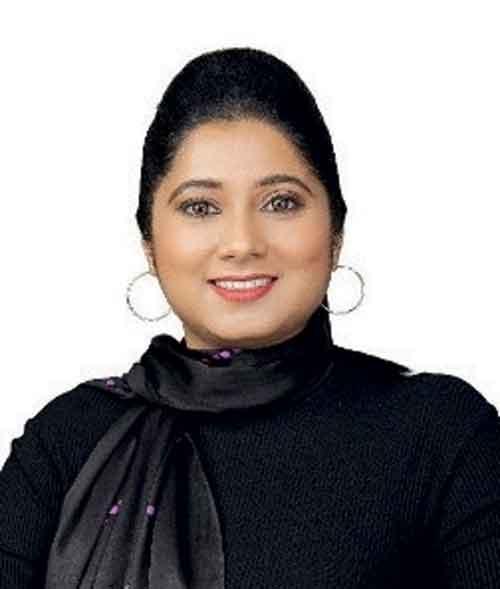
I had just finished watering the garden and my weekend guest Sharika Mubarack, a Master Emotional Release, Relationships and Personal Healing Coach had finished her exercise, walking up and down the estate drive way. It seemed like the best time to ask Sharika to explain what exactly she does in the realm of personal transformation.
Q You recently changed track completely from having been in the corporate arena. You're now in a field where your purpose is to help people with their emotions and relationships. What made you want to give of yourself like this to help others?
It all started with me. I hit rock bottom several years ago, and no matter how much of therapy I underwent or the number of self-help books I read, no matter whom I spoke to, nothing truly helped.
So even though I have been on my personal development journey for over 10 years, four years ago was the turning point. I've learned from world-class mentors, healers, and coaches worldwide, exploring different techniques and modalities. I made self-healing and self-acceptance my foundation and witnessing my own results motivated me to help others.
Through experience in business mentorship I’ve learned that most business issues stem from personal struggles. When we focus on ourselves and fix those struggles, many business problems can be solved too.
Q When dealing with relationship issues, for you as the coach, are there limits and boundaries you have to impose? Or are you open to anything? They can unload on you?
I have a process that helps potential clients identify what they truly want to deal with. Generally, when a person has a problem, everything becomes a problem, and it seems unsurmountable.
It's a bit like having headphones that are all tangled up. We untangle it and then they are able to deal with the issues that bother them the most. So, yes, we hunker down and delve in to what really matters the most for that point of time.
Q Relationships and emotions cover a vast area, but one can't possibly deal with everything. What are the areas you've decided to focus on, and why those?
The two main areas that I focus on are healing emotional states, and relationships. When it comes to emotions, we live with our emotions on a daily basis. If we're not aware of our emotions or fail to manage them, they can hijack our actions and create results we may not want.
Emotions are the underlying energy driving how we experience and respond to every situation, whether it's at work, in our personal life, or in our relationships. The way we feel, whether we're experiencing joy, frustration, peace, or feel overwhelmed, directly influences our behaviour and decisions.
Q Can you share a practical example of this?
For instance, you may not be losing weight, and the resulting behaviour could be that you're not working out, or you're not eating healthy. However, some days, you're not going to the gym, simply because you're feeling too lethargic. This is where emotion comes in, and this could be a result of a deep underlying root cause, or a subconscious belief, that doesn't allow you to act otherwise. That's what I help to address and overcome.
Further, when it comes to relationships, most people think relationships are just to do with romantic relationships. No, we are in a relationship with everything. We are ‘relation-shipping’ the whole time - with our boss, with our children, with our in-laws.
The way we connect with others is deeply influenced by our emotional states. Our emotions shape how we communicate, understand others, and respond to conflict. Healthy relationships, whether romantic, familial, or professional, require emotional awareness and management. Without it, misunderstandings, miscommunications, and unmet needs often arise.
Therefore, understanding and mastering both our emotional states and how we show up in relationships is key to achieving greater personal fulfilment and success. It's an inside-out approach that I'm catering to.
My own journey of personal development began when I was 12 years old. I remember going to a book fair and seeing a copy of Stephen Covey’s ‘Seven Habits of Highly Effective Teens’. I didn’t have enough pocket money to buy it, so one of my sister’s friends helped me. We pooled our money and we got it.
Q How different is your approach from traditional therapy?
My approach is very result driven, which is why I have my own client selection process, as they need to be qualified to do this level of deep work. I sometimes have to turn down clients, not because I do not want to work with them, but simply because this intense level of work is not for everybody.
Q What about gender issues with clients?
I think it’s cultural, depending on the conditioning of people. I work with men and women, but a lot of my male clients are from overseas and not Asians. I do have male Sri Lankan clients who approach me, but often due to their conditioning, they feel a sense of hesitation. However, with a lot of women, yes, they do open up regardless of what part of the world they hail from.
Q What is your approach to relationship coaching?
When it comes to relationships, my approach is that I rarely work with couples together, because there's always one partner who wants to put in the work, while the other is not ready. This does not serve the relationship or the level of work and healing I do to bring two people together.
Instead, I believe the two individuals concerned need to take sole ownership for their own healing and come together in their own wholeness, not trying to complete or compete with each other. They come together as two different people for their own needs, and then they come together to create something beautiful.
I choose to work with individuals on their own healing, and then they can see for themselves whether the person they're with, or the situation they're in serves them or does not serve them. It becomes their decision to make.
Q You have Sri Lankan as well as international clients. For Sri Lankans in a very conventional society, this whole concept of sharing and talking about emotions and problems, is probably still new, right?
This approach is new and what makes it truly new is that we've been conditioned to vent. Whether it's with friends or even in therapy, we often just want to share but not do anything to change the situation. However, here’s the problem, most people are stuck in a victim mindset;
“It’s the government’s fault.”
“My mother-in-law said this.”
“Inflation ruined my business.”
When clients come to me with these stories, I ask: Did your business fail because of external events? Shall I go fix the government, your boss, your family, and come back? Will that solve it? They usually smile and say, “No.” So I ask, who really needs to change here?
And the truth is, it’s us.
Q So a lot of your time is spent forcing people to look inwards?
I never force anyone to change. However, I do create awareness. Often, I get potential clients asking, “Can you coach my husband?” or “Can you work with my child?” And my first question is: “Who feels there’s a problem?”
Most of the time, the response is something like, “He doesn’t care,” or “She’s not bothered.” So I gently ask them to pause and look within. If you’re the one feeling distressed, triggered, or emotionally affected, who really needs the support here?
The hard truth is that true transformation starts with the self, not the people around us.
If we’re the ones reacting to a situation while the other person sees no issue at all, it may be a sign to examine our own internal filters and perspectives.
Q How much of a time investment does it take to see results?
My main offering, which really brings out amazing transformational results, is a two-day package where clients come to me with all their problems and walk out without a single one. It's around ten hours of coaching and they leave feeling so free. I offer a few sessions afterwards to help them maintain this change. This entails taking off all the negative baggage and limiting decisions, where we do goal setting, figure out what's been driving their life, whether they have any conflicts and so on. It’s holistic healing and self- awareness at its best.
Most people are stuck on whether to give up on their career, or leave a marriage or stay in a marriage, so this is something that I specifically work on to help them make peace with any conflicting decisions.
Q Have you had cases where you've worked through issues with people and they seem to have come through, but then they lapse and have to come back to you?
The healing process is not a very straight line. Healing in my context is actually delving into your beliefs, your thoughts, your attitudes, your inner mindset and coming to terms with those elements which are not serving you right.
It’s also about developing a mindset which makes you not blame others but take ownership for your own life. It’s about removing anything that's troubling your mind and developing healthy habits and positive ways of coping with your emotions through that awareness.
How I do this is through an element of education which I share with my clients. I allow them to express themselves, and at the same time we do emotional regulation and I have very powerful tools that have worked for me.
Each client is unique, and an important part of it working or not, is dependent on the work the client puts in as well. They must want the change for themselves. On my end, I ensure that whatever I impart is properly done. One guarantee that I always give is that the tools and methods I use have been tried and tested personally by me, and I am imparting as such in that context.
Q Is this whole journey into healing and coaching a natural conclusion of your own personal journey life has brought you?
My own journey of personal development began when I was 12 years old. I remember going to a book fair and seeing a copy of Stephen Covey's ‘Seven Habits of Highly Effective Teens’. I didn't have enough pocket money to buy it, so one of my sister’s friends helped me. We pooled our money and we got it. I remember how that book became like the gospel for me. I used to sit and work on all the exercises and I was so immersed, my family was confused because I was just 12 years old. That was also when I started my spiritual journey and learned more about Islam and brought in the spiritual concepts.
The idea of the "golden thread" runs through my life. At every stage, my spiritual journey, personal development, public speaking, and writing have all intertwined, consistently influencing and shaping who I am.
Sent by Ajita Kadirgamar