Reply To:
Name - Reply Comment
By goolbai gunasekara
Schools have undergone changes that were undreamt of in 1950. When we gained Independence the British systems of education prevailed. British teachers were still in Sri Lanka and some schools still had foreign Principals. The smothering blanket of colonial education gave way to a more national oriented system. In hindsight we have to admit that the educational re-organisation that took place immediately we gained Independence could have been done much better other than simply catering to perceived National interests at the time.
When the Bandaranaike disaster of ‘'Sinhala in 24 Hours” struck a helpless population it relegated the Sri Lankan educative processes to becoming one of the most backward in this part of the world after having earlier enjoyed the enviable position of being one of the best in the former British Empire.
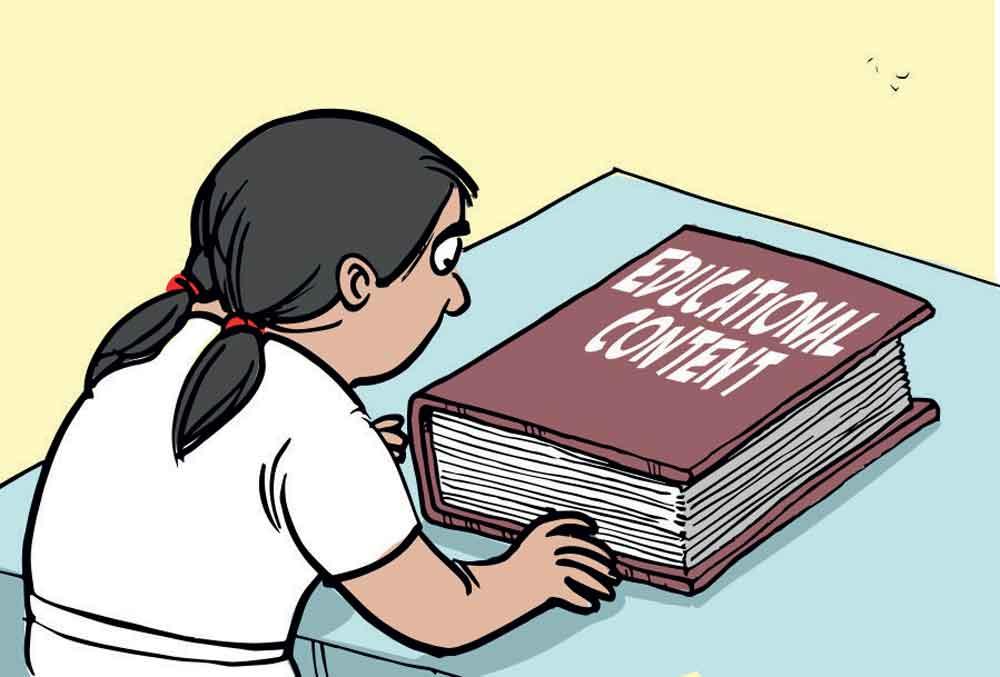
Hastily printed textbooks in Sinhala in order to meet that ‘24 Hour’ dictum took place. Those books were not always replaced with new translations. So what happened was that any research or new information in English texts was not included in new Sinhala texts. One reason for this inability to keep up with world knowledge in every subject was the expense of regular translation and printing was very high. Also translations implied excellent knowledge in both languages of Sinhala and English. This was not always available.
Another drawback was that there was a limited number of words in Sinhala that could be used as synonyms of the English word. Accordingly new words were coined. This was necessary for Science terminology especially.
Tamil students fared much better. There were always reference books from Tamil Nadu which were up to date and were available to the Sri Lankan Dept. of Education. The textbook problem may be better these days (long after Independence was achieved) though I have no idea of the content of Sinhala texts in subjects like History and Geography. Frankly I doubt there is anything much in World History which has been translated into Sinhala as school text books and knowledge in that subject has become woefully inadequate. History is my subject of study and interest. Its deterioration saddens me. I hope that Science and Technology fare better. I am told they do so simply because many of those subjects are now taught in English-- at public exam level anyway.
Coming now to 2025. Students of today need virtual suitcases to carry their daily paraphanalia to school. What do they need to carry?
Firstly come textbooks of course which are often heavy, bulky tomes. Next come exercise books which have doubled in number because new syllabuses require ‘Course books’ and ‘Reference Notes’ kept on almost every subject. (Then, if any advanced reference textbooks are available in Sinhala they are probably added.)
Pupils these days need sports shirts, a change of clothes, perhaps a tennis racquet, a swim suit, running shorts or any other sports equipment. An extra pair of shoes is de rigeur in these days of specialised sports and due to climate heating up the children must carry a flask of drinking water with them at all times or risk dehydration. A snack or maybe their lunch is included in this daily array.
I remember a time when there were no special shoes for sport. We all wore Bata tennis shoes. It was all that was available anyway. If we had netball practice in the mornings we simply kept the same shoes on all day. Boys DID have special shoes I am told for certain sports like rugger but nothing like what is needed now.
Today, girls need to carry a certain type of shoe for basketball. A different variety of shoe for gym practice and a spiked shoe for athletic practice. If the old tennis shoe is in use for ANY sport I would be surprised to hear it. Everything seems so specialized these days and students are ambitious. Ergo, they are burdened with all sorts of extraneous articles which are considered vital to their daily time tables.
A year or two ago there was a discussion in the Press about this burdensome daily luggage that students had to carry to school. It was particularly difficult if the student did not use a private car. Carrying equipment in school buses was hard and the weight of that load was seriously damaging to students' spines. I do not recall any solution other than giving students lockers in school where they could leave much of their daily paraphanalia locked up safely.
Is the present Dept. of Education aware of the new knowledge that needs to be taught in schools? Is it aware of whether text books of all this new information is available? How is The Dept of Education going to translate all this new knowledge into Sinhala? At this point does not our language policy seem outdated?
The expense of building those lockers and the space need for hundreds of children to store personal belongings became too great to really work out well. So the rat race continues with school bags bulging at the seams and students doing back breaking work getting to school each day.
During the pandemic all this changed so dramatically it hardly seems credible. Online classes came into effect. Online teaching means NOTHING needs to be carried and at that time this total lockdown meant ALL classes were held online. Obviously there was a swing back but the new “normal” was going to be a “hybrid” model which was already being implemented abroad. Online classes plus classroom teaching began being handled together. Sports fitted into this in a much more streamlined manner.
So we have begun thinking along new lines. This is one of the plus points the pandemic has forced on us. Here we are in 2025 with a new Government and new systems being implemented. Two points of the current debate caught my attention. One was the question of not including History in the syllabus. I strongly feel we must TEACH WORLD HISTORY along with Sri Lankan History. We need to be citizens of the world and our students must be aware of their place in it. In my opinion History is one of the most important subjects to KNOW and should be compulsorily taught from Junior to Upper School.
To my surprise the other subject being debated was Corporal Punishment. I had not realised that it was still in operation and being allowed in Sri Lanka. Here I am after 60 odd years of teaching (in Private and International Schools) and I assumed corporal punishment was banned half a century ago. Can any civilized nation allow teachers and Principals to actually strike their students? In many countries even parents cannot correct children physically. Children can report a parent to the authorities if they are being abused. So are we really allowing future generations to face the trauma of corporal punishment?
With the advent of AI drastic educational changes will have to be made. New subjects will take the place of former ones. We will have to prepare children to face an uncertain future, a totally new kind of career and a completely different kind of job. They are going to have to compete with Robots who do not make human mistakes and errors.
A moment of lucidity is seriously needed now. What are the choices in education going to be? As a former Principal, I would have known how to advise a parent. I would not be able to do so now. Is the present Dept. of Education aware of the new knowledge that needs to be taught in schools? Is it aware of whether textbooks of all this new information is available? How is the Dept of Education going to translate all this new knowledge into Sinhala? At this point does not our language policy seem outdated ……indeed even applicable? And if it is applicable I would like to know how!
NOW is the moment for the English Medium to be encouraged. Since much of Asia DOES use English to a great extent (even as National Languages in some African countries) it should be available to those who want it in Sri Lanka. And I can assure the Government that most people will.
I have suggested this before and I now barrel ahead with the same suggestion again. Let the Minister hold a referendum to decide this vexatious matter and our educational planners of yore may receive a sharp and salutary lesson.