Reply To:
Name - Reply Comment
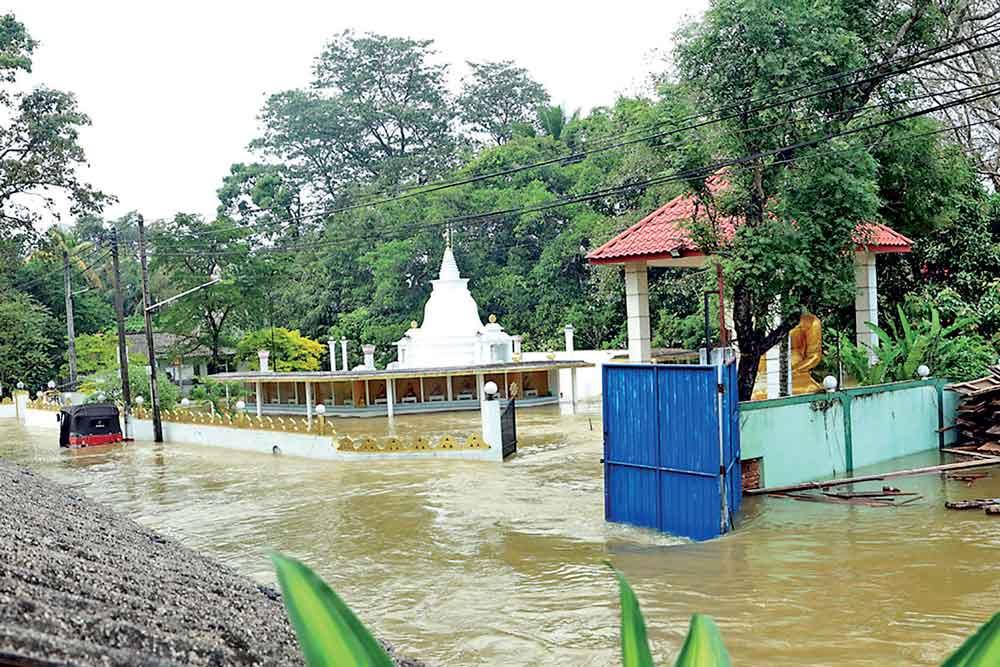
 Cyclone Ditwah which struck Sri Lanka, bringing torrential rains and strong winds that triggered widespread flooding and deadly landslides across the island has wreaked havoc. Rainfall in some regions exceeded 300 mm in a very short span of time — enough to overwhelm hillsides, rivers and drainage systems.
The impact has been severe. According to the country’s disaster management authorities, the death toll has risen sharply, with more than 400 lives lost and many more unaccounted for across various provinces. Thousands of homes have been destroyed or severely damaged; more than 15,000 houses reportedly collapsed, and tens of thousands of people were forced out of their homes and into temporary shelters.
Infrastructure across the country was badly affected. Roads and railways were blocked by mud, fallen trees or floodwaters; public transport including trains was suspended in many areas. Floodwaters even threatened urban areas — parts of the capital and low-lying suburbs were inundated, prompting emergency evacuations along riverbanks.
Recognising the severity of the disaster, the government declared a state of emergency. Military, navy and air force units have been mobilised to support rescue operations, evacuations and relief distribution where floodwaters or landslides cut off access.
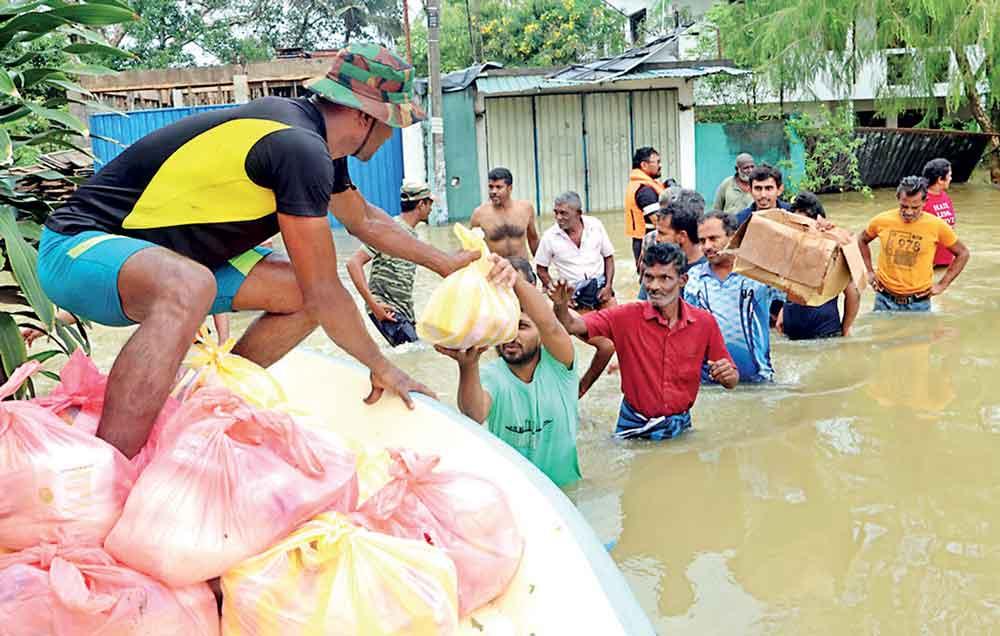
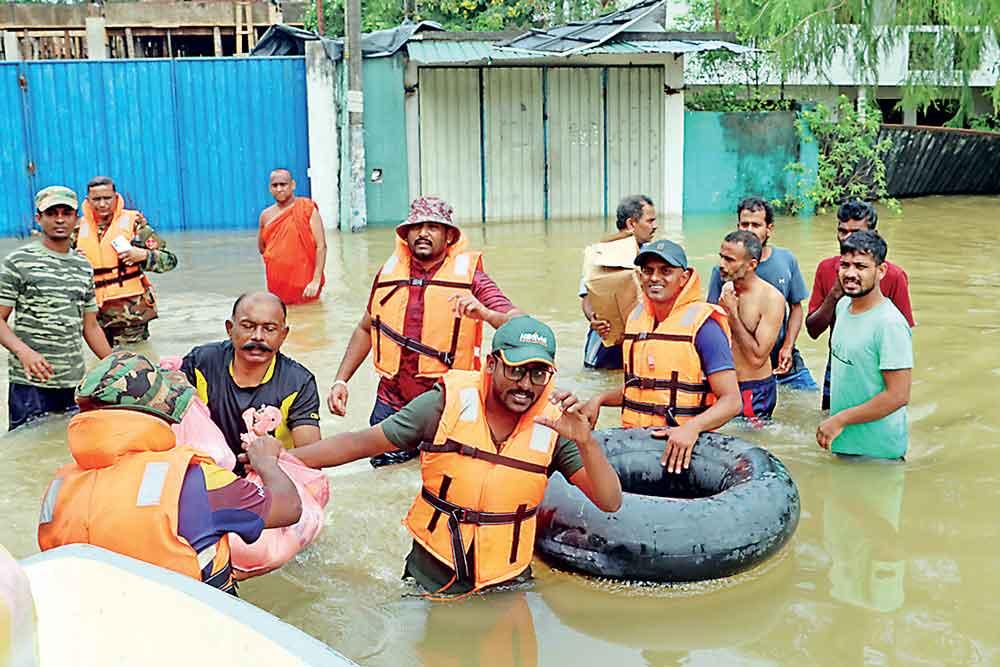
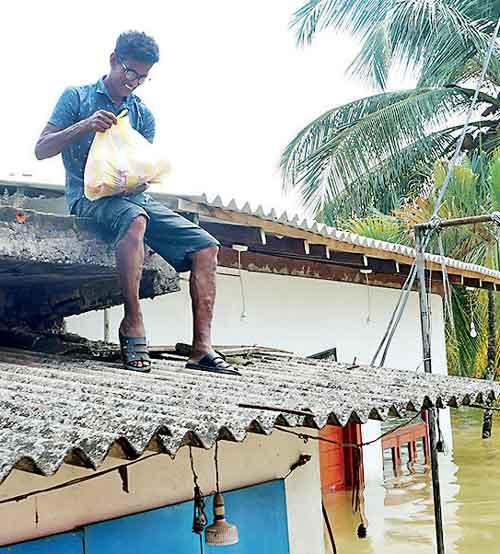
For the many families caught in the deluge, the consequences have been heartbreaking. Entire homes were lost overnight. Parents and children — many of them in rural or semi-urban areas — found themselves wading through waist-deep floodwaters, carrying what little they could salvage: some clothes, a few personal items, maybe a family pet. Reports describe people stranded on rooftops, in trees or other high ground, awaiting rescue by soldiers or volunteers.
Thousands of displaced people are now sheltering in state-run centres — schools, community halls or other safe buildings. The forced evacuation has upended their daily lives, livelihoods, and the sense of security many took for granted.
Beyond the immediate damage to homes and infrastructure, there is a looming economic toll. Many families reliant on agriculture, small trade or daily-wage labour have lost not only their homes but their sources of income. Crops, livestock, small shops — all vulnerable to flooding — face damage or total loss. The path to recovery will be long and arduous for many.
Yet amid the devastation, a powerful story of solidarity, compassion and resilience is unfolding across Sri Lanka.
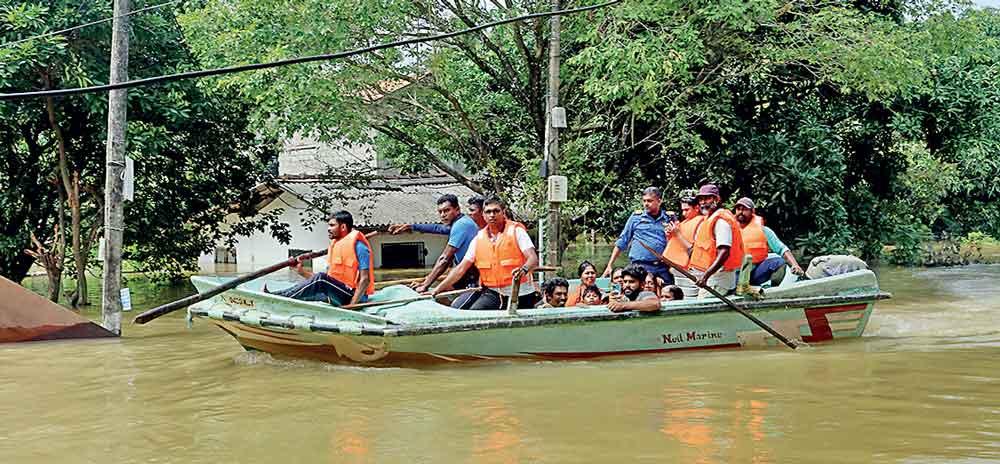
From the moment the rains began, ordinary citizens — neighbours, friends, strangers — sprang into action. People launched boat rescues, turned private or public buildings into makeshift shelters, and shared whatever food or dry clothes they had. In many flooded suburbs, whole street communities pooled resources to help elderly, disabled or isolated households.
In that true serendipitous style that the people of this island know well, in the face of tragedy, they are already proving that unity, compassion and resilience can — and will — carry us forward.
Thousands of volunteers — some from civil-society organisations, others spontaneous helpers from villages and towns — have joined hands to provide relief. In many places, local youth organised to deliver drinking water, ration packets, blankets and other essentials to families stranded or displaced by the flood.
At the national level, the military and emergency services have worked day and night to evacuate stranded families. Soldiers, sailors and air force crews airlifted residents from rooftops, boats rescued people stranded in floodwater, and convoys delivered basic supplies to remote or cut-off areas.
International support has also started to arrive. Aid shipments — food, water, emergency supplies — have been offered by friendly nations and international relief agencies responding to the national appeal.
But perhaps the most inspiring effort has come from the people themselves — communities banding together across class, religion, ethnicity, region — to help those worst hit. In villages and towns from the central highlands to the outskirts of Colombo, there are countless acts of kindness: a family sheltering a displaced neighbour; a youth group cooking meals for affected families; a man using his motorboat to ferry stranded elders to safety.
In many ways, this response echoes a familiar truth about Sri Lanka: that when the skies darken and floodwaters rise, people come together. Old rivalries or social divides fade, replaced by compassion, shared purpose and strength.
As floodwaters finally begin to recede in some regions and the rains ease, the focus shifts to relief, rebuilding and rehabilitation. But recovery will take time — rebuilding homes, restoring livelihoods, clearing debris, ensuring water, electricity and sanitation. Many families will need material support; many children will face lost months of schooling; many livelihoods may take months or years to recover.
Still, the spirit shown by countless Sri Lankans gives hope. The solidarity, the volunteerism, the instinctive readiness to help — these are powerful resources. They aren’t easily destroyed by storms or floods. If the country comes together now to rebuild — supporting the most vulnerable, lifting up communities, offering compassion — Sri Lanka can emerge stronger.
In the weeks ahead, the real test will be sustaining this momentum of compassion. As the headlines fade and the immediate drama of the cyclone subsides, thousands of families will still be grappling with the aftermath—rebuilding homes, replacing lost belongings, restoring livelihoods and finding emotional stability after profound trauma. This is the moment Sri Lanka must dig deep. Relief efforts cannot end when the rains do; they must evolve into long-term support systems that help families stand on their feet again. From community groups to corporate donors, from diaspora networks to ordinary individuals willing to give a little of what they have, the coming weeks will require sustained generosity, patience and commitment. The road to recovery is long—but with continued collective effort, no family has to walk it alone.
In that true serendipitous style that the people of this island know well, in the face of tragedy, they are already proving that unity, compassion and resilience can — and will — carry us forward.