Reply To:
Name - Reply Comment
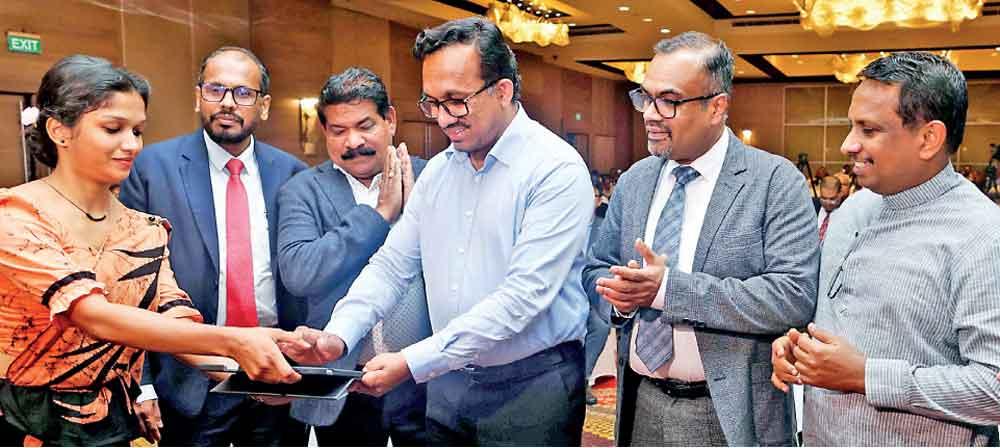
Minister of Industry and Entrepreneurship Development Sunil Handunnetti marking the launch of the National Export Development Plan 2026 - 2030 while government and EDB officials look on
Pix by Pradeep Dilrukshana
 By Shabiya Ali Ahlam
Sri Lanka yesterday unveiled an ambitious five-year export roadmap targeting annual export earnings of US$36 billion by 2030, as the government seeks to deepen the country’s post-crisis recovery by diversifying exports, expanding market access and addressing long-standing constraints that have limited competitiveness.
The National Export Development Plan (NEDP) 2026-2030, developed by the Export Development Board (EDB) with technical assistance from the Asian Development Bank (ADB), identifies eight priority sectors ranging from digital services and electronics to boatbuilding, processed foods and marine industries, while also focusing on trade facilitation, logistics, innovation, skills development and sustainability standards.
Sri Lanka attempting to convert the macroeconomic stability achieved under its IMF-supported reform programme into stronger export-led growth, amid renewed external pressures including higher fuel import costs and global trade uncertainties.
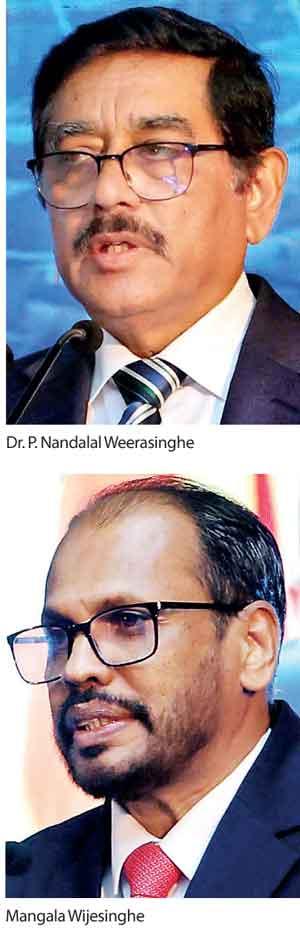
“The plan is ready, and togetherness is very, very important,” EDB Chairman and Chief Executive Officer Mangala Wijesinghe said, calling the strategy “a shared national commitment to building a stronger, more competitive and export-driven Sri Lankan economy.”
He noted that the plan is designed to move beyond export promotion alone by systematically addressing cross-sector bottlenecks, including trade logistics, market access, quality standards and the development of export-ready small and medium enterprises.
“The Export Development Board recognizes that exports are not merely a source of foreign exchange; they are a powerful driver of economic transformation, investment, innovation, productivity and quality employment,” Wijesinghe said at the launch event in Colombo.
The roadmap was formulated as a national priority under the 2025 Budget and aligns with the government’s broader vision of ‘A Prosperous Nation - A Beautiful Life’.
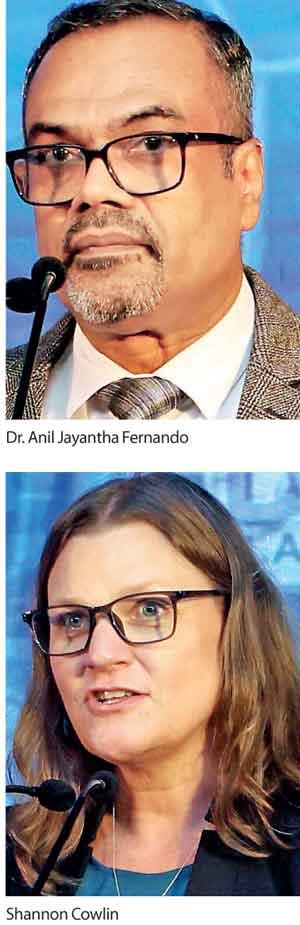
ADB Country Director for Sri Lanka Shannon Cowlin noted the timing of the plan was significant as Sri Lanka’s economic recovery remained vulnerable to external shocks despite notable progress in restoring stability.
“Export development is not only about increasing trade volumes. Stronger and more diversified exports can generate non-debt-creating foreign exchange, support reserve buffers, reduce reliance on external borrowing and help Sri Lanka better withstand future shocks,” she said.
Cowlin pointed out that Sri Lanka’s export basket remained relatively narrow and that participation in regional and global value chains was still below potential.
“The launch of the NEDP is an important milestone, but the real test will be implementation. Export development takes steady reform over time. As they say, it is a marathon and not a sprint,” she added.
 The plan forms part of a broader reform agenda supported through ADB’s Trade, Investment and Industry Development Programme, which includes measures to modernise trade facilitation, strengthen SME competitiveness, improve economic zones and simplify regulations.
Meanwhile, Deputy Minister of Finance and Planning Dr. Anil Jayantha Fernando said the export strategy is closely aligned with the government’s broader economic transformation agenda, particularly efforts to move beyond stabilisation and achieve sustainable growth.
“It is a fact that, our resources, our capabilities and the technology that we have, we have not reached our potential,” he said.
“It simply tells us that we have not diversified our exports based on our capacities and the global changes that are really created by technology,” Fernando said, describing product and market diversification as key pillars of the strategy.
The minister said Sri Lanka’s economic recovery had exceeded expectations following the crisis, with the country recording 5 percent growth in 2025 and 5.1 percent growth in the first quarter of 2026 despite adverse weather events and geopolitical disruptions.
Beyond export promotion measures, Fernando said the government is pursuing complementary reforms in digitalisation, human capital development and labour market modernisation to improve productivity and strengthen Sri Lanka’s competitiveness.
The NEDP is built around two broad pillars: sector-specific interventions targeting high-potential export industries and a set of cross-cutting reforms aimed at reducing trade costs, improving logistics, enhancing standards compliance and strengthening market linkages.
The government said the plan would also place greater emphasis on ESG compliance, innovation, entrepreneurship and integration into global value chains as Sri Lanka seeks to position itself as a more competitive export economy over the next five years.