Reply To:
Name - Reply Comment
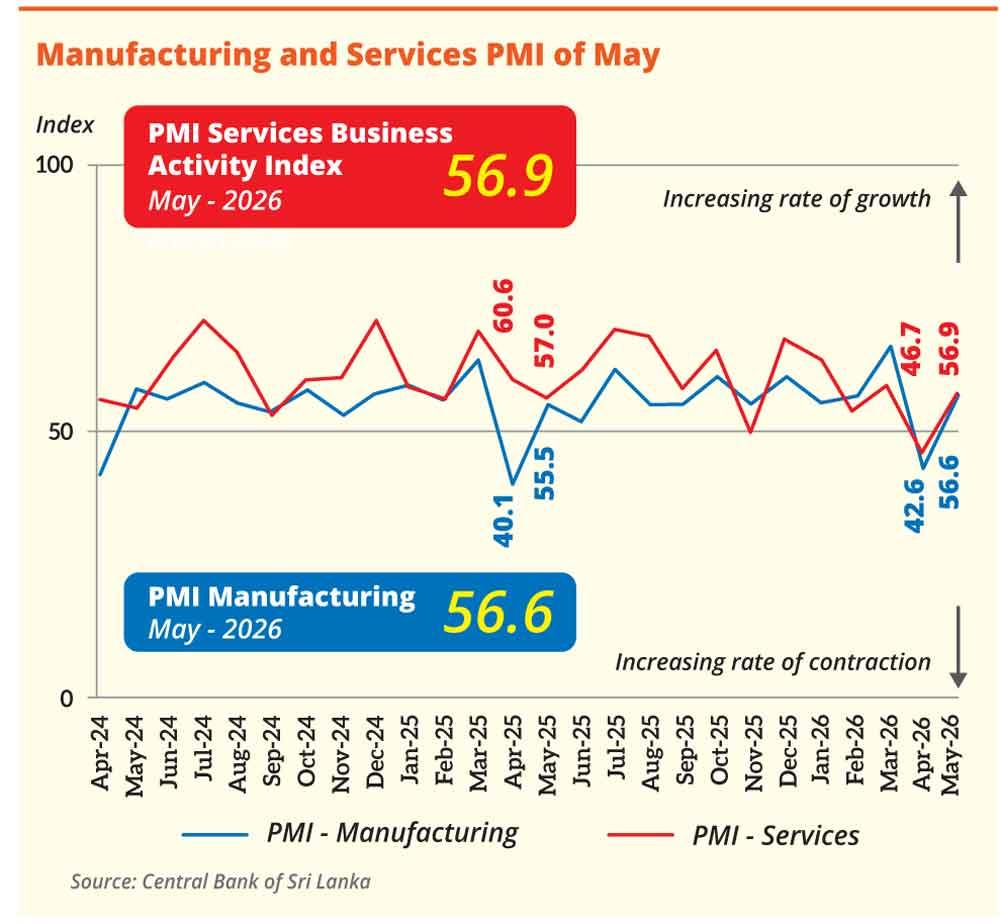
Private sector activity regained momentum in May, with both manufacturing and services expanding after a softer April, although businesses remained wary of risks linked to the escalating conflict in the Middle East.
The latest Purchasing Managers’ Index (PMI) survey released by the Central Bank showed the Manufacturing PMI rose to 56.6 in May, while the Services PMI climbed to 56.9, signalling a broad-based improvement in economic activity across the two key sectors.
The manufacturing sector was supported by stronger demand for food and beverages as well as textiles and apparel, with firms reporting higher new orders and production during the month. The increase in output was also aided by a higher number of working days compared with April.
Reflecting the pickup in activity, manufacturers increased purchases of raw materials, leading to a rise in stocks of purchases. Supplier delivery times, however, remained extended, suggesting continued pressure within supply chains.
While the latest reading points to resilient industrial activity, businesses indicated that the conflict in the Middle East continues to create uncertainty for operations and future planning. Expectations for the next three months nevertheless remained positive, although geopolitical risks weighed on overall sentiment.The services sector also rebounded strongly in May after contracting in the previous month, driven mainly by growth in financial services, professional services and other personal services. Activity in real estate, information technology programming and goods transportation sectors also improved during the month.
The increase in business activity translated into stronger new business volumes, particularly within the financial and professional services segments. Wholesale and retail trade, goods transportation and other personal services also contributed to the expansion.
However, employment in the services sector continued to weaken as firms reported staff departures through retirements, resignations and the expiry of contract-based positions. Backlogs of work also declined at a faster pace, indicating that businesses were able to clear pending workloads despite the reduction in staffing levels.
Looking ahead, service providers remain optimistic that activity will strengthen further in the coming months, supported by an anticipated increase in tourist arrivals during the Kandy Esala Perahera season and improving domestic economic conditions.
Yet, much like the manufacturing sector, businesses cautioned that global uncertainties, particularly those arising from geopolitical tensions, could cloud the outlook and temper the pace of growth.