 SUSITHA FERNANDO
Reply To:
Name - Reply Comment
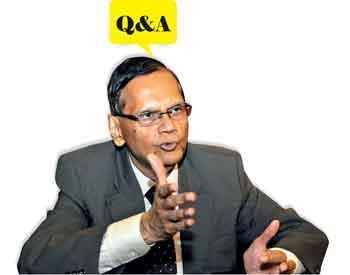
Senior politician and one of the few MPs who held almost all prominent and most responsible portfolios in almost all governments since he entered politics in 1994, Prof. G. L. Peiris carried a massive experience in major areas like economics, education, foreign affairs, constitutional and judiciary. The former Dean of the Faculty of Law and Vice Chancellor of the University of Colombo, since entering politics as a National list MP and a representative of the 1994 Chandrika Bandaranaike Government, Prof. Peiris has held cabinet portfolios in areas like External Trade, Justice and Constitutional Affairs, Foreign Affairs, Education, Export Development and International Trade, Finance (Deputy) and worked with the most of the past Presidents. While allegations have been made relating to the issues of finance, education, rule of law and governance against the National People Power (NPP) government, Prof. Peiris who holds a Bachelor of Laws with First Class Honours from Ceylon, and Doctorates from Oxford University and Sri Lanka spoke to the Daily Mirror about his view. Excerpts of the interview:
 Q: To start with, in 2024, the pattern of election demography changed and for the first time in the Sri Lankan political history of over 70 years, a left wing government came to power completely rejecting right wing parties. Where did these major rightwing parties go wrong and why?
No, I think the results of both elections, the presidential and the parliamentary, indicated a clear desire for change. That was quite apparent. There was a sense of fatigue with the political establishment and a yearning desire for a completely new point of departure. New faces, new policies. So, this was a very strong feeling that was reflected in the election results. The problem, however, is that the present government interprets that mandate in a particular way. That is, their interpretation of it is that the mandate implies the wholesale rejection of all governments. They deny the fact that there has been any progress whatsoever since 1948. That is, 75 years was a complete waste of time. Everything was negative about it. Corruption, fraud, nepotism, selfishness, everything. So, the entire 75 year period was tarred with that same brush. Now, that is not a realistic appraisal of the situation.
I will just compare Ceylon in 1948 with Sri Lanka today. What was the life expectancy in 1948? What is the life expectancy now? How many central schools and Madhya Maha Vidyalayas were in existence in 1948? How many such schools have we now? Then, you take the whole issue of social mobility. A child from a rural background, without exam papers, how far could such a child have got in 1948? How many people from a rural background found their way to a university? All that has changed. So, there has been enormous progress. Per capita incomes have risen. There is no denying that people enjoy today a far better life than they had in 1948. The most obvious changes are in health and education.
So, to say, let’s forget about all of it. Just rub it off the slate. Erase it altogether. That’s not realistic. It’s like a flowing river. So, the challenge is to build on that.
Certainly, eliminate what is not good. That also is not something that can be accomplished 100%, but it is something that you must try to achieve. But that is why the present government has a certain insular myopic quality.
We work only with our party card. We don’t trust anyone else, including senior officials. So, the relationship with the bureaucracy is also under strain because these are people who have served other governments, other governments with different policies, which the people have rejected.
Therefore, we are very cautious about getting any input from anybody other than from our own cadres. Now, that is not a practical way of governing a country.
Q: And do you think that’s partly immaturity on the part of those in the government?
Yes, it is naturally. I believe that to make a success of any job in the world, you need some form of exposure and training. That is not to criticise anybody. That is a fact of life.
You need some sort of training. So, that is not there and that is now manifest in many of the things that are happening. So, it is that combined with desire not to entertain any point of view. So, if you take the education reforms, the principal drawback was the desire to trumpet this as a party achievement and to take all credit for it. But that doesn’t work. I mean, you need to consult with the stakeholders, the principals, the school teachers, the parents, the students.
So, it is then that a digital platform we once established. We established a digital platform when I was the education minister. Nobody has all the answers.
So, if it is to stand the test of time, you must have inputs from all quarters, people who are stakeholders in the system. So, that is where it fundamentally went wrong. So, it is not just a lack of experience, but a reluctance to consult and this feeling of being comfortable only with the party cadres.
Q: Now you talk about the education reforms and you were also the Minister of Education in the 2020 government. There was a long need for reforming of the education system. What do you think about the present education reforms presented by the government?
There is no doubt, the country needs education reform. There are absolutely no two words about it. But then it has to be a thorough process, properly thought out, not adhoc. Now, the issue at the moment is about this module for grade 6. So, that is a very emotive issue and that has dominated the discussion about the education reforms. But there are far more fundamental matters. So, it is not a question arguing with the government. That is a trivial matter. It can be easily eliminated and the rest of it can be implemented.
But look at other aspects. Now, the module, grade 1, schools are starting today (29)
Grade 1, there are about 43 QR codes. Now, this means that this material is transmitted to the teachers and they have to make it available to the students. So, the infrastructure has to be available. You need smart phones. You need computers. You need internet connectivity. All of this is essential for the education reforms to work properly on the ground.
Now, is it available? And the government’s professed objective, they say that all these students sit for common examinations. Some come from affluent backgrounds. They have all the facilities at their disposal. So, is it fair by a child from a different social stratum who does not have access to those facilities? But the reforms must be implemented, but after making infrastructure available across the board, so that the differences far from being accentuated will be reduced. But if you implement it like this, children from affluent backgrounds in Colombo, they will have access to everything. Apple computers, you name it, they all have it.
The rural child does not have any of it. So, how many schools in our country have internet connectivity? How many schools in our country have computer facilities? Then, even teacher training centres, are they adequately equipped? The smart boards, smart phones, all these. So, it is very important to ensure that these things are in place and then the reforms must happen after that. Otherwise, you have the unintended consequence of increasing the inequalities rather than doing the opposite. So, that is not something that can be solved by tearing away some pages or making some cosmetic changes. You have to evaluate the process as a whole.
Q: And one of the burning issues existing is the economy. You were once Deputy Finance Minister. Following the worst ever economic crisis Sri Lanka went through in 2021 and 2022, we see this government continuing to follow the system that former President Ranil Wickremesinghe started with the IMF and this government does it even successfully. Is that the way we should go?
No, you see, the basic problem there is the gulf between the promise and the delivery. Now, as I said earlier, this government was elected on a platform of complete change.
Reject everything that has gone before. Now, far from doing that, they are continuing exactly with the policies, the economic policies of Ranil Wickremesinghe. They is not one iota of difference, not at all. If at all this is more right-wing than Wickremesinghe, right, so then in opposition, the JVP said, you know, the IMF agreement has to be changed. But what is the change that has occurred? Not one iota, not one comma, not one full stop has been changed. So, it is Ranil Wickremesinghe’s policy that’s implemented by the JVP-NPP government.
So, if Ranil Wickremesinghe had been governing the country today, what is the difference if the same policies would have been implemented? So, so long as they are on that track, they feel they are comfortable. But whenever something new is attempted, there are enormous problems. So, it is basically contrary to the promise that this is the beginning of a complete revolution, straddling all sectors of national life. What we have is not change, but total continuity as far as we can make sense of it.
Following the Ditwah disaster, more than 50 world’s leading economies said in view of this unprecedented calamity that you have to revisit the IMF agreement and its basic structure. And is the government doing anything about it? No. So, then this promise of change, the new point of departure, how is that going to be reflected? Then, there is talk of an international Donor conference. Surely, can you do that one year after Ditwah? It must be done soon.
Because the appetite will diminish over time. There are other situations in the world which are also crying out for relief. Then, has the government done a proper evaluation? Have we now taken Indian assistance? That was entirely spontaneous.
It is not that Sri Lanka went to India with a set of requirements. This is our requirement, this is our requirement for rebuilding houses, railways, roads. There was no breakdown like that which was submitted to the government of India. India took the initiative and offered us what they could. Now, can you do an international conference like that?
Now, we organised in June 2003, that is, Ranil Wickremesinghe was the Prime Minister. In 2003, Chandrika Kumaratunga was the President and Wickremesinghe was the Prime Minister.
The Tokyo conference on the 9th and 10th of June 2003, there were about 51 sovereign countries participating and about 23 international institutions. But Sri Lanka formulated the plan. This is what we required. We didn’t hand it all over to the World Bank and ask the World Bank to prepare an estimate of what was required. That is the business of the government of Sri Lanka. We need to do that. So, in all of this, we can see a lack of preparation, a lack of method. Naturally, the results are disappointing.
There is always this very disturbing situation regarding the Auditor General. Now, the Auditor General performs a constitutional function. He is the head of the financial management apparatus of the government.
That is his responsibility. Now, we are in a situation where we are asking for funds from foreign governments or Ditwah. Now, how can foreign governments contribute their taxpayers’ money in a situation where the very pinnacle of the apparatus for financial management in the country is empty? No appointments have been made.
So, that is not right. Many foreign governments prefer to give their money to international NGOs and so on, rather than to the government of Sri Lanka. That is something which even affects the capacity of the government of Sri Lanka to attract, at the highest possible level, resources which we badly need to deal with the problems arising from Ditwah. The enormous suffering, the lives that have been lost, houses, roads, railways, all of that.
So, it is very important. If you have a constitutional council at all, you must respect its independence. If you want the constitutional council to be a rubber stamp, you may as well not have it at all. So, the independence of the constitutional council really comes from the free members of civil society. It is because of the votes of the members of civil society that some of the government’s recommendations have been turned down in the past, with regard to the IGP, with regard to the Auditor General and so on.
So, it is very important to protect that independence. Because these are positions which must command the confidence of the public at large. There must not be a political colouring. Therefore, the situation regarding the continuing vacancy in the post of Auditor General is hugely detrimental to Sri Lanka’s interest in so many different ways.
Q: You were also the Minister of Justice during the Chandrika Bandaranaike Government and you have alleged that this government is interfering with the judiciary and other branches of democracy and rule of law. Your response?
Now, take one by one some of the current issues. The whole issue relating to the Attorney General. Now, the Attorney General has a specific function to perform. It is the AG who decides whether there is sufficient evidence to institute a prosecution. Is the evidence enough? He has to reflect on the value and the adequacy of the evidence. It is his decision. And the law very clearly requires him to exercise a completely objective discretion in the matter.
He must bring to bear an independent mind. He cannot mix it up with political or other extraneous considerations. He decides whether to institute a prosecution in exceptional circumstances. He has the power to withdraw a prosecution which has been instituted. The discretion is his and if he makes a mistake, as he has pointed out, he is subject to correction by the Court of Appeal and the Supreme Court.
So, it is not an arbitrary exercise of power. But it is not possible to tell the Attorney General, you file action, don’t worry about the outcome. It is for the courts to decide the outcome.
You just file action. Now, he can’t do that. That would be a betrayal of his constitutional role. He has to be satisfied. So, undue pressure exerted on the Attorney General is not just a disservice to the Attorney General, it leads to the destruction of one of the pillars of the system of criminal justice, the whole question of public confidence in the system. You can’t have political considerations determining the exercise of discretion by the Attorney General.
Then there are some other things that are happening. Now, the appointment of a sitting High Court judge as the additional secretary to the Ministry of Justice, that is wrong. He has to do justice between citizen and citizen, between citizen and the state.
Now, how can he do that if he is a senior official in a government ministry? That is, he is a part of the executive establishment. How then can he dispense justice in a manner that would win the confidence of the public at large? There is an obvious conflict of interest. These are all developments which are hugely detrimental to the rule of law.
Then take the controversy relating to promotions of judges. There was a motion in Parliament asking for a select committee to consider the environment in which judges function with particular reference to promotion. The Speaker disallowed that on the basis that the Judicial Service Commission is exercising a judicial power and that Parliament cannot transgress on that judicial power.
Now, with all respect, that is completely wrong because the Judicial Service Commission does not exercise judicial power. The Speaker in his own ruling says that the only remedy in that situation is a fundamental rights application before the Supreme Court. But a fundamental rights application is possible only in respect of executive or administrative action.
It is true that the Judicial Service Commission consists of judges, Chief Justice and other judges of the Supreme Court. But the fact that they are judges does not mean that when they sit in the Judicial Service Commission, they are exercising judicial power. There are lots of situations all over the world where judges exercise, judges perform executive or administrative functions.
The JC does not hear cases, it does not dispense justice. It goes into transfers, promotions, disciplinary control of judicial offices. That is an executive and administrative function.
So, it went to say that judges will hereafter be promoted not on the basis of seniority, but on the basis of merit. What does merit mean? What are the criteria? You must have reasonable clarity and specificity otherwise it becomes arbitrary. So, the correct principle is what has been pointed out by the Bar Association of Sri Lanka.
The Bar Association said the normal rule must be seniority. But that does not mean that that is the absolute criteria. If there are reasons for a senior judge to be overlooked, then the reasons must be clear.
If there are no reasons, then there is no justification for overlooking seniority. That would not only create heartburn and a sense of grievance on the part of judges but it would also erode the confidence of the public and that is to be avoided because that is one of the pillars of a functioning democracy and it is one of the values that Sri Lanka has jealously guarded. It is one of the most valuable aspects of our heritage.
Q: There are also allegations that the NPP Government is moving towards a single party state and some politicians have openly said their plan is to take over state power amidst having the government power. What are your thoughts?
That is a very dangerous statement. A Government is elected for a limited period. And it is a trust, it is not an entitlement, it is not a privilege, it is a trust in the public interest. Those government powers have to be exercised for the public good for a temporary period. Then you have to go back to the people and ask for a renewal of that mandate.
So, in the meantime, whoever rules the country, then there are institutions which are part and parcel of a robust and vibrant democracy. These include the independence of the judiciary, the Attorney General, the Auditor General, the Right to Information Act. Now, that is the Right to Information Act, the commission is saying that vacancies are not filled and money is not being provided and in many cases where information is sought, it is declined on the basis of one of the exceptions, that it relates to public security and we can’t give the information. So, then the entire Right to Information becomes a nullity. It has no practical value. So, these are, whatever government rules the country, these are safeguards, these are levers, you refer to the separation of powers. After all, a government is not for the benefit of the people who are governing, it is for the benefit of the people who are being governed. So, the interests of the public at large are protected by these institutions.
And therefore, any onslaught on these institutions strikes at the very root of the democratic process and that is something that Sri Lanka has enjoyed even before we received independence.
Q: When the 2004 UNF Government headed by the then Prime Minister Ranil Wickremesinghe engaged in peace talks with the Liberation Tigers of Tamil Eelam, Peiris was appointed as the chief negotiator. Now you have written a book on that as well. I am asking a hypothetical question; do you think that if the LTTE acted differently would the future of the Tamil people have been different?
The fundamental problem there was that the LTTE was convinced of their military invincibility. They felt that they could not be defeated. And therefore, there was no need to make any concessions. And there was really no serious approach to a negotiated political settlement. The LTTE was very much interested in the interim self-governing authority. Because they wanted to legitimise the power that they had got de facto. But beyond that, they were not interested in a political solution. But that is now water under the bridge. So, the war ended in 2009 and now, we have to move forward from that point onwards. That is not to say that all problems have been solved. That is not the case. We can see a residue of problems which are very much there. Now, we have the Geneva process. We have a whole elaborate apparatus which has been set up under the office of the High Commissioner for Human Rights to gather evidence against Sri Lanka and so on.
So, the problems are very much there. But even in respect of those, now there is talk of legislation to set up a truth and reconciliation solution. We know nothing about it.
The public hasn’t been told. What is even the basic framework of this legislation? So, like the counter-terrorism legislation, will it be sprung as a surprise when all of it has been worked out? And then, will it have to be reworked from the very beginning? Isn’t it better to have consultation while the process is moving forward, while it is in motion?
Q: And do you think that we still need devolution of power to bring a long-lasting solution to the ethnic crisis in Sri Lanka?
See, the 13th amendment is part of the constitution. Now, Provincial Council elections have not been held for about 13 years. Now, what is the reason that all the money that is to be spent at the provincial level is at the sole discretion of the governor? The governor is the representative of the president and the sums involved are very large. Is that a fair situation when it comes to identifying priorities? What are the projects that we are going to spend money on? That should be the responsibility of the elected representatives of the people. But as we speak, there is not one single member of a provincial council anywhere in the country who has been elected by the votes of the people. Not at all. Nowhere. So, that is not right.
The argument is that the electoral system is defective, then you have to change the system. But you cannot postpone elections until you have a perfect system.
Electors will not be able to hold parliamentary elections as well because the parliamentary election system is also defective. So, the right principle is to hold elections at the proper time under the existing system and thereafter work at improving that system.