 CHATURANGA PRADEEP SAMARAWICKRAMA
 Reply To:
Name - Reply Comment
 Advises using light mode during daytime and dark mode at night
Light mode usually features a white or light grey background with black or dark text
Dark mode should be used only in low-light conditions. It is mostly preferred by people with light sensitivity
Many people spend their days in dark, air-conditioned rooms without exposure to sunlight
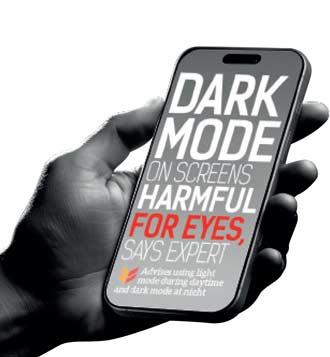 The dark mode (negative contrast display) feature on digital screens does not protect the eyes; it mainly helps reduce battery consumption and extend the device’s lifespan, Consultant Optometrist Jayamini Edirisinghe said.
He told the Daily Mirror that it is a myth that turning on dark mode can minimise damage to the eyes.
“Light mode usually features a white or light grey background with black or dark text, resembling a printed book or paper. It works well in bright environments, such as daylight or a well-lit room, but can cause glare and eye strain in low-light conditions. Dark mode, on the other hand, uses a black or dark grey background with white or light-coloured text. It reduces glare and can be easier on the eyes in dim or dark environments. Dark mode also saves battery on OLED screens. However, in bright light, reading can be more difficult, as the light text may blur against the dark background,” the optometrist explained.
Nowadays, many people spend their days in dark, air-conditioned rooms without exposure to sunlight, creating artificial sensitivity in their eyes. As a result, their eyes may become dry and prone to allergies when exposed to sunlight. People who prefer dimly lit rooms often use dark mode.
Pupil size adapts to light exposure: those who avoid bright light generally have larger pupils and are more likely to prefer dark mode.
Light mode is helpful for people with cataracts or those suffering from macular degeneration or glaucoma, especially in well-lit environments. Some people experience eye irritation and muscle strain when exposed to bright light, making it necessary to adjust screen brightness accordingly.
Dark mode should be used only in low-light conditions. It is mostly preferred by people with light sensitivity (photophobia), vision problems, or chronic migraines, as it helps reduce glare.
The optometrist advised using light mode during the daytime and dark mode at night. He also recommended scheduling periods to switch dark mode on and off during the day.