Reply To:
Name - Reply Comment
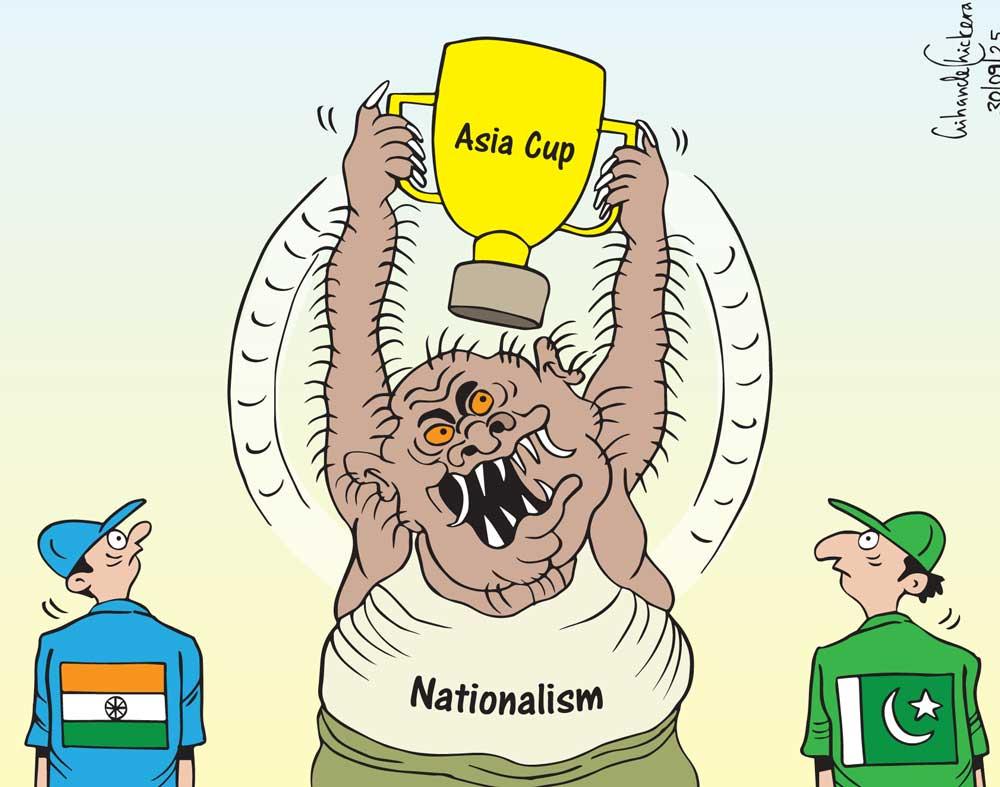
The cartoon shows a monster-like figure labeled Nationalism, grotesque in appearance, holding high the Asia Cup trophy. On either side stand two cricket fans—one in Indian colors, the other in Pakistani colors—looking on as though spectators to a prize they no longer own.
The imagery is biting. Cricket, often celebrated as a “gentleman’s game,” is here reduced to fuel for an uglier force: nationalism. The trophy, meant to symbolize sporting excellence, camaraderie, and continental pride, has been snatched away by a beast that thrives not on skill or fair play but on hostility and division.
The symbolism critiques how sport, especially cricket in South Asia, is rarely allowed to remain just sport. Matches between India and Pakistan, in particular, carry the weight of decades of political rivalry. Wins are transformed into proof of superiority, losses into national humiliation. Fans and media alike often amplify this into a spectacle of us-versus-them, where the game becomes a proxy for unresolved histories.
The monster’s ugliness is deliberate: nationalism in this form is not healthy pride but distorted fanaticism. Its twisted features mirror how pure love for sport is corrupted into hate-filled rhetoric, online abuse, and even violence. The two spectators’ expressions suggest both awe and unease—as if they, too, realize that what was theirs has been hijacked by something darker.
The deeper insight here is about how collective identity is manipulated. Sport can unite, but when nationalism takes over, it divides more deeply than it entertains. Victories are no longer moments of joy but tools of political capital, while defeats trigger scapegoating and resentment.
The cartoon asks us to consider: who truly wins when the Asia Cup—or any trophy—is lifted not by the players who earned it, but by the monster of nationalism that thrives on their struggle? The danger is that the game itself is lost, drowned in a spectacle far removed from the field.