Reply To:
Name - Reply Comment
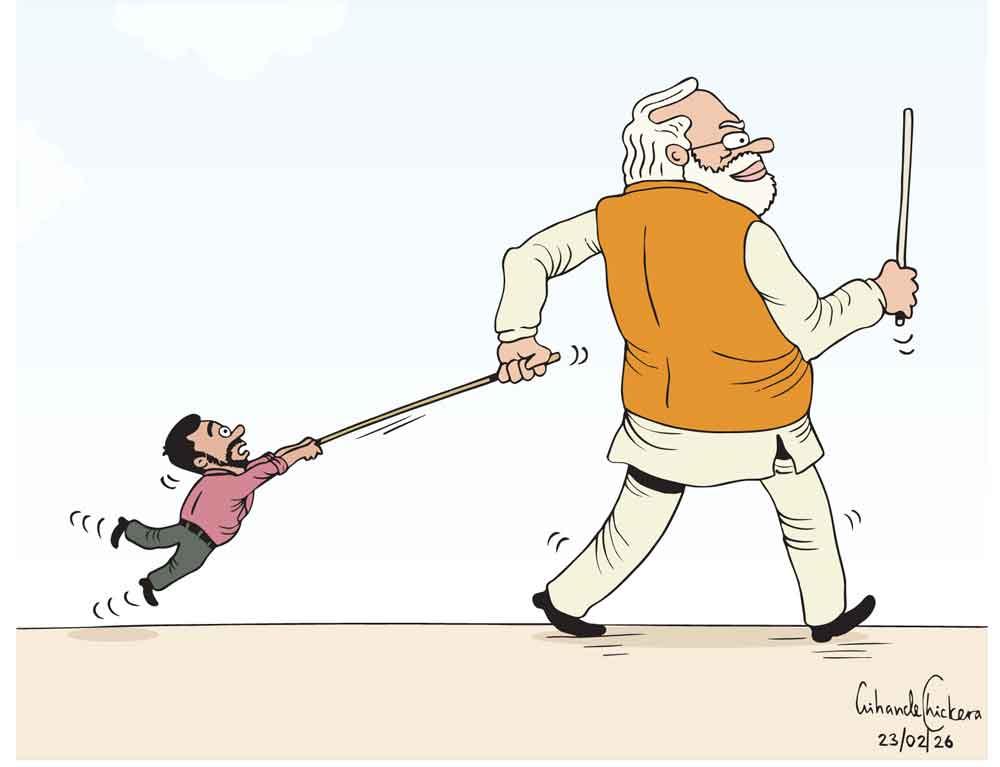
The cartoon shows a large political leader striding forward confidently, holding a long stick in one hand. With his other hand, he grips the end of the stick, which trails behind him and is being held by a much smaller figure. The smaller figure appears off balance, feet barely touching the ground, as he is dragged forward by the momentum of the larger man’s walk.
The exaggerated difference in size and posture highlights a clear power imbalance. The larger leader appears relaxed and purposeful, glancing back with a faint smile, while the smaller individual struggles to keep up, his expression strained. The stick functions as both a tool of control and a symbolic tether, suggesting influence or leverage rather than voluntary cooperation.
Viewers may interpret the cartoon in different ways. Some may see it as a commentary on political dominance, where a more powerful regional actor pulls a smaller counterpart along in alignment with its agenda. Others may view it more broadly as a reflection on unequal partnerships in diplomacy or governance. Rather than depicting open conflict, the image emphasizes asymmetry in movement and agency, inviting reflection on who sets the direction and who is compelled to follow.