Reply To:
Name - Reply Comment
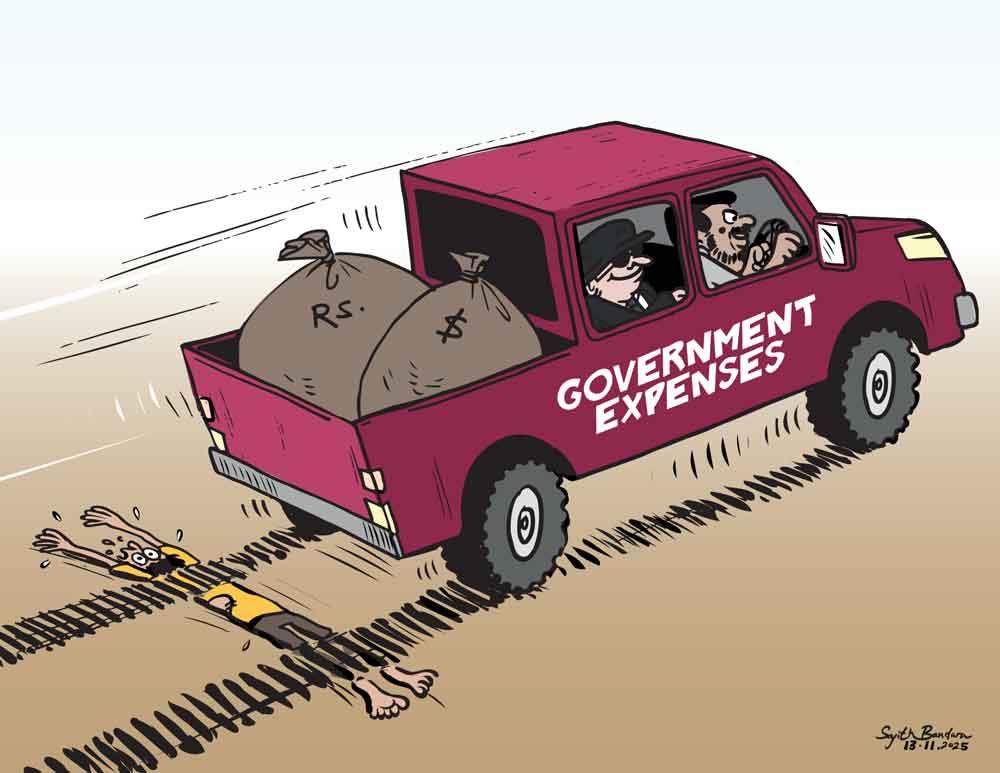
This cartoon presents a striking metaphor about government expenses and their effects on everyday citizens. A vehicle labeled “Government Expenses” speeds forward, loaded with large money bags. Beneath its wheels lies an ordinary person, stretched out helplessly as the truck drives on.
At its core, the image uses exaggeration and symbolism to highlight a tension familiar in many societies: the widening gap between rising public expenditure and the lived experience of individuals who feel overwhelmed by economic pressure. The cartoon is not assigning blame to any specific group or ideology; instead, it conveys a broader commentary on how complex financial systems can unintentionally burden the public.
The money bags — marked with currency symbols — represent the vast sums involved in running a government. These expenses may include essential services, administrative operations, and development projects. The officials in the truck symbolize the machinery of the state, steering these expenditures forward as part of routine governance.
Meanwhile, the citizen beneath the wheels becomes a powerful symbol of the individual who feels caught in the momentum of policies beyond his control. His exaggerated posture suggests vulnerability, but also invites viewers to reflect on how economic decisions can have unintended consequences on the most financially fragile members of society.
What makes the cartoon thought-provoking is its subtle balance:
It does not accuse any specific authority, nor does it claim that government spending is inherently harmful. Instead, it raises a universal question:
How can public expenditure be managed in a way that supports national needs without leaving individuals feeling overshadowed or overrun?
The image encourages a conversation about transparency, prioritization, and empathy in financial policymaking. It reminds us that behind every budget line lies a human story — and that sustainable governance must always consider the wellbeing of those who ultimately live with the outcomes.
In this way, the cartoon serves not as a critique of any one actor, but as a visual prompt urging societies to ensure that economic progress moves forward without leaving people pinned beneath its wheels.