Reply To:
Name - Reply Comment
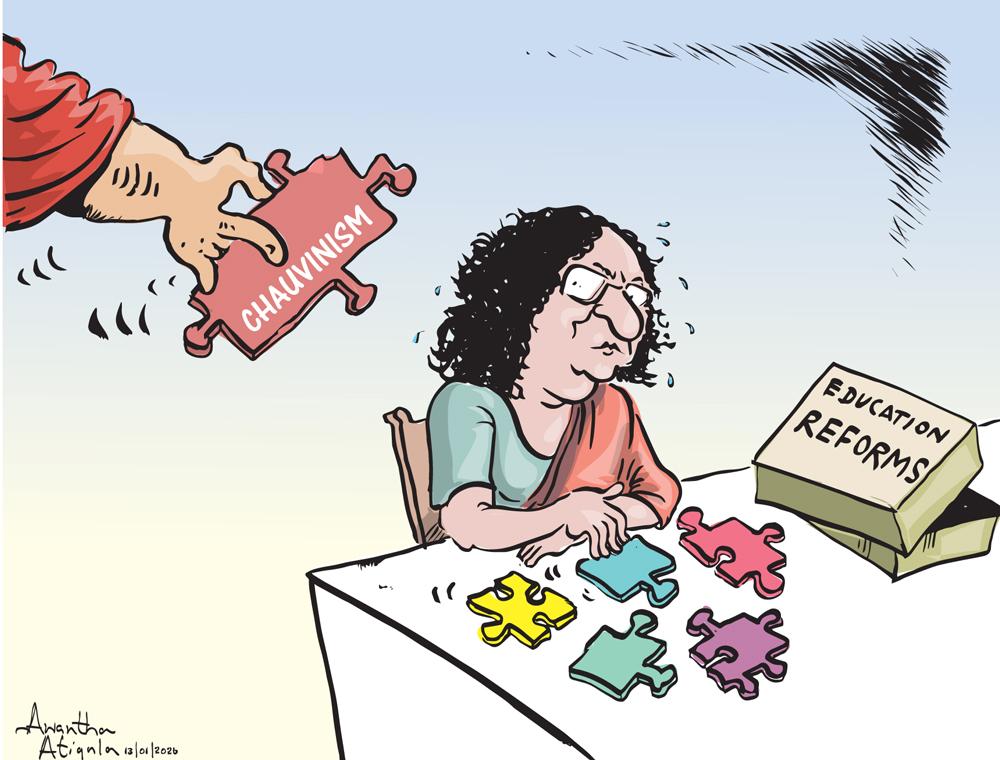
A policymaker sits at a table, sweating over a scattered jigsaw labeled “Education Reforms.” From off-frame, a large hand offers a single red piece stamped “CHAUVINISM.” The message is clear: when schools are being rebuilt, there’s always the risk that someone tries to slip in ideology that doesn’t belong.
The puzzle metaphor works well. Reform is complex; every piece should help learning, access, and fairness click together. A chauvinist piece—whether ethnic, religious, or cultural bias—might promise quick support, but it warps the picture. It narrows who feels seen in the classroom and turns shared curricula into contests of identity.
At the same time, the scene doesn’t say reforms are bad, or that cultural heritage has no place in education. It suggests a boundary: celebrate identity without letting exclusion drive policy. The uneasy expression on the reformer’s face captures the balancing act—listening to loud voices while protecting a space where all students can belong.
In short, the image warns that if divisive agendas are built into the system, the final picture won’t fit the country’s full diversity. The smartest move is to keep the puzzle open to evidence and inclusion, and leave the red piece in the box.