Reply To:
Name - Reply Comment
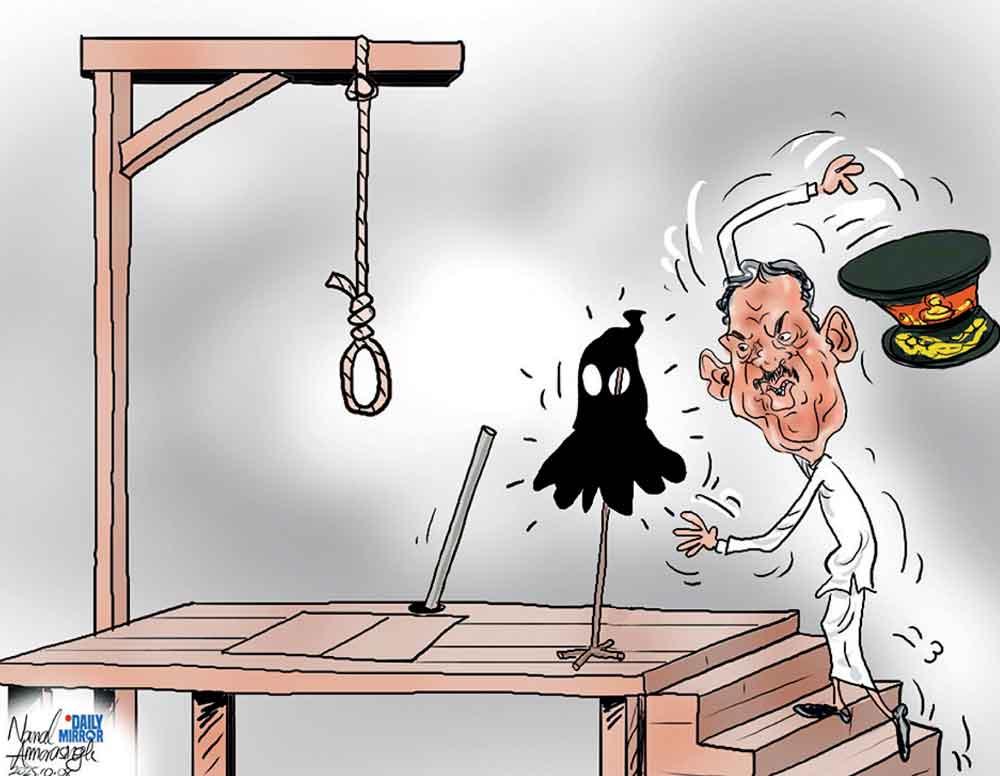
This cartoon is a haunting allegory on accountability, power, and the inescapable shadow of one’s past. It depicts a former military leader—now a civilian politician—standing before a gallows, his military hat flung aside. Before him stands a ghostly figure, a dark, faceless presence draped in a shroud, almost as if waiting to be hanged.
The symbolism is sharp and unsettling. The gallows represents justice—or the illusion of it. It is an instrument of reckoning, where the condemned are confronted with their actions. Yet the ghost on the platform suggests something different: a reckoning not with others, but with oneself. This is not an external trial but an internal haunting. The faceless specter could represent the ghosts of past decisions—those made during wartime, under the weight of command, or during moments when authority blurred into impunity.
The act of removing the military hat adds a layer of irony. It signifies the attempt to shed an old identity, to transition from a man of arms to a man of democracy. But the gallows shows that history cannot be so easily discarded. Power, especially when exercised without transparency, leaves behind shadows that refuse to die.
The cartoon, in essence, captures a moment of poetic justice—the leader is no longer the wielder of force but the one facing it. The ghost, meanwhile, is a stand-in for collective memory: the civilians, soldiers, and truths that linger unresolved. In a country where military influence has long loomed over politics, the image asks whether true accountability can ever be achieved—or if justice will remain a stage where ghosts, not the guilty, take the noose.
At its sharpest, the cartoon reveals a universal truth: when leaders rise through power unchecked, they eventually confront the specters of their own making. They may shed uniforms, titles, and rhetoric, but the ghosts of their past choices stand waiting—silent, shapeless, and immune to denial.