Reply To:
Name - Reply Comment
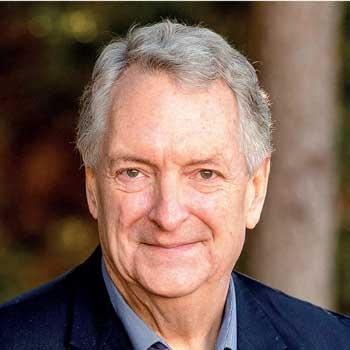 |
| Prof. Dave Ulrich is known as the father of modern HR and HR thought leader of the decade |
By Dinesh Weerakkody
In an era marked by rapid technological advancement, geopolitical tensions and economic uncertainty, the role of human resources (HR) is undergoing a seismic shift. Dinesh Weerakkody engaged with Prof. Dave Ulrich—renowned as the Father of Modern HR and a celebrated professor—to explore how HR can evolve from a support function to a strategic powerhouse driving value for all stakeholders.
QHow can HR shift its focus from internal HR processes to delivering tangible value to all stakeholders – employees, customers, investors and community?
HR must transition from a support role to a strategic enabler of stakeholder value. This requires aligning practices with core priorities for all stakeholders: employees (purpose, growth, well-being), customers (innovation, service), investors (performance, risk mitigation) and society (inclusion, responsibility).
Therefore, adopting an outside-in perspective is critical—translating internal people practices into measurable external impact. HR leaders should consistently ask: How does this initiative create value for every human connected to our organisation?
QAre CEOs assessing and enhancing human capability holistically by integrating talent, leadership and organisational culture to drive performance?
Talent, leadership and culture are interdependent. Talent thrives under strong leadership and leadership flourishes within a high-performance culture. A holistic approach aligns these elements with strategy, ensuring they reinforce one another to maximise stakeholder value. Organisations that integrate these components execute better, innovate faster and adapt more effectively.
HR’s mandate now spans people, organisation and leadership—making integration the engine of sustainable performance.
QWhat steps are CEOs taking to upgrade HR functions to operate as high-performing business units that deliver stakeholder value?
Progressive CEOs are treating HR as a strategic business partner. This involves reskilling HR teams in business strategy, data-driven decision-making and change leadership. Initiatives like the Global HR Leadership Experience (GHRLE) exemplify this shift, equipping the HR professionals with tools to tackle real-world challenges. By elevating HR competencies—both individual and functional—organisations ensure HR operates at the same strategic level as finance or business operations.
QHow effectively are we leveraging data analytics and AI to guide HR decisions and maximise stakeholder value?
Progress is underway but untapped potential remains. AI and analytics can predict attrition, personalise development and optimise workforce planning. There are four stages of AI adoption: assist, inform, guide and decide. Leading organisations now use predictive analytics and generative AI to guide decisions, prioritising initiatives with the greatest stakeholder impact. However, ethical implementation is non-negotiable: AI must augment human insight, fostering trust, fairness and transparency.
QHow are HR strategies adapting to societal trends like political polarisation, mental health crises, work-life balance and demographic shifts?
Awareness is growing but HR must pivot from reaction to action. Mental health, generational expectations and political uncertainty directly shape workplace experiences. Proactive strategies include embedding well-being into culture, fostering inclusive dialogue and planning for demographic transitions. HR needs to become a sense-making function—interpreting external trends and enabling organisations to respond with empathy and agility.
QHow can CEOs ensure HR proactively shapes the future of work rather than reacting to changes?
HR must lead with curiosity, courage and foresight. Strategic HR leaders belong in the boardroom, co-creating business decisions—not just executing them. Programmes like GHRLE cultivate leaders who balance data-driven insights with purpose-driven action. By thinking long-term, HR can architect the future of work, ensuring organisations thrive amid disruption.
QFinal thoughts on the future of the HR profession?
HR stands at an inflection point. The choice is stark: cling to tradition or embrace a bold, stakeholder-centric vision. With the right mindset, skills and tools, HR can steer organisations through chaos into sustainable growth. The future belongs to HR leaders who anticipate, innovate and inspire.