Reply To:
Name - Reply Comment
By Shannine Daniel
|
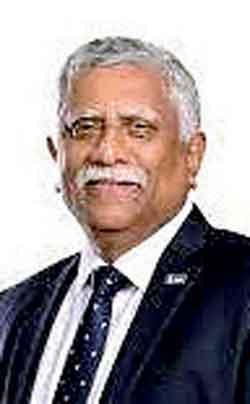
Suresh Gooneratne |
The business firms and annual report companies should focus exclusively on the process of integrated reporting when compiling the annual reports, said Diesel & Motor Engineering PLC Chief Financial Officer and Executive Director Suresh Gooneratne.
He called on the firms to remain vigilant of the ‘peacock effect’, which has resulted in the annual reports being too long and not concise.
Gooneratne advised the firms to first identify why they are compiling an annual report and what they hoped to deliver with it, before embarking on the process.
He also added that the firms should avoid looking at other annual reports and trying to duplicate the process.
Gooneratne also noted that the firms need to identify their business model and their goals and objectives, before designing and planning an annual report in a creative manner.
He made these comments at the Integrated Reporting and Sustainability Accounting Standards Workshop organised by the International Federation of Accountants and Institute of Certified Management Accountants (CMA) of Sri Lanka.
According to the International Financial Reporting Standards (IFRS) Foundation, “integrated reporting is a process founded on integrated thinking that results in periodic integrated report by an organisation about value creation over time and related communications regarding aspects of value creation.”
Moreover, integrated reporting seeks to improve the quality of information available to the providers of financial capital, promote a more cohesive and efficient approach to corporate reporting that draws on different reporting strands, enhance accountability and stewardship for the broad base of capitals and support integrated thinking, decision-making and actions that focus on value creation over the short, medium and long term.
Gooneratne asserted that the new standards on human capital and biodiversity systems would also be introduced soon.
At the moment, the IFRS has prepared the standards on accounting and sustainability.
The IFRS Accounting Standards are developed by the International Accounting Standards Board (IASB), while the IFRS Sustainability Disclosure Standards are developed by the International Sustainability Standards Board (ISSB).
Both the IASB and ISSB are independent standard-setting bodies within the IFRS Foundation.
According to Gooneratne, before the IFRS standards on sustainability came out, the companies were competing with each other by preparing sustainability reports.
“But now the IFRS standards are financial-centric because the standard is talking about the impact of sustainability on cashflows and the ability to raise capital,” he stated.
He added that technology and intellectual capital are more widely available now, with technology having a major role to play in bringing the visibility of data required for management accounting.
Gooneratne also touched on the CMA’s annual Excellence in Integrated Reporting Awards.
“These awards allow the companies to brand themselves. Their intellect is represented in an annual report, which is very important for corporate branding,” he said.
| The International Financial Reporting Standards (IFRS) Foundation sets the standards used globally for financial reporting that improve the communication between the companies and investors and boost transparency, comparability and trust in financial reporting. |