Reply To:
Name - Reply Comment
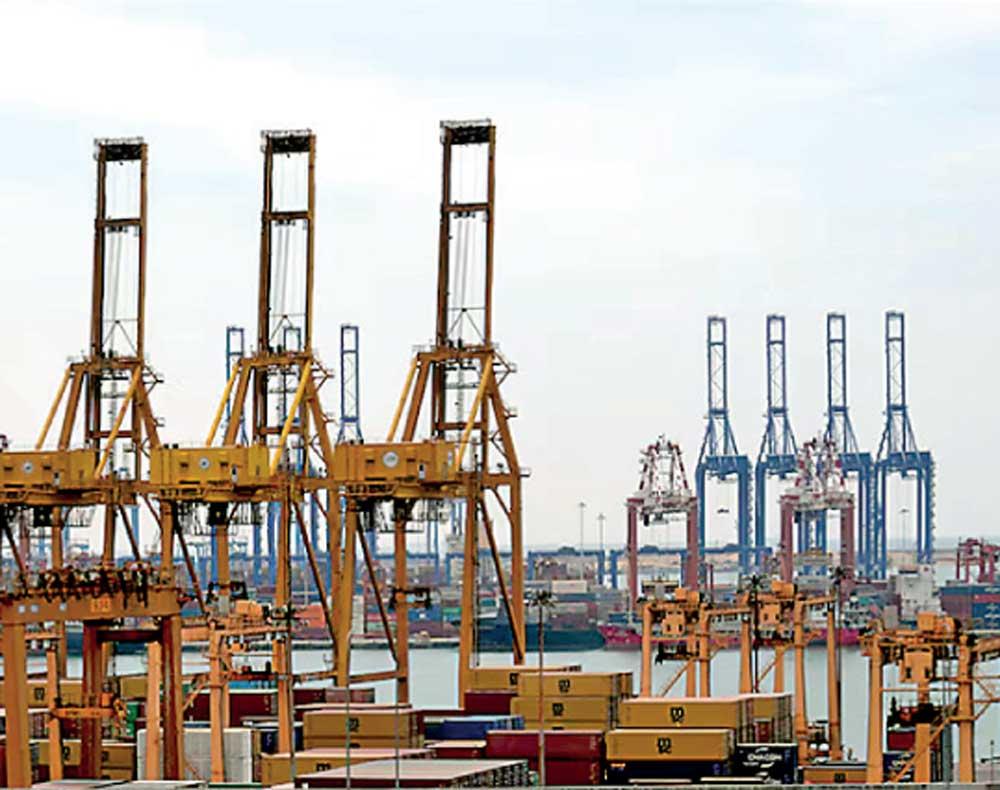
The Colombo West International Terminal (CWIT), a strategic deepwater facility developed by India’s Adani Group and Sri Lankan conglomerate John Keells Holdings (JKH), is set to complete its second and final phase by late 2026, several months ahead of its February 2027 deadline.
This accelerated timeline for the US $ 840 million project was reported by Reuters, quoting JKH Head of Transportation Zafir Hashim.
Upon completion, the terminal’s capacity will double to 3.2 million twenty-foot equivalent units (TEUs) annually, significantly boosting the overall throughput of the Port of Colombo, which is a key maritime hub in the Indian Ocean. The first phase of the fully automated terminal commenced commercial operations in April 2025. The quarter ending June 30, 2025, marked its first full quarter of operations.
The project is a collaboration between Adani Ports and Special Economic Zone, which holds a 51 percent stake, JKH with 34 percent and the state-owned Sri Lanka Ports Authority with the remaining 15 percent. Situated on an 86-acre site, the terminal operates under a 35-year build-operate-transfer agreement.
Performance since the launch has been promising. In its first operational quarter, the CWIT handled 89,959 TEUs. Data from the Port of Colombo for July 2025 shows the terminal handled 60,317 TEUs in that month alone, bringing its cumulative volume to 153,828 TEUs for the year.
JKH noted that throughput has been “encouraging” and is expected to accelerate in the coming quarters. The company anticipates that the terminal could become cash-positive within its first year of operations, with earnings reaching breakeven as volumes increase.
The project’s rapid progress is particularly noteworthy as it comes in the wake of Sri Lanka’s severe financial crisis, which stalled foreign investment. The development underscores the strategic geopolitical importance of Sri Lanka, with the Indian-backed CWIT located adjacent to Colombo International Container Terminal, a terminal operated by China Merchants Port Holdings.
According to the Reuters report, Adani Group opted to finance the project through internal accruals after withdrawing a US $ 553 million funding request from the U.S. International Development Finance Corp in December.
Hashim told Reuters that JKH’s partnership with Adani has been positive, stating, “Working with Adani, we really haven’t seen anything to worry about... They have been a very good partner to work with.”
The construction of the terminal is being managed by Access Engineering PLC in two main packages. According to its latest annual report, Package 1 included groundwork such as excavation, paving and gantry-rail foundations, while Package 2 covered the construction of 29 steel-framed support buildings, including offices and workshops.
For the first quarter of the 2025/26 financial year, JKH reported that the CWIT, classified as an equity-accounted investee, recorded financial losses of approximately US $ 3.2 million, primarily due to depreciation and amortisation charges. These non-cash charges are typical for large-scale infrastructure projects in their initial operational phase.