Reply To:
Name - Reply Comment
By Shabiya Ali Ahlam
 The centuries-old standard that defines premium Ceylon Tea is at risk of becoming “a fiction” as climate extremes disrupt growing conditions across Sri Lanka’s tea lands, Dilmah Tea Chairman and Chief Executive Dilhan Fernando warned.
Cautioning that declining quality could eventually translate into lower national output, Fernando pointed out the industry is already facing the consequences of increasingly erratic weather patterns, with prolonged droughts and intense rainfall threatening the delicate environmental conditions that give Ceylon Tea its distinctive character.
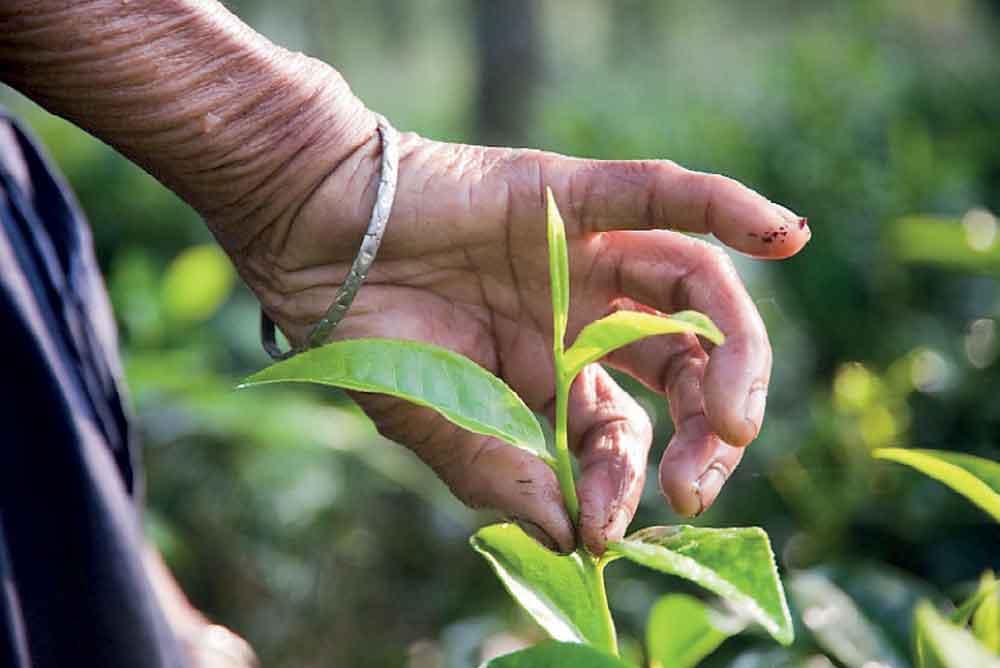
“Today, we talk about, and in the past we have talked about, two leaves and a bud,” Fernando said, referring to the internationally recognised benchmark for quality tea plucking.
“It is rapidly becoming a fiction because of the challenges we face now. When quality is affected, that is a prelude to a collapse of quantity,” said Fernando speaking at the recently held Sri Lanka Climate Summit 2026.
Sri Lanka is targeting a tea production of around 400 million kilogrammes this year, a goal which Fernando noted may become increasingly difficult to achieve if climate volatility continues to intensify.
“I can tell you quite honestly that, the way we are heading, with the climate extremes, the extremes of rain and the extremes of drought, that too is a fiction,” he said.
The warning highlights a growing concern within one of Sri Lanka’s largest export industries that climate change is no longer a distant environmental issue but an immediate commercial threat with implications for production, quality, export earnings and market competitiveness.
Fernando noted that products such as tea and cinnamon derive much of their value from terroir, the unique combination of climate, temperature, rainfall and geography that shapes quality and distinguishes Sri Lankan produce in global markets.
“Ceylon Tea is connected with premium, it is connected with luxury, it is connected with terroir. Terroir is a function of climate,” he said.
Beyond the physical risks facing plantations, Fernando warned that exporters would soon confront tougher international market requirements as sustainability-related regulations take effect in key export destinations, particularly the European Union.
He said new measures, including the EU Deforestation Regulation, packaging waste regulations and the Green Claims Directive, would increasingly penalise companies unable to prove the sustainability of both their operations and supply chains.
“If we are using a packaging supplier who is unable to validate the source of their raw material, you do not get in,” Fernando said.
He described climate adaptation as “another word for survival” and urged Sri Lanka to accelerate investments in nature-based solutions, climate resilience and climate finance mechanisms.
“We are paying for sins that we did not commit, and yet we have the opportunity to be reimbursed for those, and we are not ready to take that on,” he said.