Reply To:
Name - Reply Comment
Sri Lanka’s aggressive Value-Added Tax (VAT) reforms in 2024, a key component of its post-crisis fiscal stabilisation, single-handedly contributed to a 2.2 percentage point increase in the nation’s poverty rate, a stark new report from the World Bank reveals.
The report, titled “Sri Lanka Public Finance Review: Towards a Balanced Fiscal Adjustment,” criticizes the country’s heavy and “regressive” reliance on indirect taxes and tables urgent proposals for a fundamental shift towards a more equitable system of direct taxation to ensure a sustainable and fair economic recovery.
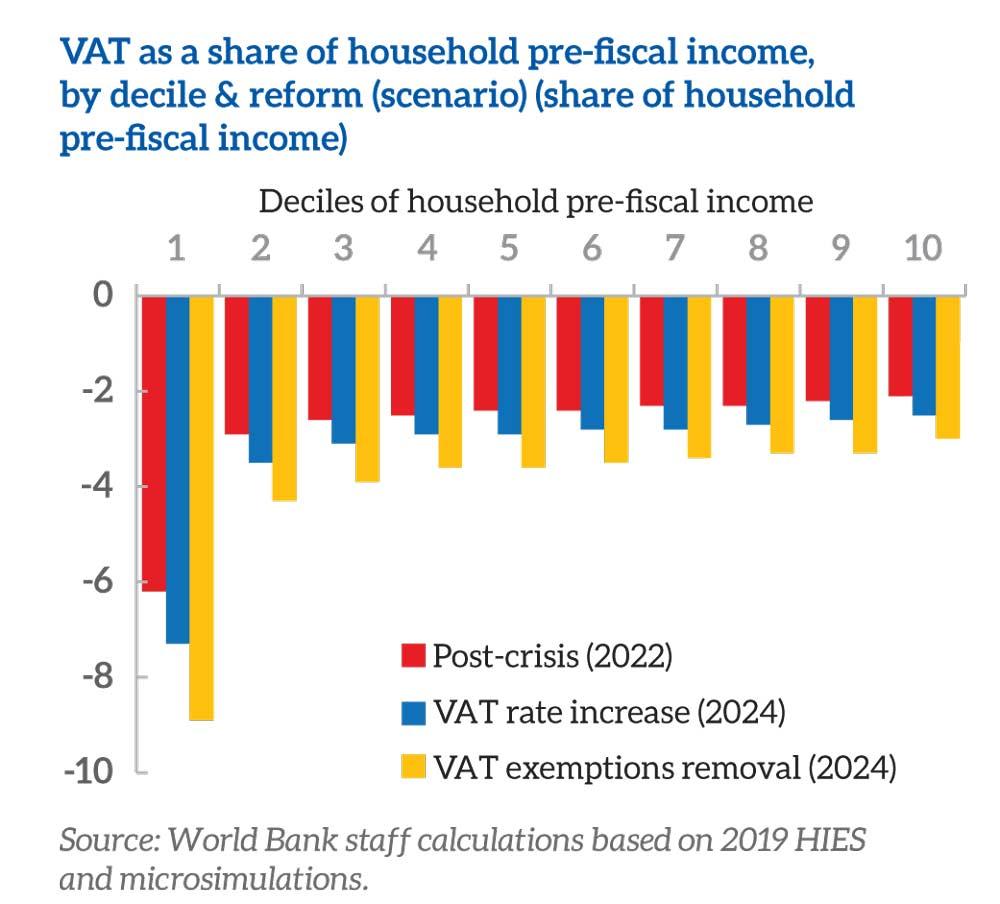
The findings highlight the severe social cost of the government’s revenue-led fiscal adjustment. Over 75 percent of this adjustment has been derived from indirect taxes that disproportionately burden the poor. Following the 2024 reforms, VAT now consumes 5.3 percent of the pre-fiscal income of households in the poorest decile, compared to just 3.3 percent for those in the richest decile.
“The revenue adjustment since 2022 has been significant,” the report states, but it “has strained a narrow tax base” and its reliance on indirect taxes “disproportionately affected the poor”.
This strategy of “squeezing the existing, narrow base” is seen as unsustainable and detrimental to both equity and long-term growth. The number of registered taxpayers in 2023, for instance, had still not recovered to pre-2019 levels, indicating that the increased revenue has come from higher rates on existing payers rather than a broadening of the tax net.
With macroeconomic stability largely restored, the World Bank is calling for a “more balanced fiscal strategy” and has laid out a clear path to make the tax system more progressive and growth-friendly. The core recommendation is to raise an additional 1.5 percent to 2 percent of GDP in revenue by 2029 by increasing the share of direct taxes.
The proposals from the World Bank suggest a significant policy shift for the business community. Key recommendations include introducing a minimum Corporate Income Tax (CIT) at an effective rate of 15 percent for all companies, aiming to prevent tax avoidance and potentially generating 0.4 percent to 1 percent of GDP in revenue.
Additionally, the report calls for overhauling the country’s tax incentives, which cost the state an estimated 3.5 percent of GDP in foregone revenue in 2023-24. By adopting a transparent, rules-based policy for incentives and publishing detailed cost-benefit analyses, Sri Lanka could gain an additional 1 percent of GDP in revenue.
Finally, the report identifies significant potential revenue gains of 0.1 percent to 0.2 percent of GDP by improving tax compliance among high-net-worth individuals.