Reply To:
Name - Reply Comment
|
Dr. Nandalal Weerasinghe |
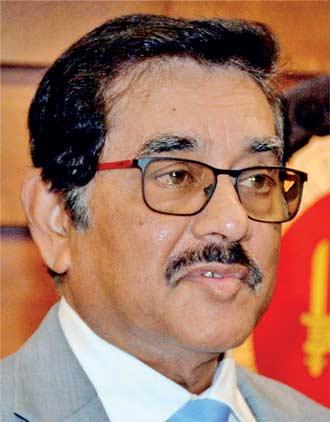
The Central Bank of Sri Lanka (CBSL) has expressed confidence that the country will outperform all fiscal targets set for this year, including the primary surplus, revenue, expenditure, and overall fiscal deficit, marking what it said would be a historic first.
CBSL Governor Dr. Nandalal Weerasinghe said higher vehicle imports, and the resulting tax revenue, played a significant role in helping the government meet its fiscal goals.
“As a result of the higher vehicle imports, the government was able to collect more revenue than expected. In fact, the government has outperformed its revenue target,” Dr. Weerasinghe said, addressing the media during the briefing of the ‘Financial Stability Review 2025’.
According to him, the government is on track to exceed three key fiscal targets: the primary surplus as a share of gross domestic product (GDP), revenue as a percentage of GDP, and the fiscal deficit as a percentage of GDP, which is expected to be lower than initially projected.
“This is the first time in history that we are going to achieve more than what was targeted from the standpoint of fiscal performance,” Dr. Weerasinghe said.
Central Bank Governor’s remarks follow years of criticism levelled against the former administration by academics, think tanks, media commentators, and opposition figures, who blamed it for running high fiscal deficits and pushing the economy into crisis. This was partially attributed to weak revenue collection caused by the prolonged vehicle import ban and pandemic-induced disruptions. Officials from the Treasury and the CBSL had previously told a parliamentary committee probing the economic crisis that the vehicle import ban, imposed in March 2020 to preserve scarce foreign exchange reserves, deprived the government of a key revenue source. The ban was enacted as the pandemic severely curtailed foreign inflows, particularly from tourism.
Meanwhile, the Central Bank said Sri Lanka could spend around US$ 1.5 billion on vehicle imports in 2025, slightly higher than the US$ 1.2 billion initially projected when imports resumed in February this year after a five-year hiatus.
Echoing remarks made earlier by President Anura Kumara Dissanayake in Parliament, Dr. Weerasinghe said the higher spending on vehicle imports would not pose a threat to external sector stability.
“The initial surge in demand following the reopening has now started to taper off as pent-up demand fades,” he said, adding that Central Bank expects a more normalised level of imports next year, with no undue pressure on the balance of payments.
Vehicle importers have also reported that prices have begun to ease from the early days of the import resumption.