Reply To:
Name - Reply Comment
CNN - Ukraine struck a key oil refinery in Moscow early Thursday morning for the second time this week, Russian officials said, as Kyiv increasingly targets Russian energy infrastructure in long-range attacks.
Several drones hit the Moscow Oil Refinery in the southeastern district of Kapotnya, said Sergei Sobyanin, mayor of the Russian capital city, on Telegram, according to Reuters. More than four dozen drones heading toward Moscow were downed, he said.
“Air defense forces continue to repel a massive attack,” he added.
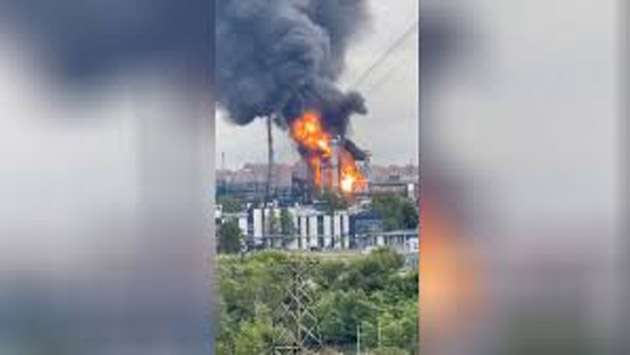
Video geolocated by CNN showed the moment of an explosion at the refinery. In the video, thick black smoke can be seen billowing from a section of the facility before a large explosion rocks another part of complex, blowing the roof of a large fuel tank container into the air.
An apartment building in Zhukovsky, outside Moscow, was also hit by a drone, according to Russian state media TASS, citing Moscow regional Gov. Andrey Vorobyov.
The strike damaged the building and some balconies, but there were no casualties, he said. Drone debris also fell in several other locations outside the capital, damaging a fitness center, an industrial facility, a shopping center (where a fire began), and a private home, he said.
Further south in Russia’s Rostov region, a separate drone attack on Thursday killed one civilian and injured two others, as well as damaging a locomotive and causing fires at two commercial facilities, said regional governor Yury Slyusar, according to TASS.
Thursday’s Moscow strike comes after a drone strike “damaged a facility on the grounds” of the same refinery on Tuesday, Sobyanin said at the time.
After Tuesday’s strike, Ukrainian President Volodymyr Zelensky said his country’s military had used long-range weapons to hit facilities “500 kilometers away,” framing Kyiv’s intensified attacks deep into Russian territory as a key strategy in forcing Moscow to end its war.
Ukraine has launched extensive drone attacks against Russian refineries and military facilities in recent months, with targets including naval facilities, oil depots and terminals. Some attacks took place in the Leningrad region, where St. Petersburg recently hosted a global economic forum often dubbed Russian President Vladimir Putin’s version of Davos.
Russia’s state budget relies on oil earnings for at least one-third of its revenue, according to analysts. Since the Ukraine war began, the pool of buyers for Russian oil has shrunk, thanks to stricter sanctions from the European Union and Washington – though the Iran war proved to be a windfall, with Moscow benefiting from surging global fuel prices and eased sanctions.
Still, Ukraine’s nearly-daily attacks on oil infrastructure have taken a toll. Crimea, which Russia illegally annexed in 2014, faced oil shortages and gasoline rationing earlier this month after Ukrainian attacks constricted road supplies across the region, Reuters reported.
Thursday’s attack also comes as the world leaders gather at the G7 summit in France, where Zelensky spoke to Trump on Tuesday. After his first batch of meetings, Zelensky said “everyone” had agreed to help Ukraine secure more air defense capabilities – and that Trump had received his suggestions positively.
Earlier on Tuesday, Trump encouraged Russia to agree to a deal that would end the war, now in its fifth year. “Russia’s lost tremendous amounts of people, and so had Ukraine,” he said.
On Thursday at a gathering of NATO defense ministers, NATO Secretary General Mark Rutte said he and Zelensky had discussed the war during a meeting a day earlier.
“Ukraine is doing really well,” Rutte said, citing Russian losses at 30-35,000 a month. He added that discussions are still ongoing “with all allies to make sure Ukraine has what it needs,” including missile interceptors and weapons systems.
“We need to keep Ukraine strong,” he said, crediting Trump for providing critical equipment and breaking a deadlock with Putin last year.
The NATO meeting comes at a pivotal time for Europe, which has been rattled by statements from Trump administration officials about plans to draw down the amount of US forces and hardware stationed in Europe.
Last week the New York Times reported that the United States plans to significantly reduce the aircraft and warships that it makes available for NATO operations in Europe, citing European sources.
As a member of the group, the US is part of a cooperative framework called the “NATO Force Model,” in which participating countries provide their support and resources to joint defense, security and crisis response.
Rutte confirmed the drawdown but played down its impact.
“Europeans are already backfilling a lot of those resources. We are in a good place,” he said, adding that were NATO to come under attack its member states, including the US, would ramp up its military presence wherever needed.