Reply To:
Name - Reply Comment
By Nishel Fernando
In a candid and data-driven address, the head of Sri Lanka’s anti-corruption watchdog has revealed that the public institutions are perceived as the most corrupt by citizens, while simultaneously identifying a separate list of state bodies whose corrupt activities inflict the most severe damage on the national economy.
Commission to Investigate Allegations of Bribery or Corruption (CIABOC) Chairman Justice Neil Iddawala presented the stark findings from a recent year-long, nationwide survey.
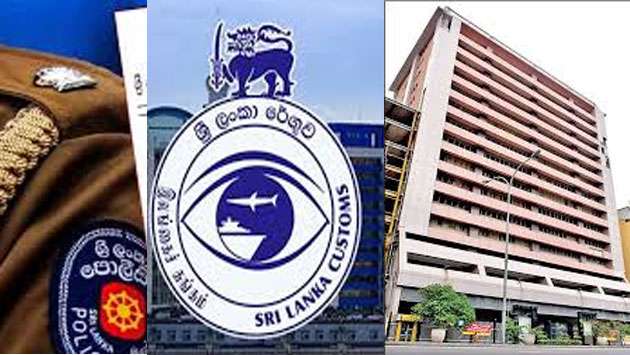
Speaking at a lecture for senior government officials in Colombo recently, he drew a crucial distinction between the public perception and economic impact, placing agencies such as Sri Lanka Customs and Inland Revenue Department at the epicentre of high-value corruption that directly undermines the country’s financial stability.
The revelations come as Sri Lanka enforces a powerful new legal arsenal, including the Anti-Corruption Act of 2023 and Proceeds of Crime Act of 2025, signalling a zero-tolerance approach and placing the onus of compliance squarely on the shoulders of the public and private sector leaders.
According to the national survey, the Sri Lankan public views the institutions they interact with daily as the most susceptible to bribery and corruption.
The institutions perceived as most corrupt by the public are, in order, the Police Department, politicians, Sri Lanka Customs, Immigration and Emigration Department and schools. Following these are government ministries (collectively), Land Registries, Provincial Councils, Foreign Employment Bureau and Divisional Secretariats.
However, Justice Iddawala emphasised that from an investigative and economic standpoint, the CIABOC’s focus is on institutions where a single corrupt act can result in monumental losses to the state.
Sri Lanka Customs, the Inland Revenue Department (including Provincial Revenue Departments), Excise Department and Motor Traffic Department are identified as the institutions with the highest negative economic impact due to corruption.
“The economic damage from one act of corruption in these key revenue-generating institutions can be far greater than the combined impact of many smaller incidents elsewhere,” Justice Iddawala stated, highlighting that these entities are where the country’s economic stability is most vulnerable.
To illustrate the scale of the problem, he cited a recent case involving the import of goods valued at Rs.3 billion. The officials had solicited a Rs.125 million bribe to allow the importer to evade Rs.300 million in taxes, giving the importer a net “benefit” of Rs.175 million.
“This is why we receive fewer complaints from such places,” Justice Iddawala noted.
“Both parties benefit and the state loses.”
The survey also provided a provincial breakdown of corruption prevalence and insights into the nature of bribes.
The Western province has been identified as the most corrupt province in the nation, followed by the North Central and Southern provinces. In contrast, the Eastern, Northern and Uva provinces reported the lowest levels of corruption. While financial bribes are the most prevalent, accounting for 62 percent of reported cases, other forms of bribery include goods (such as electronics) at 21 percent, services (like flight tickets) at 12 percent and sexual favours at 5 percent, the latter now being a specifically prosecutable offense.
With the new laws granting the CIABOC wider powers, including the ability to confiscate illicit assets without a conviction, Justice Iddawala laid out a clear framework for the leaders to ensure their organisations remain compliant and foster a culture of integrity.
He urged every institutional head to champion five practical steps. Firstly, strengthen internal controls by ensuring procurement, recruitment and financial management processes are governed by clear, transparent rules and subject to stringent oversight.
Secondly, promote radical transparency by publishing budgets, reports and key decisions online. He advised using digital tools to make processes traceable and accessible to the public, noting this would also reduce the burden of responding to Right to Information (RTI) requests.
Thirdly, lead by example by setting an unimpeachable personal standard. This includes honestly declaring assets and meticulously avoiding conflicts of interest, which is now a serious criminal offense under the new act.
Fourthly, protect whistleblowers by creating a safe environment for staff to report wrongdoing without fear of retaliation.
However, he cautioned the leaders to be wary of malicious complaints aimed at sabotaging promotions or settling personal scores. Finally, invest in ethics and capacity, going beyond technical training and investing in programmes that instil the values of public service and integrity in staff at all levels.
“Good governance is not built in speeches. It is built in the files you sign, the approvals you grant and the fairness you afford every day,” he concluded.