Reply To:
Name - Reply Comment
BY Ishan Sheriffdeen
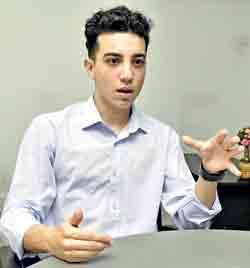 |
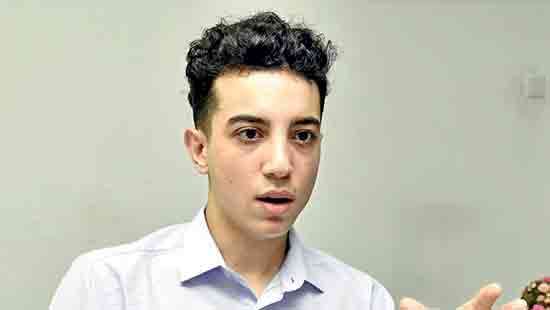
| Mohamad Salame Pic by Nimalsiri Edirisinghe |
The restaurant industry is a major economic force in Sri Lanka, generating billions of rupees in revenue each year. It is one of the largest and most important sectors of the economy. With resurgence in tourism reshaping the food and beverage sector, particularly in tourism-heavy zones like Colombo, new restaurants and culinary concepts are progressively emerging.
Young Lebanese entrepreneur Mohamad Salame, the Co-Founder of new entrant ‘Le Beirut’ Restaurant in Colombo, sat down with Mirror Business and shared his views on the key trends influencing the restaurant industry of Sri Lanka, industry challenges, his entry into Sri Lanka’s business scene and expansion plans.
Following are excerpts from the interview.
Q Can you give a brief introduction of your restaurant in Sri Lanka?
The name of our restaurant is ‘Le Beirut’. It is an authentic Lebanese restaurant located at the ‘Bamba Food Square’ in Colombo 4 that offers the rich flavours of Lebanese dishes in a traditional Arabic setting.
The restaurant was co-founded by me and my Sri Lankan business partner Hamid Hussein in January 2025. It’s a 50-50 partnership.
 Q What was the initial investment for this venture?
Approximately Rs. 3 million.
Q Can you explain what influenced you to enter the Sri Lankan restaurant scene, and what background you possess in this field?
My business partner, Hamid Hussein, was a classmate and a good friend of mine. We studied together for the Bachelor’s Degree in Malaysia.
Knowing my background, Hamid was quite keen on opening a proper, authentic Lebanese restaurant in Sri Lanka with me, and I too consented to the idea, realising the potential of such a project.
During the beginning of my Master’s journey, Hamid who was back in Sri Lanka then, informed me about the possibility of opening a restaurant in ‘Bamba Food Square’, a prime location in Colombo 4 along the Galle Road. I realised it was a fine opportunity, and I flew to Sri Lanka, and subsequently partnered with Hamid to open ‘Le Beirut’ in Colombo in the first week of January (2025).
With God Almighty’s blessings, things started to move on well gradually, after a few early snags. We learned a lot from our mistakes. We wouldn’t have been in this position if not for those mistakes. We steadily built a very good relationship with both our suppliers and customers. With regard to my background in the restaurant field, yes, I have worked in the food and beverage sector while I was in high school in Kuwait. That was during the Covid pandemic time.
Q What gave you the confidence to step into an unknown country and start a business at a very young age of 21 years?
Having a well-known and trustworthy person as the partner here was key. I also had the opportunity of taking a good look of how things work in Sri Lanka, during my visit in 2022. Hamid took me to many places in Sri Lanka and educated me on various aspects and procedures. He really motivated me and boosted my confidence ahead of stepping into a project. I was very much comfortable and confident at the time of making the investment decision in Sri Lanka.
In the meantime, my father, who is a big-time restaurateur in Kuwait, was also very optimistic over my idea to invest in a restaurant in Sri Lanka. He encouraged me to go for it, if I was really confident of making it a success.
Q Your views on the current status of Sri Lanka’s restaurant industry and its future prospects?
The restaurant industry in Sri Lanka is an industry that is dynamic and growing. It is a major source of tax revenue for the government, and is poised for growth in the coming years, despite certain challenges.
The sector is highly competitive, with new establishments constantly emerging. This competition is driving innovation, and requires continuous improvement and differentiation by existing players to attract and retain customers.
As a popular tourist destination in Asia, Sri Lanka’s restaurant industry stands to benefit significantly from the growing influx of international travellers seeking diverse dining experiences. A huge part of tourism is food and beverage.
The restaurant industry in Sri Lanka is highly competitive, with new establishments constantly emerging. This competition is driving innovation, and requires continuous improvement and differentiation by existing players to attract and retain customers
Q What do you see as key trends driving the restaurant industry of Sri Lanka?
I see three important trends. Firstly, the growing demand for international cuisine by the local community. Sri Lankans are becoming more adventurous in their food choices, and the demand for international cuisine is on the rise. This is being driven by the country’s tourism industry, rising middle class as well as by the increasing number of Sri Lankans who are travelling abroad and experiencing new cuisines. Restaurants offering Middle Eastern, Japanese, Italian, and Chinese dishes are gaining popularity.
The other trend is the rise of casual dining. Many consumers in this country prefer relaxed and informal dining experiences nowadays, and this is mostly evident in urban areas of Sri Lanka. Casual dining restaurants offer a more relaxed dining experience than fine dining restaurants, but they still offer high-quality food.
Online ordering is also becoming increasingly popular in Sri Lanka, and this is another important trend. This is due to the growing number of people having access to the internet, as well as the convenience of being able to order food from the comfort of their own home.
Online ordering and delivery services have become mainstream, especially post-Covid. Digital platforms like Uber Eats have made it easier for consumers to access their favourite meals, pushing restaurants to invest in online presence and digital marketing. Operational efficiency and customer satisfaction can be enhanced through technology. I see Sri Lanka gradually laying the groundwork for a modern, tech-savvy and consumer-centric restaurant industry.
Q Generally, what challenges do you think the Sri Lankan restaurant industry is facing at present?
Rising costs is the main challenge for the industry. Supplier prices that had been fluctuating in the past, keep on increasing now.
So, inflation is going to impact everything - from labour to ingredients to debt. Larger players will withstand it better because they’ve got purchasing power and tools that help them adjust while on the move. But smaller operators won’t have that cushion, which means real-time visibility into their costs will matter more than ever.
There are also regulatory hurdles. Navigating health and safety standards, obtaining licenses, and dealing with bureaucracy are challenging for restaurateurs.
Skilled labour shortage is another issue. In general, there is a persistent shortage of trained chefs, wait staff, and management professionals, affecting the quality of service.
Q How do ‘Le Beirut’ cuisines differ from other restaurants offering similar dishes?
The Lebanese style cuisines differ in the spices used, and the way they are cooked. Le Beirut always uses the best, fresh local ingredients. Quality chicken is sourced directly from the farms, and we make our spices in-house without depending on ready-made stuff from outside suppliers or supermarkets. That makes a huge difference and also helps us to keep the prices low.
Our menu that mainly consists of appetisers, shawarma and shish tawook are filled with flavourful spices and grilled chicken prepared in Lebanese style. We just started doing shish tawook on charcoal, which is the authentic way of preparing it.
Q Do you all have any plans to obtain food & beverage endorsements such as the ‘Halal’ certification?
Yes, we will be working on getting a ‘Halal’ certification in the future. Right now, it’s not feasible at all because it’s a long process and also very costly. All our inputs are channeled through ‘Halal’ means.
Q Completing the first year of biz operations this week, what immediate and future plans do you have for the restaurant in terms of cuisine?
Our ultimate future plan is to make ‘Le Beirut’ the first Lebanese Quick Service Restaurant (QSR) in Sri Lanka. This is to keep prices low for the people and provide them a fast service, while maintaining the authenticity of the food. Both high-class Colombo people who usually prefer fine dining as well as the middle and lower classes who enjoy fast food patronize our restaurant at present.
When it comes to the menu, we are planning to expand it in the near future, and beef kebabs are a possible inclusion.
Many spice varieties are not available in Sri Lanka for us to introduce certain new cuisines. So, we are planning to import them in the future. We are currently working on getting registered with SLTDA, in order to get more legitimacy for those imports.
Q Any plans to enter new locations?
Yes, we hope to open a branch in Dehiwala. There’s a good crowd of Muslims and also many Sri Lankan expats who have returned to the island very familiar with our cuisines, living in that area. We also have plans to move into different food courts in the future. Opening a proper branch is not easy. We have to take many things into consideration when selecting the right location. The location has to be an easy to find place, not too overcrowded, and also with ample parking space. Customers need to enjoy their meals in a relaxed, comfortable setting.
Besides, we have to also study the different consumer types living in different parts of the country. Unlike in Middle Eastern countries, there are many different ethnicities, religions, different markets in this country. Each category has different expectations.
When it comes to long-term plans, I have an idea of taking ‘Le Beirut’ to the country where I live. That’s to Kuwait. I will start working on it, once my father’s restaurant is fully stable there.
Q What are the digital channels through which customers could approach your restaurant?
We’re on Facebook, Instagram and Tik Tok. Okay. Most traffic comes from Instagram, then comes TikTok, followed by Facebook and WhatsApp.
We are also currently working on fully activating our website with the new menu and promotions. This will enable us to guide people to order from us directly instead of using apps, because that’s cheaper.
Q Finally, what advice would you give to a young entrepreneur, interested in entering the restaurant business?
My humble advice is to go for it with confidence and with the right partners. Don’t be hesitant or afraid.
Sometimes you may fail at the beginning. In such a case, you have to learn from the failures, readjust and get back again.
It is a very lucrative field. At the beginning, it might not be so. But, if one works really hard, may be for a couple of years or so, thereafter the business will turn out to be highly rewarding. It will be smooth sailing, once you surpass the break-even point.