 SHABIYA ALI AHLAM
 Reply To:
Name - Reply Comment


PIC BY NIMALSIRI EDIRISINGHE
Core prices firm
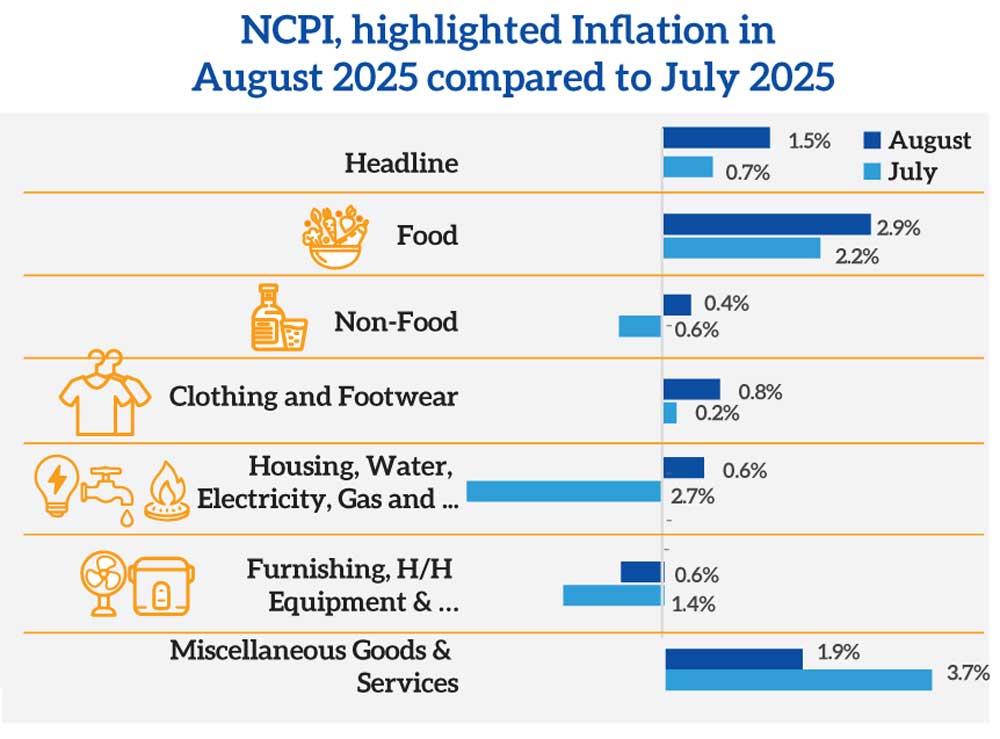
The consumer prices, as measured by the National Consumer Price Index (NCPI), climbed 1.5 percent in August from a year earlier, accelerating from July’s 0.7 percent.
The change reflects the lingering impact of lower prices seen at the same time last year.
Everyday items such as vegetables, fresh fish, coconuts, green chilies, rice and salt saw price drops, though some food items, including chicken, dried fish and coconut oil, recorded modest increases.
Over the 12 months through August, food prices were up 2.9 percent, primarily due to base effects, as the country was emerging from a months-long deflationary period that ended in April this year, according to the official data.
Meanwhile, the NCPI-measured non-food inflation edged up 0.1 percent month-on-month and 0.4 percent year-on-year, reflecting modest price pressures outside the food basket. Core inflation, which excludes volatile food, energy and transport items, climbed to 1.5 percent in August, from 0.9 percent in July, signalling a firming of underlying price pressures.
The more frequently cited Colombo Consumer Price Index, which had been falling through July, turned positive in August, with a 1.2 percent increase, its first in 11 months.
The Central Bank is set to announce its September interest rate decision tomorrow, with markets widely expecting no change.
Despite the uptick in inflation, readings remain well below the Central Bank’s medium-term target of 5 percent. The policymakers project inflation will reach target levels only by mid-2026, supported by the recovering demand as the consumers gradually increase spending.
The Central Bank is also closely monitoring private sector credit, which has exceeded Rs.200 billion in consecutive months, growing at nearly 20 percent year-on-year. Further, monetary easing, despite some room to manoeuvre, could drive credit to unsustainable levels, putting pressure on both prices and the external sector, officials have warned.
Analysts say the increase in core inflation is likely to restrain the Monetary Policy Board from further easing, as the policymakers aim to protect the stability in the economy.