Reply To:
Name - Reply Comment
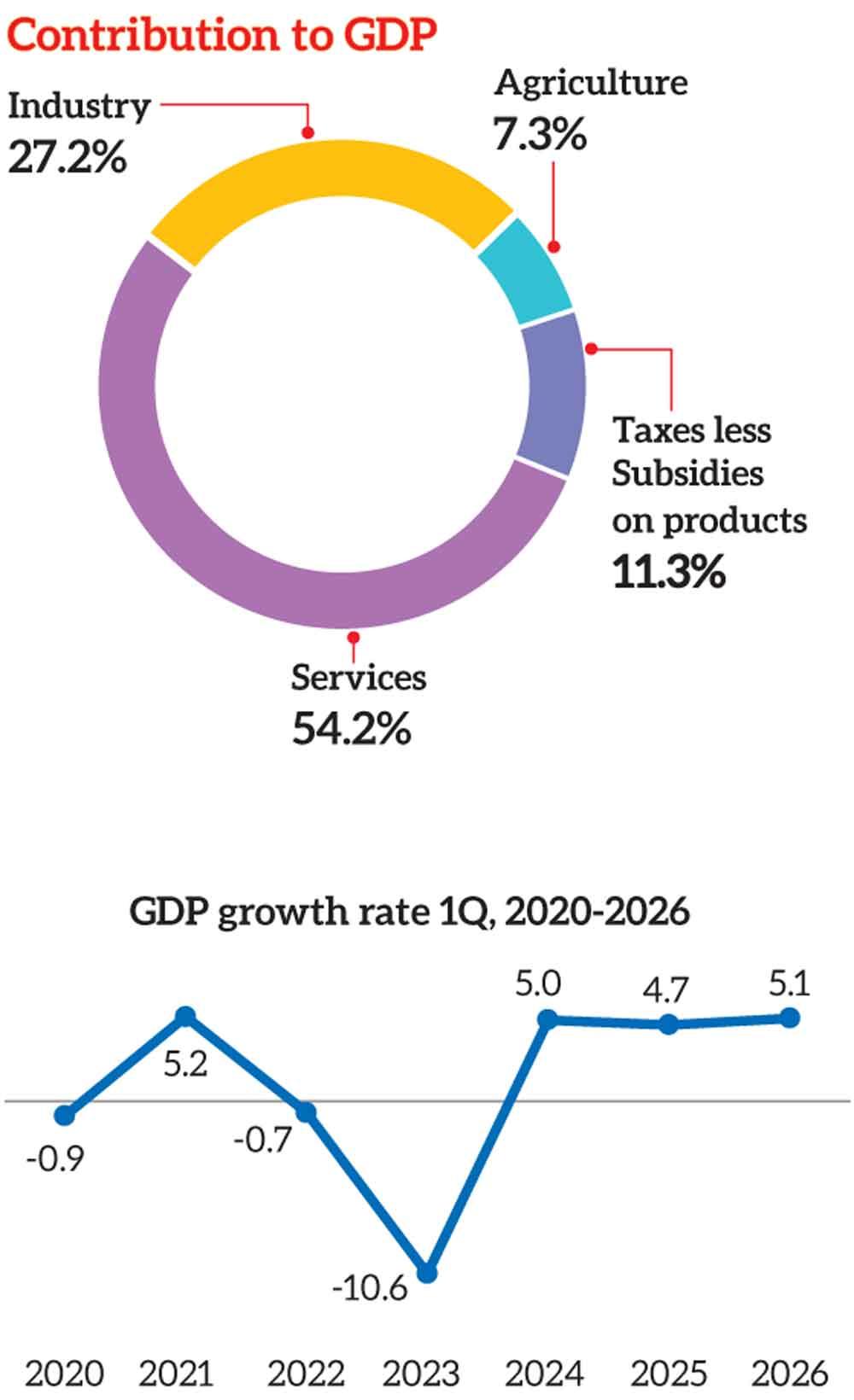
The economy expanded by 5.1 percent in the first quarter of 2026 (1Q26), extending its recovery streak, as a surge in construction activity, rising imports of production-related goods and stronger performance across financial and technology services helped offset the lingering external and domestic challenges.
The data released by the Census and Statistics Department showed the economy grew to Rs.3.65 trillion at constant 2015 prices during the January-March period, up from Rs.3.48 trillion a year earlier.
At the current prices, gross domestic product (GDP) increased 11 percent to Rs.9.16 trillion.
The latest figures suggest Sri Lanka’s post-crisis recovery is becoming increasingly broad-based, with the growth no longer confined to a handful of sectors but spreading across construction, manufacturing, financial services, information technology and tourism-related activities.
While the economy entered the year still recovering from the adverse effects of Cyclone Ditwah and later faced the emerging geopolitical tensions in the Gulf region, domestic production remained resilient.
A notable feature of the quarter was the sharp rise in imports, which increased by around one-fifth from a year earlier. Rather than signalling a consumption-led demand, the report highlighted the increase was largely linked to the need for capital and intermediate goods required to sustain the domestic production.
The construction, goods and passenger transport activities were the principal drivers behind the rise in imports, which indicates the growing investment activity across the economy. The higher import bill also boosted tax collections, providing an additional revenue windfall for the government.
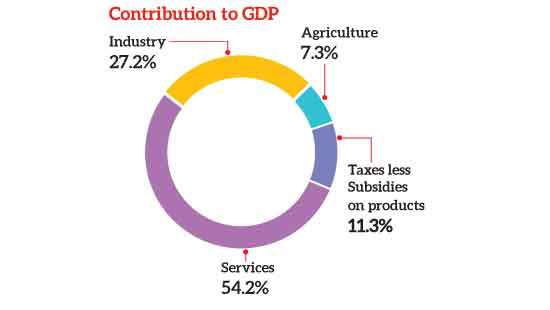
Industry emerged as the standout performer in the quarter, expanding by 7.2 percent and outpacing both agriculture and services. Construction activity surged 16.3 percent, while mining and quarrying jumped 19.5 percent, reflecting a stronger demand for building materials and infrastructure-related inputs. Manufacturing also remained in the positive territory, growing 2.8 percent, supported by the strong gains in the chemicals and pharmaceuticals, metal products, non-metallic mineral products and food processing industries. However, weakness persisted in several export-linked segments, including textiles and apparel, rubber and plastic products and machinery manufacturing.
Services, which account for more than half of the economy, expanded by 3.4 percent, improving from a 2.7 percent growth a year earlier.
Insurance activity recorded a sharp 22 percent increase, while IT programming and consultancy services grew 16.1 percent and financial services rose 12.8 percent.
Tourism-linked accommodation and food services expanded 5.4 percent, suggesting a continued recovery in the visitor-related activity.
The strong performance of the insurance and financial services reflects the combined effects of increased trade activity, a larger vehicle fleet and a lower interest rate environment that prevailed during much of the period.
Agriculture remained the weakest of the three major sectors, growing only 1.1 percent. While coconut cultivation and several crop segments posted gains, the declines in tea, rubber, rice, fisheries and livestock production weighed on the overall sector performance.
The contraction in tea cultivation highlights the ongoing challenges facing one of the country’s key export industries, despite the broader economic improvements.