 CHATURANGA PRADEEP SAMARAWICKRAMA
Reply To:
Name - Reply Comment
Colombo, Feb. 2 (Daily Mirror) - The Center for Environmental Justice (CEJ) has warned that efforts to protect Sri Lanka’s wetlands are meaningless if development projects continue to destroy them. The statement was made on the occasion of World Wetlands Day, observed annually on 2 February to mark the adoption of the Ramsar Convention on Wetlands in Iran in 1971.
This year’s theme, “Wetlands and Traditional Knowledge: Celebrating Cultural Heritage,” highlights the deep connections between wetlands and the cultural practices, traditions, and knowledge systems of communities worldwide.
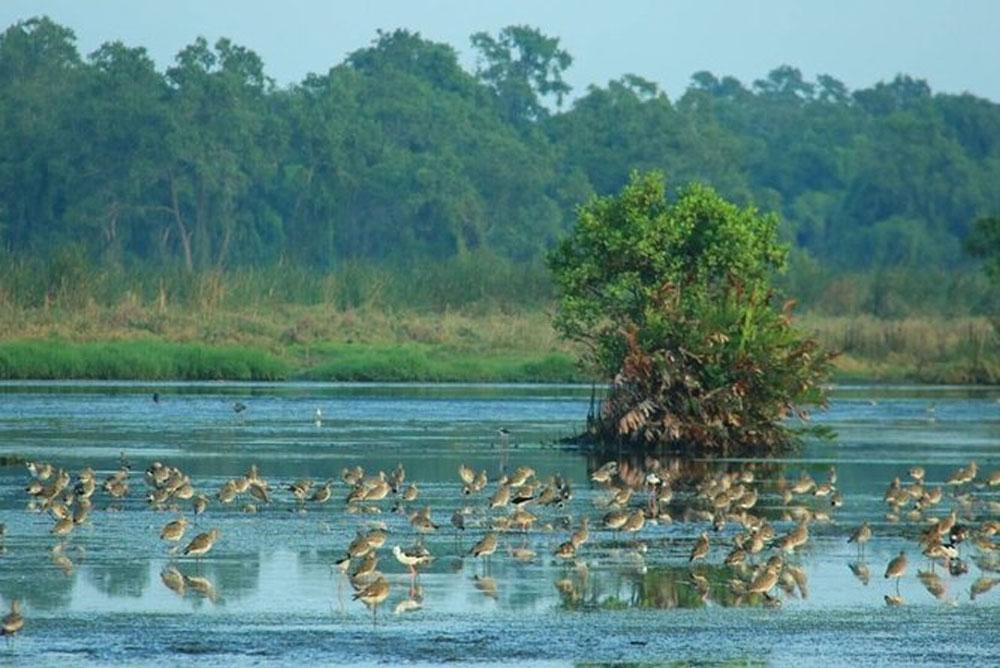
Wetlands, which include lakes, rivers, swamps, peatlands, estuaries, mangroves, coral reefs, rice fields, reservoirs, and tidal flats, cover just 6% of the Earth’s land surface but are home to 40% of all plant and animal species. They provide critical ecosystem services, including flood control, water regulation, water purification, and support biodiversity, health, food supply, tourism, and employment. Globally, over one billion people depend on wetlands for their livelihoods and as a buffer against climate change.
In Sri Lanka, the Muthurajawela Swamp, the country’s largest saline coastal peatland covering 3,068 hectares, faces threats from infrastructure projects such as the Colombo-Katunayake Expressway, which bisects the wetland. Political connections often compound these threats, with the destruction of wetlands such as Anawilundawa, the Negombo Lagoon, and reclamation projects in Muthurajawela being notable examples. Plans to construct roads, tourist hotels, and industrial facilities also continue to encroach on these fragile ecosystems.
According to the 2006 National Wetlands Inventory by the Central Environmental Authority (CEA), the IUCN, and the International Water Management Institute, Sri Lanka has 62 wetlands, 18 of which are under high threat. The CEJ has intervened in cases such as the proposed development of the Vedithalathistu reserve, successfully reversing attempts to exploit the area.
The CEJ highlighted that state intervention is critical and that development planning must prioritize the conservation of wetlands to ensure these vital ecosystems are not irreversibly damaged.