19 Jun 2025 - {{hitsCtrl.values.hits}}
Compiled and Edited by Lakmali Gunasekara
The actuarial profession is evolving rapidly, shaped by global trends and new challenges. To gain insight into this dynamic field, we caught up with Bozenna Hinton, President of the International Actuarial Association (IAA), during her brief visit to Sri Lanka. With decades of leadership experience spanning multiple continents, Bozenna shared her inspiring journey, her vision for the future of actuarial profession, and valuable advice for students and professionals alike.
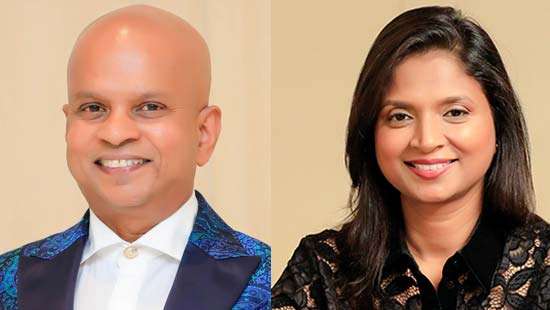
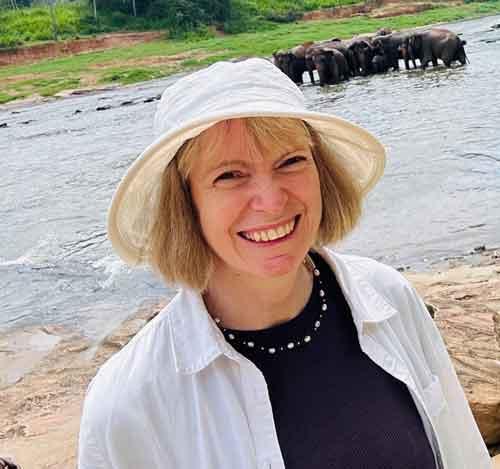
Bozenna made a brief stop in Sri Lanka on her way home to Australia after attending a conference in India. During her two-day visit, she met with Thanuja Krishnaratne, a Past President of the Actuarial Association of Sri Lanka, for a quick Q&A before heading to Sigiriya, the highlight of her trip.
Based in Sydney, Bozenna is a Fellow of the Institute of Actuaries of Australia (FIAA). She started her career at Munich Re before moving to Trowbridge Consulting, where she advised on risk in the energy market. With extensive experience across life and general insurance, superannuation, and consulting, she has held multiple leadership roles within the Actuaries Institute Australia, including serving as President in 2010. In 2020, she was honoured with the Volunteer of the Year Distinguished Service Award. Outside work, Bozenna is a mother of four who enjoys running, cycling, reading, and traveling.
I loved mathematics, and I was looking for a career that would let me use those skills in a meaningful way. What really attracted me to the actuarial profession was the global recognition - having a qualification that opens doors worldwide gives you incredible freedom to work anywhere. The profession also offered good career prospects and financial stability, which was important to me.
It’s truly international. The key thing that's different is you're working across so many cultures and countries. What I've learned is that you can't assume what's "normal" or standard practice in one place applies everywhere else. You need to be sensitive to cultural differences and respect the unique ways different countries approach things, and adjust your style accordingly.
The IAA serves as the global voice of the actuarial profession, promoting the value and importance of actuarial expertise. The IAA develops relationships with key supranational institutions, something that member associations are not easily able to do by themselves. It can inform and influence global bodies. The IAA also supports the development of the actuarial profession worldwide, helping member associations achieve their objectives. It does this by establishing an education syllabus that allows associations to be innovative, promoting professionalism, and developing actuarial standards of practice. The IAA also promotes the advancement of scientific knowledge and the development of the skills of the profession. It does this through the work and research of members of its Committees, Forums and Sections.
I expect continued growth worldwide, with new entrants recognising the profession’s value. There are exciting opportunities in artificial intelligence, cyber risk, climate change, and sustainability — areas where actuarial skills in risk, modelling, and data analysis are very relevant. I hope actuaries continue to embrace these fields and use their existing skills in new ways.
Traditional areas like defined benefit pensions are declining in many markets, though this transition will take time. Mergers and acquisitions may also reduce roles in some sectors.
However, many markets around the world still have untapped insurance potential, and developing local actuarial expertise in those regions is needed. IFRS 17 implementation is creating new opportunities too. While it's helpful when there are legislative requirements for actuarial involvement, I don't think that's essential. The value actuaries bring - our ability to understand and quantify risk - will keep us in demand regardless of regulatory requirements.
I absolutely love it! It’s been fantastic, though I really wish I had more time. Everyone has been so welcoming and the hospitality has been amazing. I’m grateful I have had these two days and I am already hoping I can come back and explore more of the country.
First of all, I want to say that even though you're small, the work you're doing here is fantastic - please keep it up! A key thing I've learned is that collaboration makes everyone stronger. We can achieve so much more when we work together, both domestically and internationally.
Sri Lanka's success story can really inspire other developing actuarial markets. Your close involvement with the IAA has been great to see, and I encourage you to keep up your involvement to both learn from others and also share your experiences so others can learn from you. The global actuarial community benefits when we all contribute our unique perspectives.
The biggest challenge is awareness - many students simply don't know enough about what actuaries actually do. We can be more vocal at educating school leavers and sharing real stories about how people discovered the profession and what their careers have looked like.
In Australia, we've had success with volunteers speaking at career days in high schools. It's a simple approach, but it can be quite effective at sparking interest. Personal stories are powerful - when students hear from actual actuaries about their work and career journeys, it makes the profession much more tangible and appealing.
I'd also suggest highlighting the diverse career paths available. Actuaries aren't just working in insurance – there are many different opportunities and this variety can be really attractive to students.
Volunteering provides exposures to new people, situations and roles, that you might not have access to in your daily employment. It really is true that the more you give, the more you get back. You can develop new skills, make new friends and connections, and gain knowledge and experience. This can help you grow both technically and personally. You can be exposed to different ways of thinking and approaching problems (and new problems) that you otherwise might not encounter. The connections you make through volunteering can also turn into valuable professional relationships – people to turn to if you need advice or assistance.
Lead by example. It's important to create an environment where people feel safe to take on challenges, even if they don't feel fully ready. Volunteering can be a safe space to give things a go and to develop skills. We all learn by trying things, making mistakes, and improving - that's just part of the process. When we support each other through that learning process, it creates a much stronger and more vibrant community overall.
AI has the potential to speed up a lot of the routine tasks we do, which I see as a huge opportunity. It frees us up to focus on the higher-value work - thinking critically, reviewing results, and structuring solutions to complex problems. Actuaries aren't just math experts. We understand the broader business context, which helps us make better judgments about what the numbers actually mean. That contextual understanding can become even more valuable in an AI-driven world, where you need those who can interpret and apply critical thinking.
Go for it! This profession can open many doors. Say yes to opportunities that come your way, even if you don’t feel fully ready. Don’t be afraid to ask for help along the way – the actuarial community is incredibly supportive. If you don’t try, you’ll never know your what you are capable of achieving. You’re smarter and more capable than you think. The actuarial profession gives you skills that are valuable across so many different areas.
Bozenna Hinton’s visit to Sri Lanka was a reminder of the global community actuaries belong to, united by a shared commitment to excellence, innovation, and collaboration. As the profession faces exciting opportunities and challenges ahead, her message is clear: embrace the journey, support one another, and never stop learning. For young actuaries and students considering this path, the future is full of promise, and the doors are wide open.
If you’d like to learn more about the actuarial profession, join the us at the Fourth South Asian Actuarial Conference, taking place from 18th to 20th June 2025 at the Shangri-La, Colombo.
13 Jun 2026 25 minute ago
13 Jun 2026 52 minute ago
13 Jun 2026 53 minute ago
13 Jun 2026 54 minute ago
13 Jun 2026 1 hours ago