08 Jan 2026 - {{hitsCtrl.values.hits}}
 US President Donald Trump has thrown a wrecking ball at the rule-based international order and brags about it. However, unlike his previous action, the cost of the latest misadventures is hard to undo, and it has set the template for the other great powers to follow suit at their own volition. The international order that would emerge from the smouldering of American action in Venezuela would mimic the international system harking back to 19th-century great-power politics, when each great power carved out a sphere of influence.
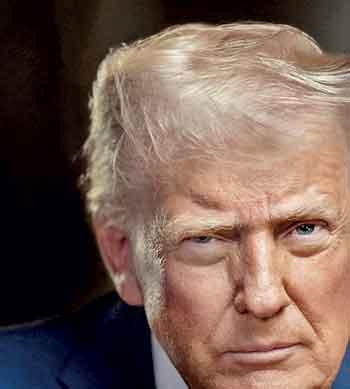 |
| US President Donald Trump’s action wrecks the existing world order |
The US military raided Caracas’ presidential compound and captured President Nicolás Maduro and first lady Cilia Flores, ostensibly enforcing a judicial order for arrest. Maduro and the first lady were indicted in New York yesterday for narco-trafficking— for which they pleaded not guilty.
However, coming in the wake of Trump’s pardon of another South American president, the former president of Honduras, who was previously serving 45-year sentence for similar charges, the American raid appears to do little with drug trafficking, Instead, it bears all the hallmarks of an act of predation to secure oil, of which Venezuela had the world’s largest reserves of 300 billion barrels.
The military raid, American plans to rule Venezuela, however whimsical they could be, and subsequent threats to a host of other regional countries, have now upended the international order, and risk dismantling for good the post-World II ruled and norm-based order, which the US itself has taken credit for structuring and defending.
While the post-World War II international order and, more importantly, the post-Cold war global order were not without violations, they reduced anarchy in the international system. They fostered an international system built on trade and the complex interdependence of states.
A crucial normative pillar of this system was that it guaranteed the survival of smaller states, reduced security risks, and enabled them to more actively integrate into international trade, supply chains, and international institutions.
The bipolarity of the early system, until the collapse of the Soviet Union, was not without hiccups. Still, nuclear peace, governed by mutual assured destruction, kept the two superpowers from direct military engagement. Proxy wars in the Korean peninsula to Indo-China, revolutionary wars in Africa, and dirty wars and American-backed coups in South America, replaced the great power wars as the frequent form of military conflict.
However, even within those constraints, the freedom of action and security of smaller and medium-sized states increased considerably. Not a single sovereign state has faced extinction in the post-World War II order, and the number of independent countries doubled from 99 at the end of World War II to 195 now.
The collapse of the Soviet Union and the end of the bipolar world further reduced systemic pressure and the resultant security risk in the international system, effectively leading to greater expansion of international trade and the complex interdependence of states interconnected through supply chains. The greatest beneficiary of this world order was none other than the People’s Republic of China, which saw its GDP grow from US$ 360 billion in 1990 to US$19 trillion in 2025, a mind-boggling 50X increase over 35 years.
The rules-based international system and institutions influenced state behaviour and set retributive costs in the form of sanctions for violators of its norm-based order, including armed aggressors.
The retributive costs of the system proved so expansive that sanctions proved an effective alternative to military action in most cases. Two exceptions, Russia’s ongoing war in Ukraine and North Korea’s acquisition, were possible because both were fortress economies, largely insulated from international trade and supply chains.
Donald Trump has upended this international order and threatens the international system that helped the United States consolidate its power and influence—often without resorting to military power—through the very international institutions it had nurtured.
The system he envisages mimics 19th-century geopolitics, except that he thinks only America is entitled to the exception, and that other competing great powers would sit and wait.
He referred to the Monroe doctrine, which he fancied to rechristen – Donro doctrine. The original geo-political strategy was named after James Monroe, the US president in the 1820s, who sought to carve out the Western Hemisphere and warned European powers against claims of influence in the newly independent states of Latin America. Much of America’s dirty wars, military coups, and propping up of authoritarian regimes in Latin America during the Cold War broadly correlated to this claim, and also to its expressed strategy of the containment of the Soviet influence.
Rolling back the system
It should not be missed that the latest attack on Venezuela, and the rendition of its president -- a major act of aggression violating international law, follows a greater shift in American policy to roll back the very system it had nurtured for seven decades.
The reeking mercantilism in American trade policy under Trump, targeting both allies and foes alike, delivered the first blow to the foundation of the post-Cold War international order. Interestingly, it impacted the allies more than the main competitor, China, which not only withstood US trade tariffs but retaliated in style at minimal cost.
However, the mercantilism of Trump’s foreign policy has now taken a dangerous turn, into predation, as the calls to control Venezuelan oil resources suggest. This harks back to imperial Japan’s military expansion into East Asia and China, and Nazi Germany’s expansion into Eastern Europe and the Soviet Union.
Trump says he is in charge of Venezuela, while Venezuela’s new president, Delcy Rodriguez, formerly Maduro’s erstwhile deputy, says her country would not be slaves of any empire.
How Trump would control Venezuela without boots on the ground is open to question, though it is not that difficult to imagine the potential fallout an American ground invasion and long-term occupation would incur in a country deeply in the grips of revolutionary Chavismo. An American occupation there would not be possible without recreating the wider Indochina conflict in the wake of the American occupation of Vietnam.
Trump’s threats to a host of other states, from Colombia, Cuba, Mexico, and even Greenland, which is part of the Danish Kingdom, further upends the international order—and in the long term, reduces American security itself.
However, more importantly, it set a template for the other great powers, which, with America, has little political will to come to direct confrontation.
The world that would emerge from American aggression in Venezuela would broadly mirror the 19th-century sphere of influence.
Many Taiwanese, or for that matter, Japanese or Filipino officials should be pondering now what would happen if China follows suit and declares the president of Taiwan a fugitive of crimes and opts to enforce a legal order by its courts.Or what if the PLA Navy occupied disputed Spratly islands or Diaoyu Island, and established its zone of influence over the expansive South China Sea up to the nine-dash lines?
What if Russia expands into Georgia and Moldova or annexes ethnic Russian areas of Estonia?
Donald Trump has dismantled the moral and legal convention against naked aggression against sovereign states.The notion of American exceptionalism is applicable to the smaller and middle-sized states, not to great powers with matching military capability and political will to follow through. If the Chinese had second thoughts about a possible adventurism over Taiwan, given Russia’s prolonged entanglement in Ukraine, it would now reconsider those constraints again.
For Russia, its miring in the war had much to do with its fighting it with one hand tied behind its back. However, Trump’s wrecking of the international order would have far-reaching consequences, including eroding the normative constraints against the use of even battlefield nuclear weapons.
If the Trump order of the international system comes to life, it would produce at least three or four spheres, reminiscent of the 19th-century global order.
China would claim East Asia, Russia would continue to expand its sphere of influence in neighbouring East European states, and America would claim the Western hemisphere. The Chinese expansion would trigger a security dilemma for India, effectively pushing it into a more assertive posture in its historical zone of influence in South Asia and the Indian Ocean.
All of that would seriously constrain the freedom of action and foreign policy choices of smaller states like Sri Lanka.And the world would increasingly mimic what Thucydides wrote in the Melian Dialogue: ‘The Strong do what they can, and the weak suffer what they must.’
15 Jun 2026 11 minute ago
15 Jun 2026 14 minute ago
15 Jun 2026 22 minute ago
15 Jun 2026 27 minute ago
15 Jun 2026 34 minute ago