28 Mar 2025 - {{hitsCtrl.values.hits}}
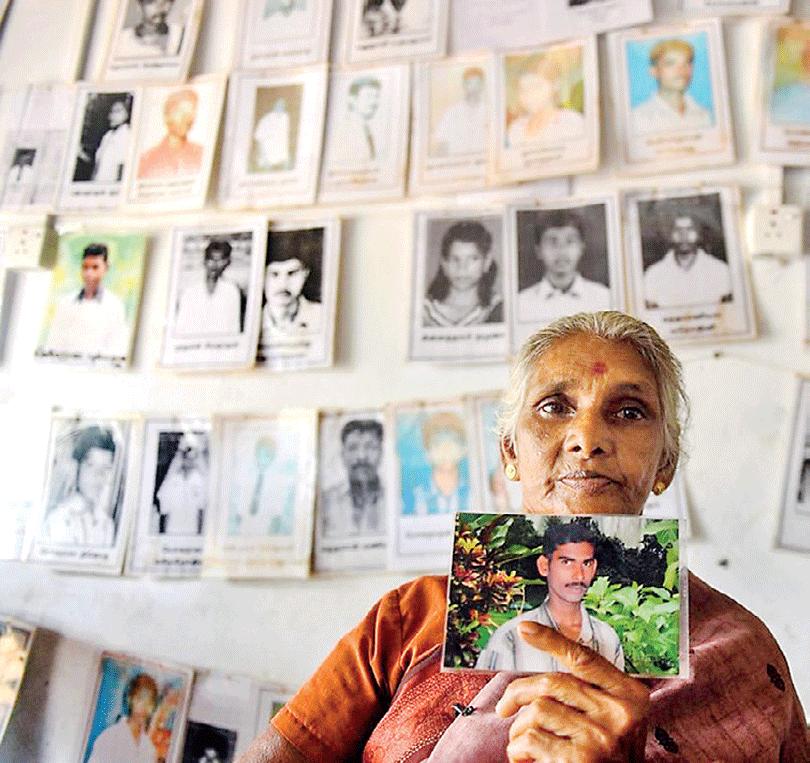
In trying to achieve transitional justice, successive governments have re-traumatised and re-victimised affected communities
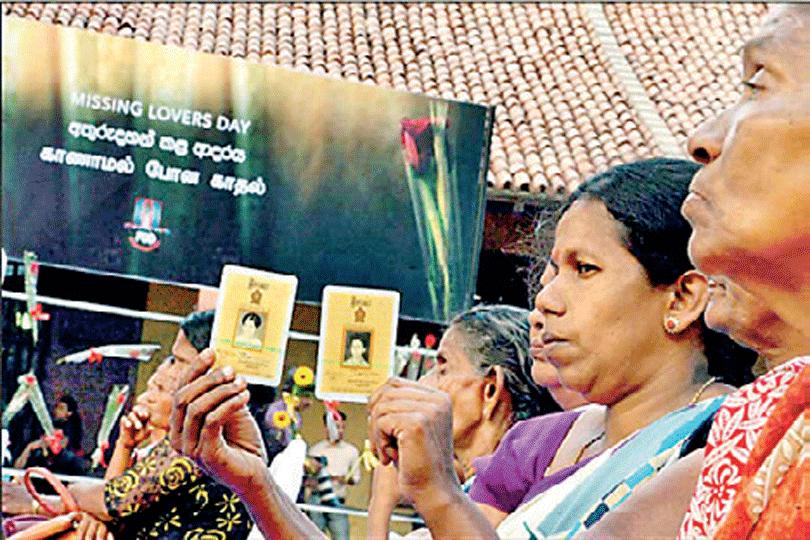
Rather than focusing on a Truth and Forgiving Commission, it should focus on improving the CTUR, which was issued in the gazette last year
(pic credits – Daily FT)
 During a recent parliamentary debate, Minister of Religious Affairs and Buddha Sasana, Sunil Senavi, emphasised the need for Sri Lanka to establish a ‘Truth and Forgiving’ Commission. He further referenced the views of former South African President Nelson Mandela, highlighting the importance of achieving national unity.
The Minister’s statement evoked controversy, primarily because of the term ‘forgiving’ as many argued that it is the right of the victim to know the truth along with the legal framework which determines further punitive action. While restorative justice is important, the first step should be fostering both truth-telling and truth-seeking.
|
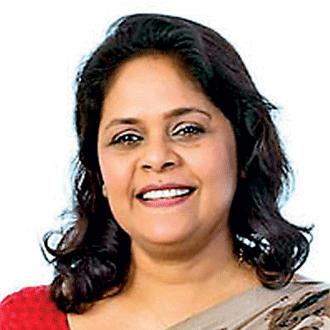
Dr. Dayani Panagoda, a Policy specialist, Strategist, and Practitioner in Reconciliation and Coexistence |
During a discussion with Dr. Dayani Panagoda, a Policy specialist, Strategist, and Practitioner in Reconciliation and Coexistence, she said, “Truth, unity and reconciliation should be the top priorities since forgiveness comes after, it’s not something we can really demand. It is the victim’s right to decide whether to forgive or take further action. Even if you observe the South African model, it does highlight forgiveness, however, it is something that comes from the victim once the truth is revealed. Referring to a ‘Truth and Forgiving Commission’ implies that forgiveness has already been decided for those responsible, but what if the victim reveals a perpetrator who should be held accountable? So, the commission should not solely focus on truth and forgiveness, it should be a broad one—truth, unity and reconciliation as outlined in the bill passed last year. This is what they must consider and further improve, and then conclude on what exactly the country needs.”
Dr. Panagoda also spoke about the Minister’s view on achieving ‘national unity’, explaining that unity goes beyond just reconciling perpetrators and affected communities; it must involve the entire nation. Using post-genocide Rwanda as an example, she noted that the citizens of Rwanda simply call themselves Rwandans, avoiding terms like ‘Tutsi’ or ‘Hutu’ when referring to their identity. Here, we are yet to call ourselves Sri Lankans instead of using religious or ethnic identities. While embracing and respecting our cultural diversity, it’s equally important to recognise that we are all Sri Lankans in order to foster inclusivity and strengthen national unity.
This year marks the sixteenth anniversary of the end of the Civil War, a conflict which affected an entire nation and all its citizens, irrespective of race, ethnicity or class. Under the previous administration of Ranil Wickremesinghe, the state made efforts to achieve transitional justice. The Bill on the Commission for Truth, Unity and Reconciliation (CTUR) was included in the gazette on January 1, 2024.
However, the bill faced criticism from International Organizations like Amnesty International, the International Commission of Jurists (ICJ) and several CSOs. They argued that the government’s proposed bill regarding the CTUR lacked credibility, failed to promote accountability for perpetrators and deliver justice for the victims of the atrocities committed during the 26-year-long armed conflict. Critics pointed out that the State must address the repeated demands of victims for international involvement in the CTUR, since justice cannot be achieved through a purely domestic approach.
Dr. Panagoda remarked, “Following the bill which was passed, the Interim Secretariat for Truth and Reconciliation Mechanism (ISTRM) was established, but it appears that the office has ceased operations under the new government. I think the government should take the lead on this bill in parliament, include local experts in discussions, make necessary improvements, and then establish the CTUR. Furthermore, many people in the country fear that the CTUR will tarnish the reputation of the military and that they will be punished despite having ended the war. Thus, there is one school of thought arguing that truth and reconciliation are not needed. There is another belief considering the aftermath of truth and reconciliation; if there are clear cases of gross human rights violations, how should punitive action be taken? Should it be through a national, international, or hybrid court? This factor also leads to people opposing truth and reconciliation efforts”.
Sri Lanka has a complex legacy when it comes to transitional justice, with both successes and failures. Throughout the years, the government has introduced various Commissions of Inquiry (COIs), including a Consultation Task Force (CTF) and the Office of Missing Persons (OMP). These efforts have provided avenues for truth-telling and trauma healing, allowing victims and their families to share their experiences and seek accountability. However, some argue that these institutions are inefficient and in several instances, have failed to take legal action against the alleged perpetrators. Daily Mirror tried reaching out to the OMP to get information regarding the progress made by them in terms of locating missing individuals or clarifying their fates, yet there was no response.
Dr. Panagoda stated, “As a war widow myself, I personally believe that the CTUR is important. However, we must learn from the multiple commissions that have been established and determine what our focus should be, as well as the timeframe. If the CTUR is only focused on the LTTE or northern insurrections, what about the southern insurrections? We cannot simply focus on one aspect. The government is currently examining the Batalanda reports, but you can’t just take them to court now without starting the process from scratch. We need to first understand the position of the bill and its primary objective, and then proceed with the CTUR from there.” Many have expressed concerns about whether the efforts to achieve reconciliation are genuine or done as a response to international pressure. They opine that in trying to pursue transitional justice, successive governments have constantly re-traumatised and re-victimised affected communities, excluding them from the initial mechanisms which led to a lack of accountability and transparency. While Sri Lanka has made efforts to address past human rights abuses and deliver justice, the effectiveness or progress of these initiatives has been hindered by a combination of political, legal, and institutional obstacles.
Dr. Panagoda further emphasised that the CTUR should be established by objectively analysing conflicts and atrocities, ranging from the civil war to the Easter Sunday attacks, without solely focusing on punishing the perpetrators. “The victims are fatigued from repeatedly engaging with various commissions, including Udalagama and Paranagama commissions, Lessons Learnt and Reconciliation Commission (LLRC) and special task force reports. Firstly, we need to assess what we already have without forcing these victims to recount their stories, which only makes it harder for them to heal from their trauma. While some cases may clearly warrant punitive action, there are other grey areas where open dialogue between victims and perpetrators could lead to some form of amnesty. There may also be cases lacking solid evidence, such as hearsay, which are insufficient for further action, and such cases should be excluded from the list. For instance, when we were at the Peace secretariat (Secretariat for Coordinating the Peace Process) at the height of the war, we investigated several missing persons reports, only to discover that many of these individuals had gone abroad, as confirmed by airport records. There is a lack of credibility in such lists, thus, it’s important to analyse all the statements in the archive first. The LLRC has made 281 recommendations, out of which more than 40 are related to the education sector. We need to address these recommendations as well. Transitional justice mechanisms must be context-specific, developed and implemented with meaningful victim inclusion. This entire process cannot be ad-hoc; it must be a well-structured effort, as the nation needs a meaningful discourse on reconciliation to move forward towards achieving justice, social cohesion, and sustainable peace,” she explained.
19 Jun 2026 32 minute ago
19 Jun 2026 2 hours ago
19 Jun 2026 2 hours ago
19 Jun 2026 2 hours ago
19 Jun 2026 2 hours ago