07 Oct 2025 - {{hitsCtrl.values.hits}}
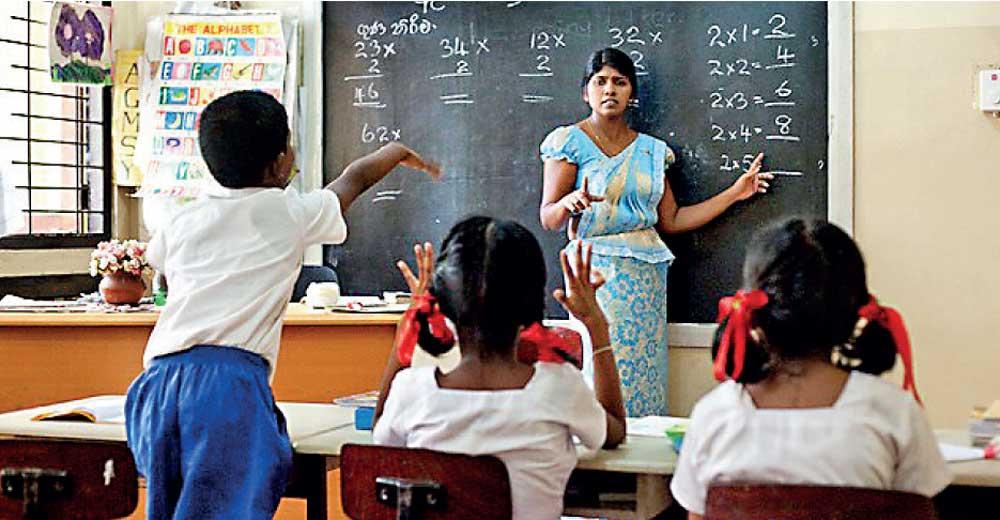
Schools face recurring challenges, including bullying, disruption of classes, disrespect of teachers, and cases of theft. FILE PHOTO
 Sri Lanka’s Parliament has taken a historic step. The Penal Code Amendment of July 2025 bans all forms of corporal punishment of children — not only physical violence but also psychological humiliation, however slight. For the first time, a teacher scolding a student, a prefect striking a classmate, or a principal shaming a child in public can lead to fines and/or imprisonment.
This is a landmark for child protection. No child should suffer cruelty in the name of discipline. Yet, while the amendment has noble intentions, it raises a pressing question: how can schools maintain order and respect in classrooms if no clear alternative mechanisms of discipline are legally recognised?
There are recurring challenges: Bullying in every form, Disruption of classes, disrespecting teachers, cases of theft, and Fights in the playground. Students are skipping classes or leaving school without permission. Even sexual harassment of younger students by older ones. In some instances, students use drugs, smoke, consume alcohol, or engage in public displays of affection that are culturally unacceptable in Sri Lanka. But the school is now uncertain whether to implement the above disciplinary system with the ambiguity of the new Penal Code Amendments.
On October 2, 2025, Lankadeepa Newspaper reported on an assault on a teacher by a student, three students intoxicated by illicit liquor and a few students narcotised by swallowing drug globules (Math Guli) in Monaragala District alone.
Research shows that between 39% and 59% of Sri Lankan students report being bullied. About 44% of teenagers admit to being in physical fights in the past year. Over 80% of students report experiencing corporal punishment, and more than 70% say they have faced psychological aggression in schools.
The drug menace has entered schools, especially in Colombo. Recent arrests include five Year-9 schoolgirls detained for drug use on school premises, while police uncovered a drug distribution network targeting students in Colombo, Gampaha, and Kalutara. The National Dangerous Drugs Control Board confirms that the Western Province has the highest number of addicted schoolchildren.
Surveys reveal that 16% of secondary students in Colombo have used at least one substance in their lifetime. National data show alcohol use at 3.4%, smoking at 3.6%, and illegal drug use at 2.7% among adolescents. These may appear small percentages, but in absolute numbers, they represent thousands of schoolchildren.
Even more alarming, sexual harassment and abuse are far too common. A study in Colombo schools found that nearly 80% of boys reported some form of sexual harassment, and over 20% reported sexual abuse. Earlier this year, the tragic suicide of a 15-year-old girl after alleged abuse by a teacher shocked the country.
Truancy is another silent crisis. The Ministry of Education recently reported that around 100,000 students in Colombo are either out of the school system or irregular in attendance — 20,000 dropouts and 80,000 who attend only occasionally.
Countries have addressed discipline differently. The United Kingdom and most of Europe banned corporal punishment decades ago, but schools are empowered with strong non-violent disciplinary systems such as detention, suspension, and expulsion. In the United States, suspension and restorative justice practices are common. Singapore, in contrast, continues to regulate the caning of boys but also enforces a strict zero-tolerance culture. Nordic countries have banned corporal punishment entirely, but they provide schools with counsellors, psychologists, and strong parental accountability structures.
Sri Lanka has adopted the ban, but without the counselling, resources, or legal clarity to fill the vacuum.
If left unaddressed, this amendment could: leave teachers powerless and demoralised; allow persistent offenders to disrupt learning; undermine respect for teachers; increase truancy and dropouts; and endanger vulnerable students.
We must build a balanced framework that protects children while empowering schools. This means: legal recognition of non-violent corrective actions; counselling and behaviour management resources; monitoring systems; parental accountability; and teacher protection and training.
Cruelty has no place in education. But neither does chaos. Discipline is not about punishment — it is about creating an environment where learning, respect, and safety can flourish.
If we want Sri Lankan schools to be places where children thrive, we must pair the ban on corporal punishment with a clear, legitimate framework of discipline. Protect the child, empower the teacher, and safeguard the classroom. That is the balance our country urgently needs.
The writer is the Founder of Lyceum International Schools.
05 Jun 2026 6 minute ago
05 Jun 2026 10 minute ago
05 Jun 2026 23 minute ago
05 Jun 2026 29 minute ago