13 Feb 2025 - {{hitsCtrl.values.hits}}
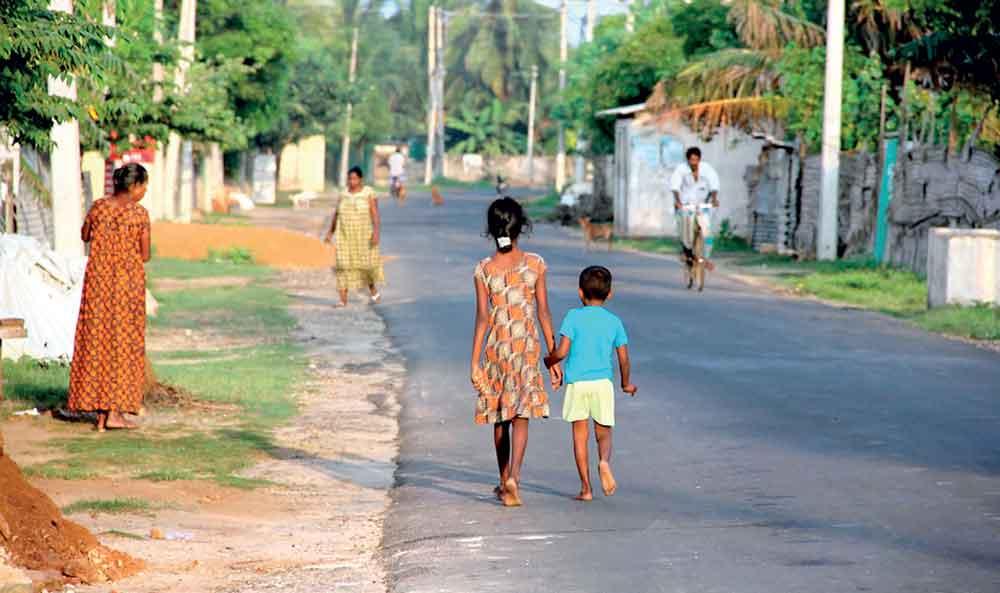
According to the government media spokesperson, to upgrade some of these roads in the north and the east, input has been obtained from the public, community-based organizations and local government institutions
 The government has approved the enhancement of rural roads in the Northern and Eastern Provinces. According to cabinet spokesman Dr. Nalinda Jayatissa, priority will be given to develop 1500 kilo metres of roads in the Northern Province and 500 kilo metres of roads in the eastern province. The people from these areas would have walked on these roads during the civil war. Sri Lanka is a country where there are nice places that give a great view of mountains, lakes and sometimes of never ending roads where you can even get a glimpse of deer and peacocks at a distance. But the present generations might not be aware that the existing beauty of such places might have a dark past related to a war.
The worst of the war was faced by people in the north and the east. Building roads for them is good. This government must also rebuild the bridges that existed between the two ‘main’ communities before the war commenced. People in the above-mentioned provinces got a raw deal during the war. For most of them, there is no time now to collect the pieces of their shattered lives and start all over again. Many of them are old and need the best of care and attention. This development, underscored here, is for the young, to benefit and expand their horizons. At least building roads in these areas would facilitate the travelling of an ambulance from point A to point B; in other words from a patient’s perspective, taking him or her from the residence to the hospital. From the perspective of youth, thousand five-hundred kilo metres (1500) of roads is huge and would benefit young adults who are into business and travelling.
Some sections of the local media has criticised this regime for not deciding whether to engage in development work or politics. Reading between subtle lines and observing the work that is in progress in the name of development in the island, we cannot help but notice the winds from India’s political scene being present in these areas. India being happy about what’s taking place in Sri Lanka’s once troubled areas in the name of development must be noted. The Tamil community in Sri Lanka is in the hearts of South Indian politicians. Apart from this, Prime Minister Narendra Modi has a soft corner for the Sri Lankan Tamils. He has also looked into the welfare of estate Tamils, who are apparently a different clan despite associating themselves with the common Tamil identity.
India has in the past done its share to alleviate the pains and sufferings of the Tamil community here. When past Sri Lankan governments have lagged behind in looking into the welfare of the main minority community here, India has often stepped into playing a supportive role.
We remember the reopening of the Palaly Airport for civilians in 2019 and the adding of a second Airbus to this facility in 2024. There was a strong Indian presence and support when the Palaly Airport was upgraded and opened for civilian use. India has been connected with our transport system for many years. In 2023 India gave Sri Lanka 75 buses and in 2014 the Indian government gave its closest neighbour 22 train engines and spare parts. All in all, we cannot help but remind ourselves that India is one of the main countries which Sri Lanka looks to when obtaining loans for development work.
We also remember the recommencing of the ferry service that operates between India and Sri Lanka. This project was recommenced in 2023 during the Wickremesinghe government. From transport to most infrastructure development work in Sri Lanka, India has shown a great interest in having a presence here.
And when the ‘road ended’ for some of the most controversial Tamil Sri Lankan politicians and Tamil Tiger rebels, the sea route from Sri Lanka to India was open to many of them to establish their ‘havens’.
According to the media spokesperson of the government, Dr. Jayatissa, to upgrade some of these roads in the north and the east, input has been obtained from the public, community-based organisations and local government institutions. This only goes on to suggest that there is little or no political favouritism and no nepotism involved when building and expanding roads in the northern and eastern provinces.
Maybe Indians too would travel on these redeveloped roads and see for themselves that this new regime serves everyone equally where infrastructure development is concerned. When this happens India doesn’t see doors being opened at will for them to interfere in our administrative matters.
We need to see Tamils, Muslims, Burgers and even Sinhalese from these lesser-developed areas in the north and the east to travel to Colombo and find their fortunes here. We cannot forget other minority communities like the Bohras, Parsis and also if there are clans which have Portuguese, Dutch or British blood in them to walk on these newly refurbished roads and connect with the rest of Sri Lanka.
Just the other day, in the third season of Voice Sri Lanka, a contestant by the name of ‘Derrick Keil’ had the audience spellbound when he conveyed that he had Portuguese roots and that his home folk spoke in ‘Portuguese’. And he was quick to underscore that he is ‘Sri Lankan Portuguese’ after saying that the fourth language he spoke after Sinhala, Tamil and English was Portuguese. Derrick has shown the entire Sri Lanka that he has opted to travel and not complain about dilapidated roads near home, which is Trincomale, and try his luck in the showbiz scene in Colombo. He gives a strong message and that is that all roads lead to better places when the mind isn’t blurred with feelings of hatred, revenge and isolation.
15 Jun 2026 2 hours ago
15 Jun 2026 3 hours ago
14 Jun 2026 14 Jun 2026
14 Jun 2026 14 Jun 2026
14 Jun 2026 14 Jun 2026