05 May 2025 - {{hitsCtrl.values.hits}}
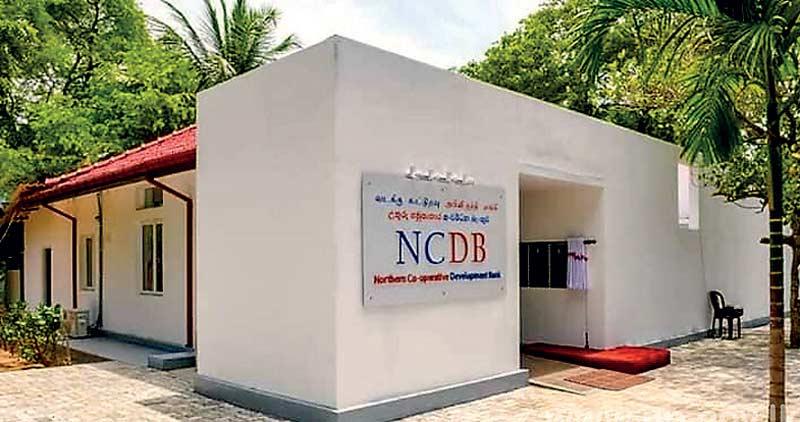
The Northern Co-operative Development Bank (NCDB), is a federation of about 1,200 co-operative societies in the Northern Province. File photo
 Some ideas simmer in our national imagination for years, if not for decades, before they gain fruition. A development bank for Sri Lanka has not just been an idea, but was formed, dissolved and re-imagined time and again since Independence.
In this context, the National Budget for 2025 states that the Government is working towards setting up a development bank: “As a first step, the function of a development bank through a new administrative structure will be established through the existing state bank mechanism. The Government will support this task through the National Credit Guarantee Institution (NCGI).”
What has been the history of development banking in Sri Lanka, and what constraints could such an initiative towards a new development bank face today? I address below the need and importance of a development bank to both find a way out of the economic crisis and for Sri Lanka’s long-term reconstruction.
 Industrialisation and banking
In the years after Independence, a powerful World Bank mission to Sri Lanka in the early 1950s, pushed a vision of development that was devoid of industrialisation. As with so many newly independent countries, the West wanted to maintain a neo-colonial hold by pushing countries like ours to only focus on primary production dependent on the Western economies. In the case of Sri Lanka, this meant an exclusive focus on agricultural production, which would prove unsustainable with the declining terms of trade; where the value of agricultural exports in relation to the value of industrial imports continued to decline.
It was with some resistance that our governments at that time moved to form industries. Those initiatives towards industrialisation were paralleled by the formation of the Development Finance Corporation of Ceylon (DFCC) in the mid-1950s; though with a limited vision shaped by support from the World Bank. In the late 1970s, the National Development Bank (NDB) was formed as a fully state-owned entity. These two institutions were clearly formed with an idea of industrialisation guided by the state, and the diversification of our economy driven by development banking.
The move away from Import Substitution Industrialisation (ISI), particularly with the Jayewardene regime’s open economy policies in the late 1970s shaped by the International Monetary Fund (IMF) led Structural Adjustment Programme, drastically changed the structure of our economy with increasing privatisation. Eventually under pressure from the IMF, both the DFCC and NDB were privatised and transformed into commercial banks in the 1990s. Therefore, Sri Lanka for close to three decades has been bereft of development banking altogether, even though the history of development of most countries including many of the powerful Western countries have gained from such development banks.
Rural journey
My own interest in development banks began in the mid-1990s when I worked as an engineer in Tokyo in a multi-national investment bank. I was part of an informal study group of mainly young Japanese professionals, which I co-founded with a friend who worked at the Japan Development Bank (JDB). I was fascinated by the history of JDB that was formed in 1951, particularly its contribution to the post-war economic development of Japan. Some of those reflections, I had penned in an earlier Red Notes column on 5 August 2019, titled, “Re-imagining Industrialization: The State and Development Banking.”
That piece was written just before we formed the Northern Co-operative Development Bank (NCDB), as a federation of about 1,200 co-operative societies in the Northern Province. Over the last six years, in my capacity as the Chair of the Board of NCDB, we have seen its transformation into an agile rural development banking institution with about forty-five staff.
Committed to the idea of providing comprehensive support for rural development, NCDB has six divisions. The development banking division creates business plans, provides investment loans and working capital for co-operative industries, and creates appropriate livelihood loan schemes for farmers, fisher folk and other small scale producers. The technology division, including engineering support, oversees quality and efficient production, while the marketing division capitalises on the broad network of co-operative shops and ensures the products reach consumers at affordable prices. The research division finds new sectors and plans for the future, while the back offices of finance and human resources keep the organisation going. This intense work over the last six years has provided many lessons on the idea of development banking with co-operatives embedded in the rural sector.
Significantly, the formation of NCDB came out of the recommendations of a Central Bank of Sri Lanka (CBSL) commissioned report titled, ‘Northern Development Framework’ (https://www.cbsl.gov.lk/sites/default/files/cbslweb_documents/Economic%20Development%20Framework%20NP-English.pdf) published in August 2018. This report worked on by ten of us from the North, as a response to the deep post-war indebted crisis in our region, had advocated for a number of structures; a planning bureau, a development finance entity, an employment centre, a natural resource management committee, and a research and policy institute for sustainable development. While we saw the need for such holistic macroeconomic engagement for the war-torn province, the policy makers in Colombo at that time would not even consider a development bank for the region, and that is what led to NCDB as an initiative under the co-operative movement.
National alternative
Much has changed from the times of rejecting development banking in Sri Lanka over the last three decades. Government policy today is for the formation of a new development bank. I believe such a development bank is crucial to both address the ongoing economic depression and for the long-term growth of the country. However, the functioning of any new development bank will be constrained by the ongoing IMF program and the regressive Central Bank Act passed two years ago by the illegitimate Wickremesinghe-Rajapaksa regime.
There are crucial differences between commercial banks – that dominate banking in Sri Lanka – and a development bank that needs to be formed. Commercial banks are only interested in earning interest income with their lending guaranteed by collateral. With their short-term profit orientation, they cannot make much of a contribution to national development, and certainly not during an economic crisis. Development banks are meant to support long-term development, including the nurturing of new businesses, industries and sectors, and should lend on the basis of the potential of projects, rather than those who have collateral.
Therein lies the problem with maturity and interest rate mismatches for development banks without state support. Short-term and higher interest cost deposits cannot finance long-term and low interest-bearing ventures. Therefore, deficit financing or at least a low-interest cost financing guarantee needs to be secured from the Central Bank, but both are denied if we remain under the IMF and the regressive Central Bank Act.
There are a whole range of other concerns to ensure a successful development bank. These include development banking capacity with industrial expertise and project based appraisal of loans, rejuvenation of national planning and industrial policy to direct long-term financing, and building the rural economic development structures to absorb such financing. The need for a new domestic development bank is now more urgent than ever, as the global turmoil of markets with the trade shocks require a reconfiguration of our own domestic economy with new development alternatives.
13 Jun 2026 1 hours ago
13 Jun 2026 16 minute ago
13 Jun 2026 17 minute ago
13 Jun 2026 38 minute ago
13 Jun 2026 47 minute ago