03 Jul 2025 - {{hitsCtrl.values.hits}}
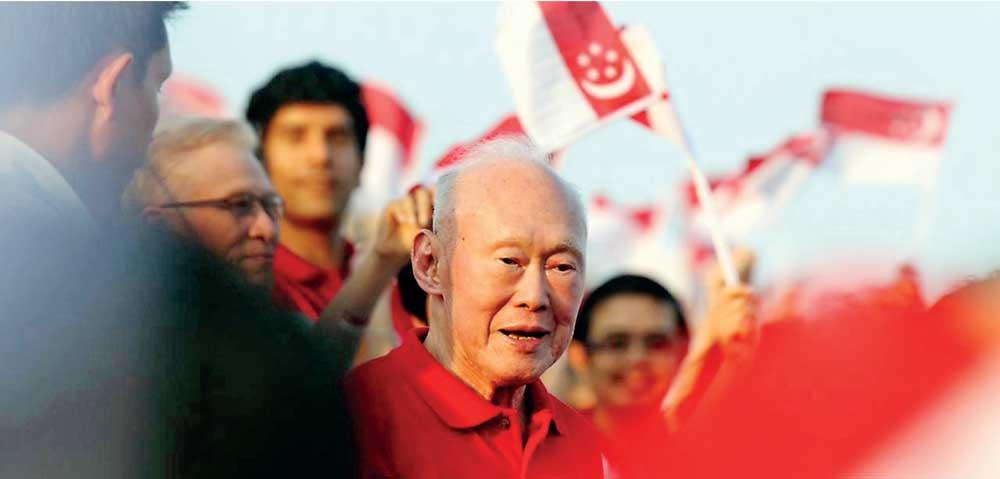
Lee Kuan Yew’s Singapore was built on the bedrock of pragmatism and an unyielding belief in human capital
 Sri Lanka, a nation blessed with abundant natural beauty, a rich cultural heritage, and a resilient populace, stands at a critical juncture in its development trajectory. As it navigates the complexities of economic recovery, social cohesion, and sustained growth, the quality of its leadership, particularly in higher positions within the public and private sectors, becomes paramount. In this pursuit of national progress, there are profound and invaluable lessons to be drawn from the remarkable transformation of Singapore under the visionary leadership of its founding father, Lee Kuan Yew. Central to Singapore’s meteoric rise from a nascent, resource-poor island nation to a global economic powerhouse was an unwavering commitment to meritocracy and competency in all appointments, a principle that Sri Lanka could profoundly benefit from emulating
Lee Kuan Yew’s Singapore was built on the bedrock of pragmatism and an unyielding belief in human capital. He understood, with crystal clarity, that a small nation with no natural resources had only its people to rely upon. To maximize this singular asset, every individual, particularly those entrusted with significant responsibility, had to be the best and brightest, selected solely on their ability, integrity, and dedication. This philosophy was not merely an abstract ideal; it was meticulously woven into the fabric of the nation’s governance, education system, and public service.
For Sri Lanka, the immediate and most impactful lesson lies in adopting a rigorously meritocratic approach to appointments in all echelons of power. Historically, and in many contemporary contexts, appointments in Sri Lanka have often been influenced by patronage, political affiliations, family ties, or even ethnicity. While a degree of political loyalty is inherent in any democratic system, when it supersedes competence and integrity, the nation inevitably suffers. The consequences are manifold: inefficient governance, corruption, policy paralysis, and a brain drain of talented individuals who see little opportunity for advancement based on their true worth.
Lee Kuan Yew’s approach was a stark contrast. He famously scoured the globe for talent, even within Singapore, seeking out individuals with exceptional intellectual capacity, strong moral compasses, and an unshakeable commitment to public service. These individuals, regardless of their background, were then groomed, mentored, and entrusted with significant responsibilities, with their performance rigorously evaluated. This commitment to meritocracy extended from the highest ministerial positions down to the entry-level public service roles. It fostered a culture where individuals knew that their hard work, talent, and dedication would be recognized and rewarded, irrespective of their connections.
One of the cornerstones of Singapore’s meritocracy was its robust and transparent recruitment processes for the public service. The Public Service Commission (PSC) in Singapore is a powerful, independent body responsible for recruitment, promotion, and discipline of public officers. Its independence from political interference is crucial, ensuring that appointments are made based on objective criteria, rigorous assessments, and a deep understanding of the skills required for each role. Sri Lanka could greatly strengthen its own public service commissions and establish similar independent bodies, shielding them from political influence and empowering them to truly uphold meritocratic principles. This would involve crafting clear, objective selection criteria, implementing standardized and transparent testing procedures, and fostering a culture of accountability in the selection process.
Continuous earning for public servants
Beyond recruitment, Singapore also prioritized continuous learning and development for its public servants. Lee Kuan Yew understood that the world was constantly evolving, and so too must the skills and knowledge of those leading the nation. Extensive training programs, scholarships for further education, and exposure to international best practices were integral to developing a highly competent and adaptable public service. For Sri Lanka, investing heavily in the capacity building of its public sector, from leadership training for senior officials to skill enhancement programs for all levels, would yield significant long-term dividends. This investment should not be seen as an expenditure but as a vital contribution to national productivity and good governance.
Furthermore, Lee Kuan Yew fostered a culture of performance and accountability. While meritocracy ensured that the right people were in the right positions, robust performance management systems ensured that they delivered results. Underperforming individuals were either re-assigned, retrained, or, in some cases, removed. This focus on outcomes, rather than just effort, instilled a sense of urgency and responsibility among public servants.
It’s a widely held belief in Sri Lanka that meritocracy has often taken a backseat to political affiliations when it comes to appointments in the higher public sector. This pervasive issue is frequently cited as a root cause for the systemic inefficiencies, widespread corruption, and diminished productivity that plague various government institutions.
The argument is that when individuals are selected based on loyalty rather than competence, crucial roles are filled by those lacking the necessary skills, experience, or ethical grounding. This creates a ripple effect, leading to poor decision-making, mismanagement of resources, and a general decline in the quality of public services. Ultimately, this undermines public trust and hinders the nation’s progress.
Sri Lanka could introduce more rigorous performance appraisals, link promotions and increments to demonstrable results, and establish clear mechanisms for accountability when targets are not met. This would help shift the focus from merely holding positions to actively driving progress and delivering tangible benefits to the citizenry.
The Singaporean model also emphasised the importance of competitive salaries for public servants, particularly those in senior positions. Lee Kuan Yew argued that to attract and retain the best talent, especially when competing with the private sector, the public service needed to offer competitive remuneration. While this can be a sensitive issue in countries facing economic challenges, the underlying principle holds true: underpaying competent public servants can lead to a brain drain, reduced motivation, and an increased susceptibility to corruption. Sri Lanka needs to critically evaluate its public sector remuneration structures and, within its economic means, strive to offer salaries that attract and retain top talent, while simultaneously strengthening anti-corruption measures to ensure transparency and integrity.
The Singaporean experience underscores the critical role of political will in implementing and sustaining a meritocratic system. Lee Kuan Yew’s personal commitment to meritocracy was unwavering, and he instilled this ethos throughout his government. He recognized that short-term political expediency could be a powerful temptation, but he consistently prioritized long-term national interest over narrow political gains. For Sri Lanka, this translates to the need for its political leadership, across the spectrum, to genuinely embrace meritocracy as a fundamental principle of governance. This requires a shift in mindset, moving away from patronage politics towards a genuine commitment to identifying and empowering the most capable individuals for the betterment of the nation.
Implementing these lessons will not be easy. It will require overcoming entrenched interests, challenging traditional practices, and fostering a cultural shift. There will undoubtedly be resistance from those who benefit from the existing systems. However, the alternative – a continuation of sub-optimal appointments leading to continued underperformance – is far more detrimental to Sri Lanka’s future.
Sri Lanka possesses immense human potential. Its universities produce bright, capable graduates. Its diaspora holds a wealth of talent and experience. Tapping into this pool, purely on the basis of merit and competency, without fear or favor, is the surest path to national resurgence. By drawing inspiration from Lee Kuan Yew’s resolute commitment to meritocracy and competency, Sri Lanka can lay the groundwork for a future where its leadership is truly reflective of its people’s aspirations, where talent is nurtured and rewarded, and where national progress is driven by the very best minds working in unison for the common good. The time for such a transformative shift is now, for the future of Sri Lanka depends on it.
Since gaining independence, Due to continuous political interventions and influences for government high level appointments, large number of intellectuals have left the country which is considered a unbearable loss of human capital to developing country like Sri Lanka.
This systemic practice has significantly contributed to a sustained brain drain over several decades, as many of the nation’s skilled professionals and intellectuals have sought opportunities elsewhere. A direct consequence of this trend is Sri Lanka’s continued classification as a developing country, despite the passage of many years since independence.
For the nation’s progress and the well-being of its citizens, it is imperative that this deeply entrenched system is reformed. Implementing a genuine “system change” that prioritizes meritocracy and competence in all public appointments is crucial. Such a fundamental shift requires decisive leadership and could most effectively be spearheaded by the President, ensuring a more prosperous and equitable future for Sri Lanka.
“ For a country to rise from the threshold of subsistence to one of the highest living standards in the world in 30years is no common achievement. Mr Lee has gathered around himself the most brilliant minds, transforming the most exacting standards into a system of Government “
CAN THE PRESIDENT OF SRI LANKA DO WHAT LEE KUAN YEW HAS DONE TO SINGAPORE?
(The writer is a battle-hardened Infantry officer who served the Sri Lanka Army for over 36 years. In addition to his military service, Dr. Perera is an international researcher and writer, having authored more than 200 research articles and 16 scientific books. He holds a PhD in economics and is an entrepreneur and international analyst specializing in national security, economics, and politics. He can be reached at [email protected])
17 Jun 2026 4 hours ago
17 Jun 2026 4 hours ago
17 Jun 2026 5 hours ago
17 Jun 2026 6 hours ago
17 Jun 2026 6 hours ago