27 Sep 2025 - {{hitsCtrl.values.hits}}
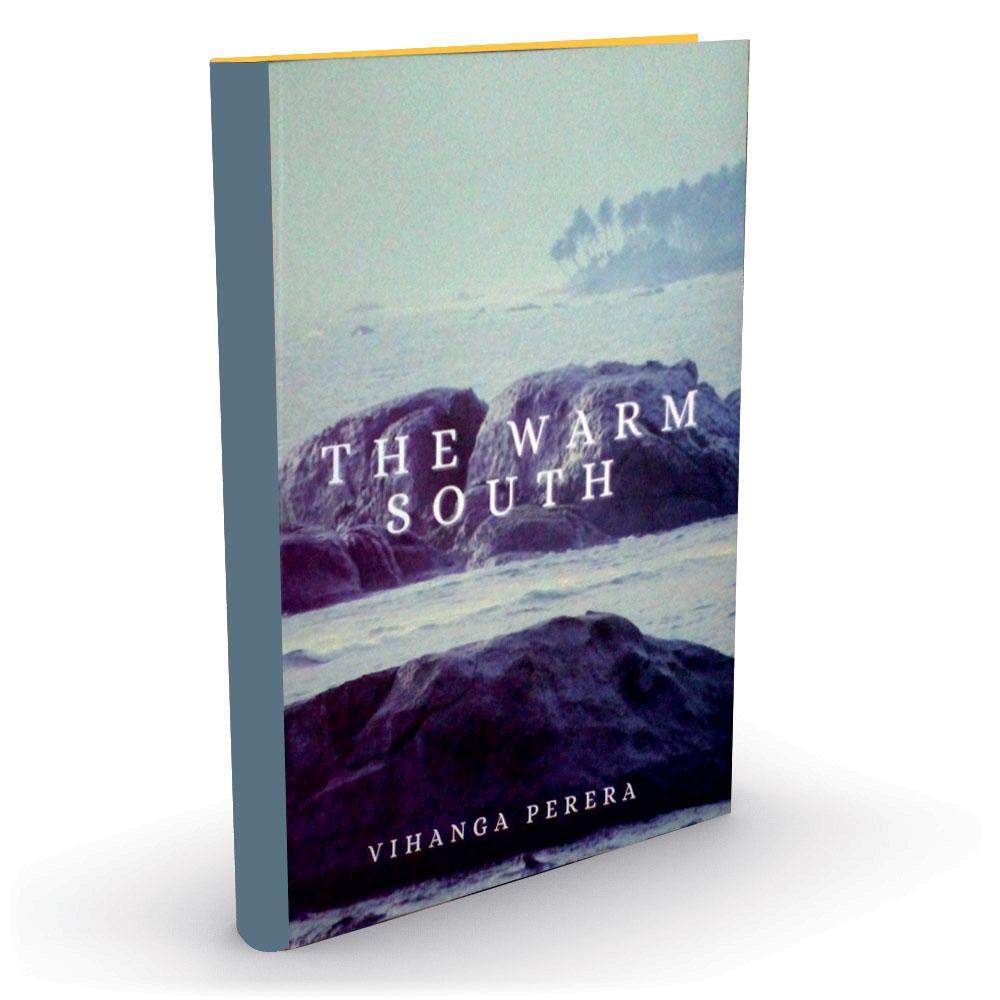
The cover page of the book ‘The Warm South’ by Vihanga Perera, shortlisted for the 32nd Gratian Prize.
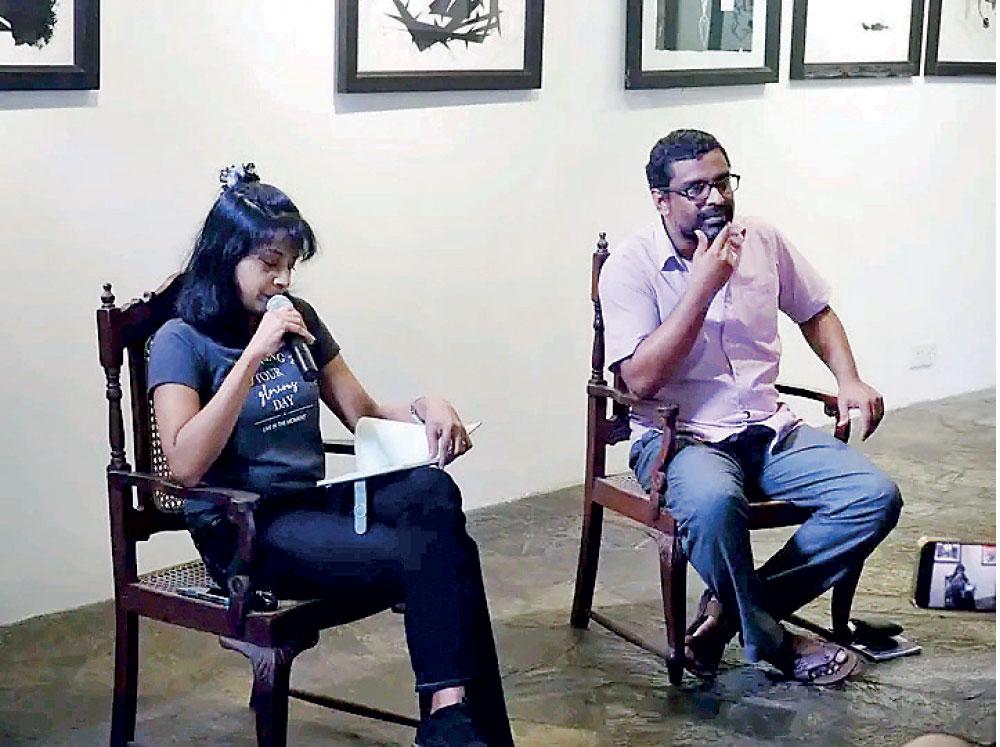
Gayathri Hewagama moderating the book launch in conversation with the Vihanga Perera
 “Sri Lankan readers are increasingly drawn towards literature tied to international and national awards. Instead, they should also explore other authentic works,” said Vihanga Perera, author of The Warm South, which was shortlisted for the 32nd Gratian Award 2025. Yet, Perera emphasised that he never wrote the book with awards in mind, clarifying that he does not chase after recognition. On September 20th, Perera launched his book, ‘The Warm South’, at Atelier in Kandy.
When asked about pursuing international recognition, Perera was clear when he said: “I write for myself, not specifically for international awards,”. He further advised future writers to refrain from going behind awards, as it would damage the spontaneity of writing and force a writer into a serious tone.
“I was abroad for about four and a half years. I began writing this book in 2020, and by then it was already half finished. I completed it last year,” explained Perera. At times, he even felt he had outgrown the manuscript. “I didn’t plan the ending when I started the story,” he said. Struggling through phases of writer’s block, Perera often paused, only to return later with new inspiration. “I felt no need to use dialogue. Instead, I embedded them within the narration,” he added.
There were moments when he thought the book might never be completed. “One morning, I realised I was back in business, so I started to write again,” he recalled.
The novel follows a group of friends on a weekend trip to the South. For Perera, the landscapes of Thalpe were particularly captivating, which led him to choose it as the setting. “The journey itself makes up one-third of the book,” he noted. Inspiration for his writing does not follow a strict routine but emerges from different situations in daily life. This book is less autobiographical, compared to my other creations,” said Perera.
Perera has been shortlisted for the Gratian Award six times and won it in 2014. “The Gratian prize has become a benchmark. Even being shortlisted feels like belonging to a club. It provides validation, and the citation is valuable, but I will not make it a destination,” he remarked.
According to Perera, writing evolves with the different phases of life. His focus now lies largely on editing. He pointed out that publishing firms sometimes request language changes that strip away the creative element in favour of a textbook style. “With all the experience I’ve gained, I chose to self-publish this book,” he said.
He explained that the line editing of The Warm South was done by someone who had not read the text, yet was someone he trusted deeply. The cover design, meanwhile, was created free of charge by Sakuna Gamage. The book itself, he revealed, is divided into three main parts.
“My work is personal. I would advise future writers to trust their instincts and never compromise their story for any external purpose,” he added. For readers who claim a work is difficult to understand, Perera advises: “Let the audience step up to the writer, but the writer should never lower themselves to the audience. Writers must remain honest to their creativity.”
Perera also announced that his book will not be available at the BMICH Book Fair. “But anyone interested can contact me directly and purchase it at my book stall,” he said.
The structure of The Warm South unfolds in distinct phases: the first phase centers on a weekend trip to Tangalle; the second introduces a story imagined by the narrator, involving people he meets there; the third shifts to the narrator’s life at a university, where he again encounters one of those individuals as a student; and finally, the narrator revisits Tangalle.
Through The Warm South, Vihanga Perera not only crafts a journey and imagination but also reaffirms his belief in writing as an act of honesty and instinct.
08 Jun 2026 27 minute ago
08 Jun 2026 31 minute ago
08 Jun 2026 40 minute ago
08 Jun 2026 42 minute ago
08 Jun 2026 45 minute ago